I made a lovely walk before christmas and had planned to write a post about it (one of the many unwritten posts) – I had even thought of a title – “a well rounded day” as, not only was the walk nicely circular, but the beginning and the end of the day tied up surprisingly well.
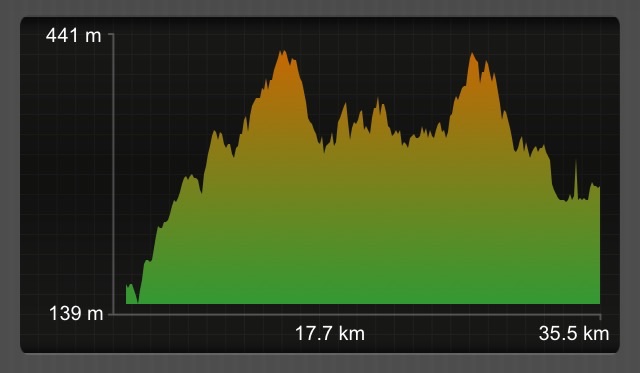
It was actually a very long walk of over 32 kms with an accumulated elevation of 958 metres and very hard going in the beginning because I seemed to have a complete lack of energy, and hard going at the end because I was knackered from over 9 hours walking.

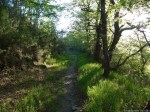
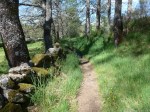
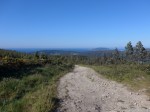
But the scenery on my route from home to La Fabrica de la Luz, via Puerto Blanquillo, stopping off for half an hour’s rest and a spot of late lunch at El Acebuchal and back via the helipad was magnificent. The last section was slightly less pleasant than the rest of the day and involved a kilometre or so of road walking back towards Cómpeta in the gathering darkness, but passing the goatherd and his flock was a welcome diversion.


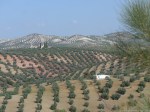
And now I will tell you about the other side to this “well rounded day”. At the beginning of this walk, whilst picking my way along the acequia (irrigation channel) very high above the road below with a very steep drop, I noticed how plump and lovely and plentiful the olives were looking and as I rounded a bend I came across a farmer preparing to collect his crop. No mechanical harvesting in these parts, the only machinery that can be used on this very steep and rocky terrain is a sturdy stick to wallop the branches, a net to catch the fruit and a mule to carry the load to the nearest road. It is very hard work and often the whole family will bring a picnic and spend their weekends clearing the trees. It is a lovely sight to behold, but must be back-breaking and dangerous work on such steep slopes.

So my beautiful day started with olives, and surprisingly ended the same way. As I walked into the top end of Cómpeta I could see a line of pick-up trucks parked along the road, and as I came closer I realised that farmers were waiting to deliver and weigh-in their crops at the olive-oil cooperative “La Reciproca de Cómpeta”. There were possibly a couple of dozen trucks waiting to deliver their sacks of olives. Being naturally very nosey I wanted to take a look and see what was happening at the point of delivery and was allowed to watch while a farmer emptied his sacks into the metal grid in the ground. I was delighted to get this opportunity to see the farmers delivering their crop – and I am sure that the guy I had seen early in the morning was probably waiting in the queue before going home for a well earned dinner (or perhaps more likely to the bar for a well-earned beer or anís).
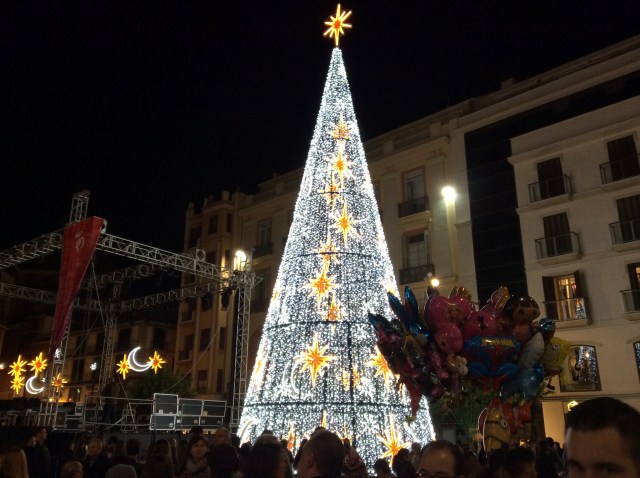
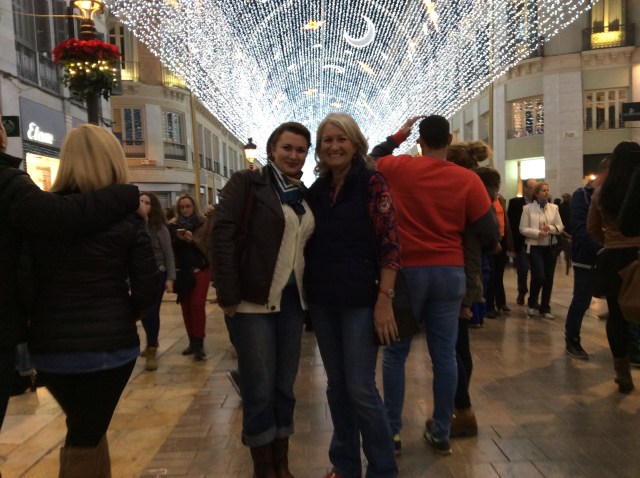
I was further cheered during the last stage of my walk to pass through the village and enjoy the christmas decorations before carefully picking my way along the goat track in the pitch dark for the last ten minutes of my journey (luckily my phone had enough battery remaining to light my way).

So, having been pleased with myself that my day went so well, you can imagine that I was delighted when I learned that my garden club (who so kindly invite me to make a presentation about my camino adventures each year) had arranged a visit to La Reciproca for our January meeting – now I could see what went on after the olives were delivered.
Thanks to our knowledgeable host Sophie we were given an tour of the premises and she patiently answered all our many questions.
The cooperative has 320 associates who are entitled to have their crop processed. Other ‘clients’ can also use the facilities, but have to be registered with the local government as producers. The picking season runs from mid-November to mid-February, with December being the busiest period.
After delivery the olives are separated from any twigs and leaves (the goatherds collect the leaves for their flocks to enjoy), and the fruit is taken via conveyor belt to be weighed and a sample of each batch is taken and sent to a laboratory in Algarrobo to test for yield. The average amount of oil extracted from an olive is around 20%. This amount varies according to weather conditions in any year, with a range of around 18% to 23%. 2015/16 has been a particularly poor year with very little rainfall and the yield has been quite low.

There is considerable competition between the farmers, and those whose olives test for the highest percentage of yield feel justifiably proud and in return receive a greater payment for their crop. There is a chart on the wall showing the producers identification number with their respective percentage.
The cooperative handles around one million kilos of olives each year which produce about 200 thousand kilos of oil. The price received for the total crop doesn’t vary much from year to year, because if it is a bumper crop and there is an abundance of oil, the price per kilo will be lower, whereas if there is a lower yield, as this year, there will be less availability and therefore the price per litre will be higher.
The local variety of olives is Nevadillo Blanco, so called because of the silvery white underside of the leaves. They are used only for production of oil, not for eating. After weighing, the olives need to be processed within 24 hours to preserve their freshness and next go into a crushing machine where the pips are separated from the fruit, then to a mixing machine for 3-4 hours where an olive ‘mush’ is formed, and onwards to a centrifugal spinner where the oil is extracted from the mush.
The oil is stored in huge stainless steel tanks awaiting sale. Much of the produce is sold locally in attractive 5 litre cans and the remainder might be sold to producers in Barcelona where they grow the same variety but not in great quantity, and in a very productive year it can even be sold to Italy for mixing with their own oil, although we were told that this was not a preferred customer. Ninety percent of the oil produced in Cómpeta is classified as extra virgin.

Nothing is wasted during the production of the oil, the pips are sold to the town hall and used as fuel to heat the indoor swimming pool throughout the year. The ‘mush’ is collected to be dried and also used as fuel.
In 2016 the cooperative are celebrating their centenary. I imagine during most of these 100 years that the queues waiting to deliver their crop on a busy December day were of the four-legged, rather than four-wheeled variety.
There are very few new olive trees being planted these days (they take around five years to produce a crop) and the local crop of choice is avocados which produce a good income and I believe grants are available to establish new orchards.
This was a fascinating visit that was attended by a record number of garden club members all totally absorbed by the tour.



















































































 Trepidatious traveller - camino blog