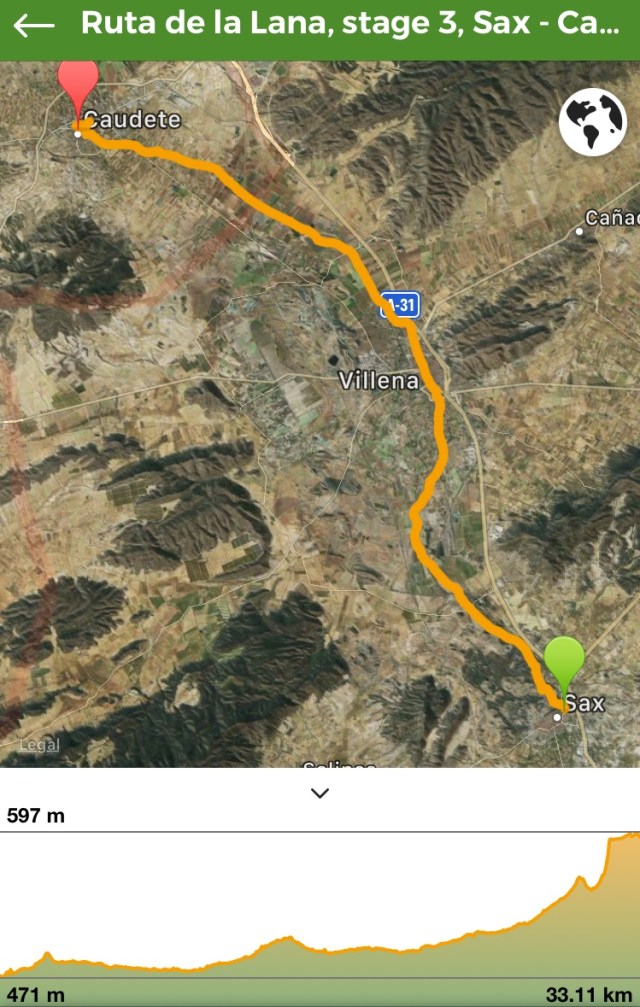
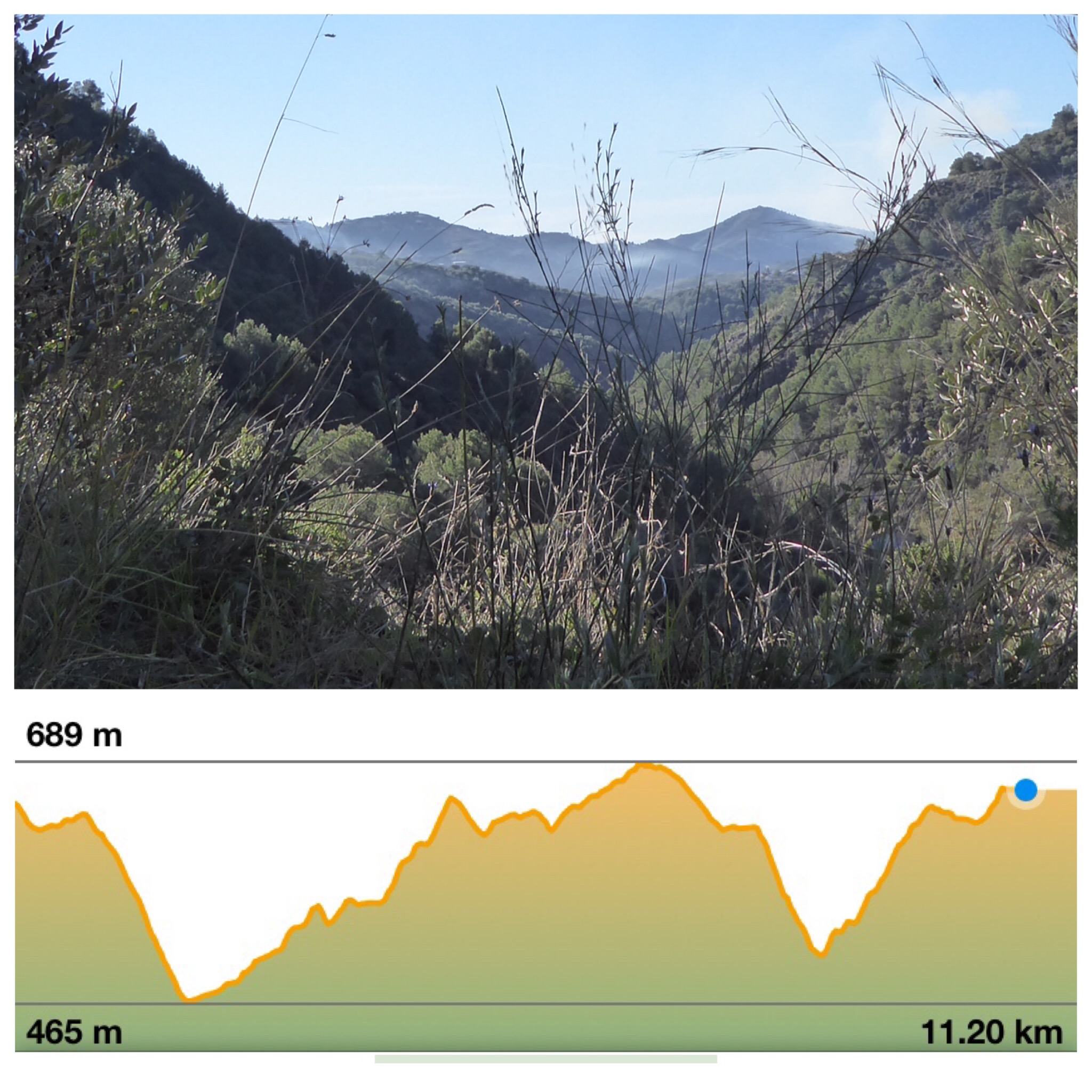
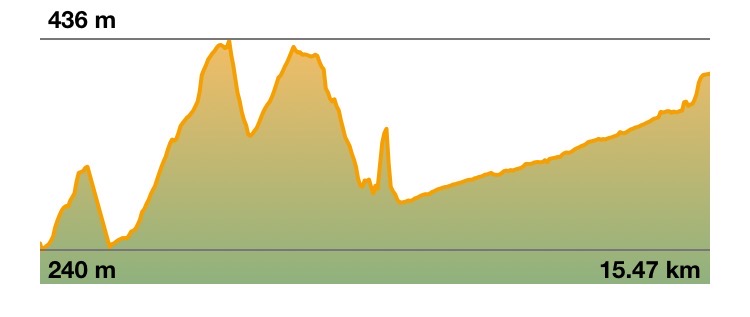
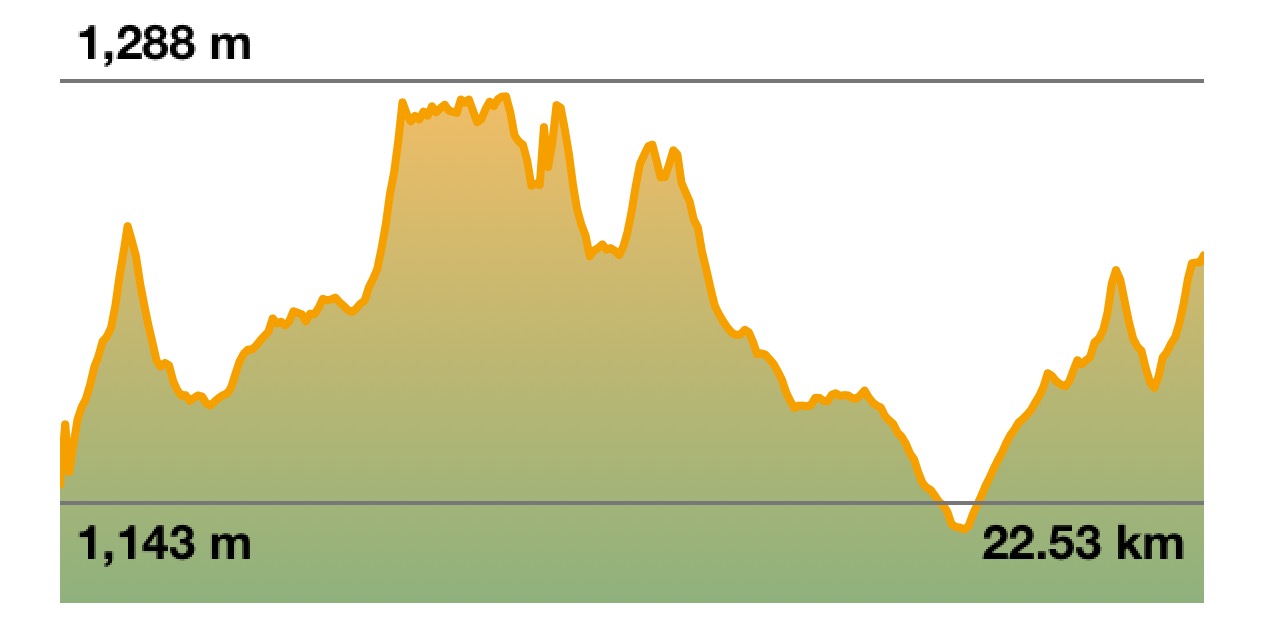
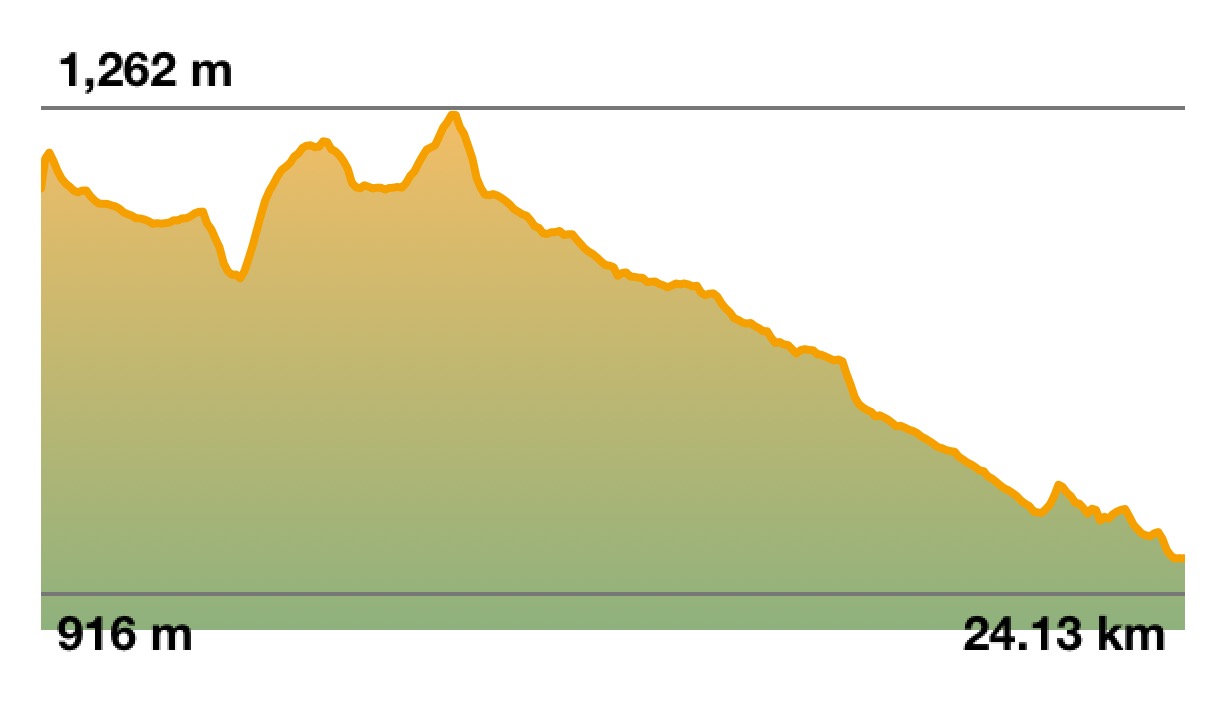
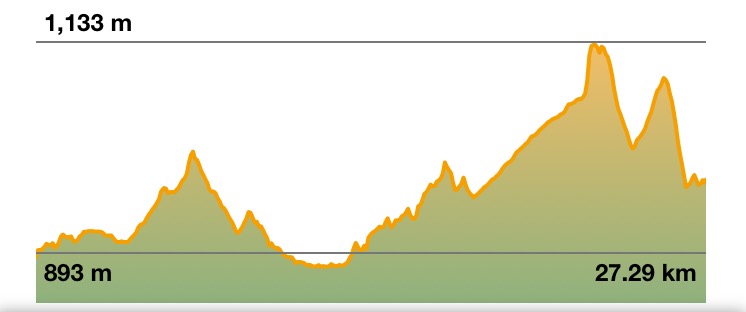
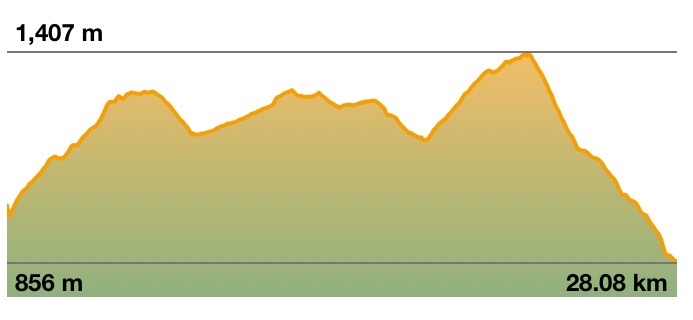
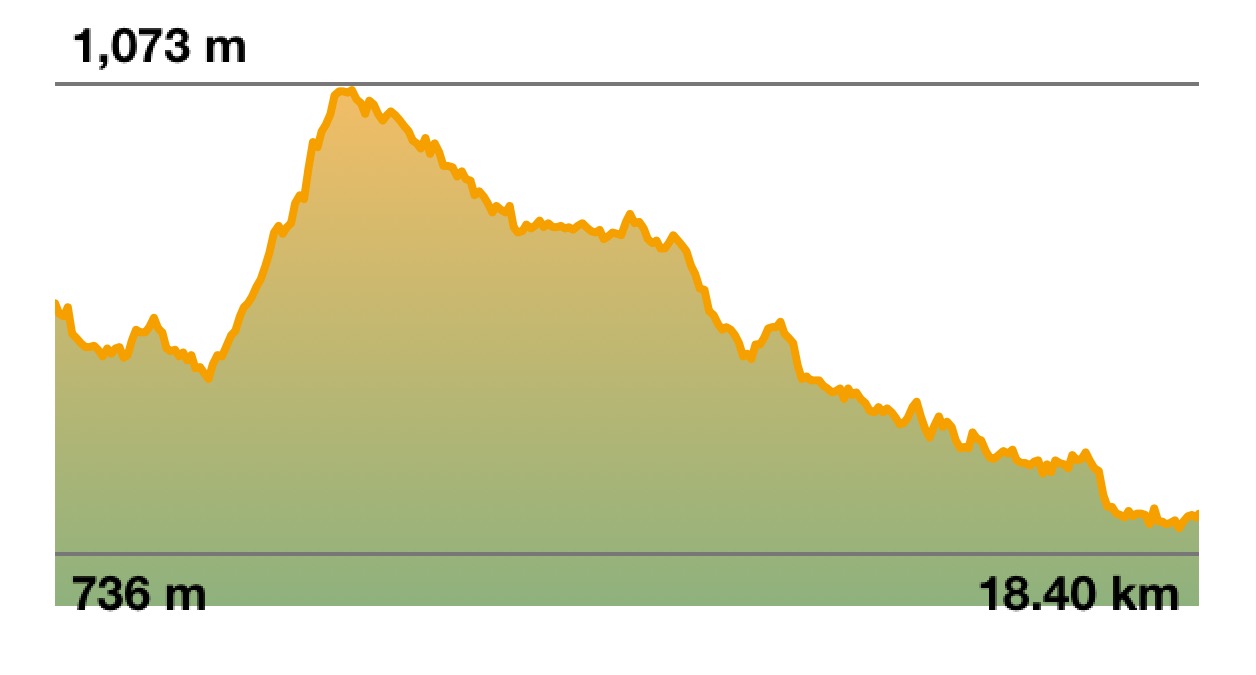
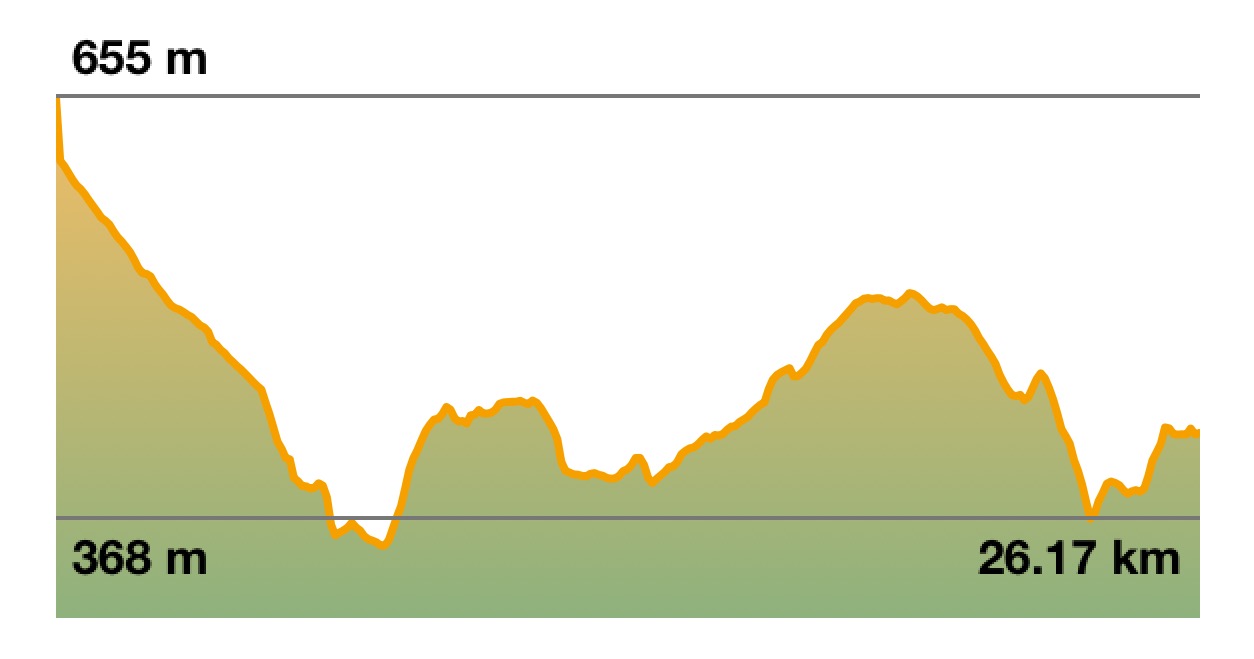
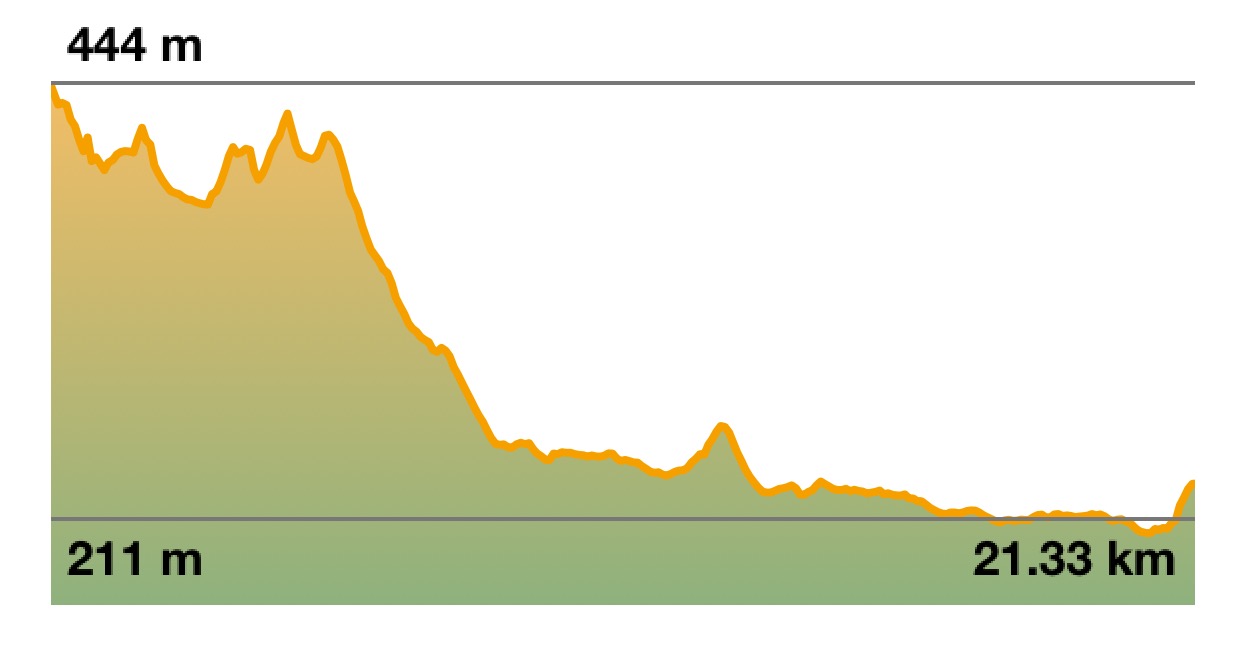
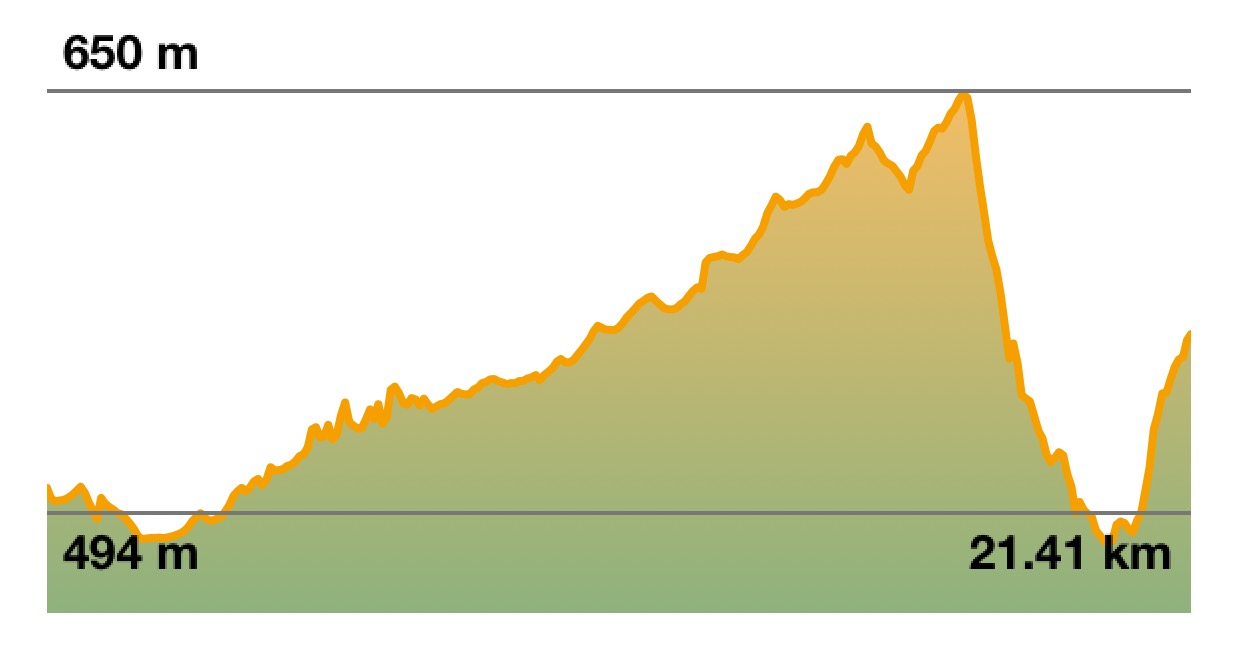
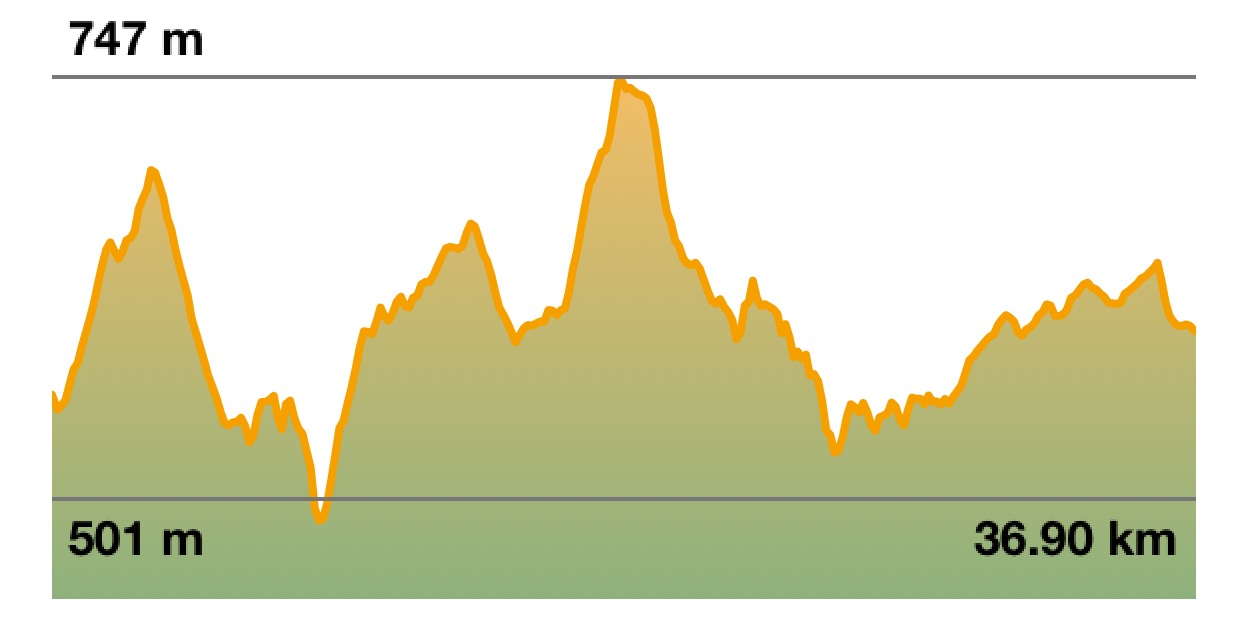
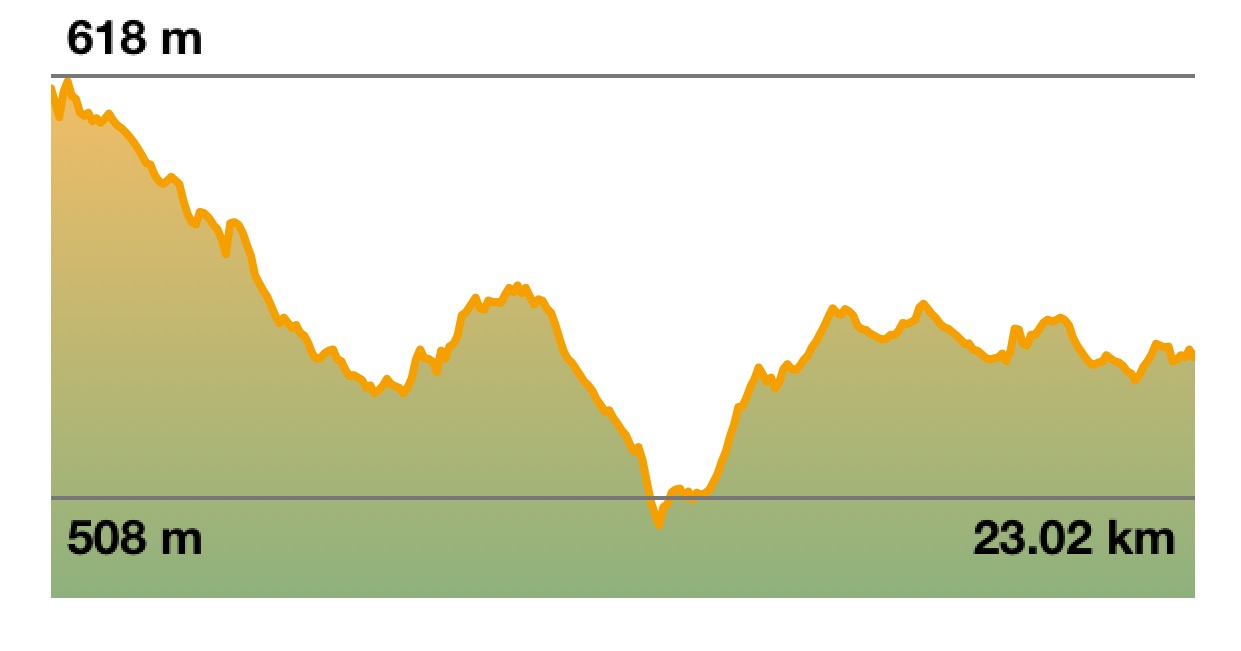
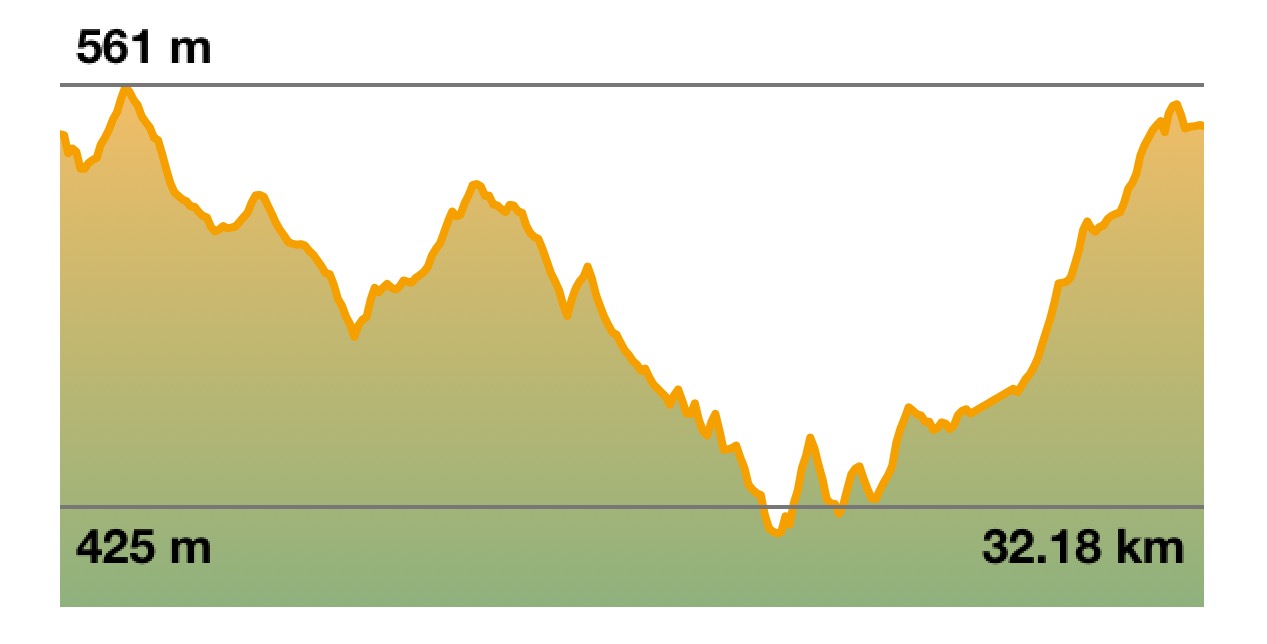
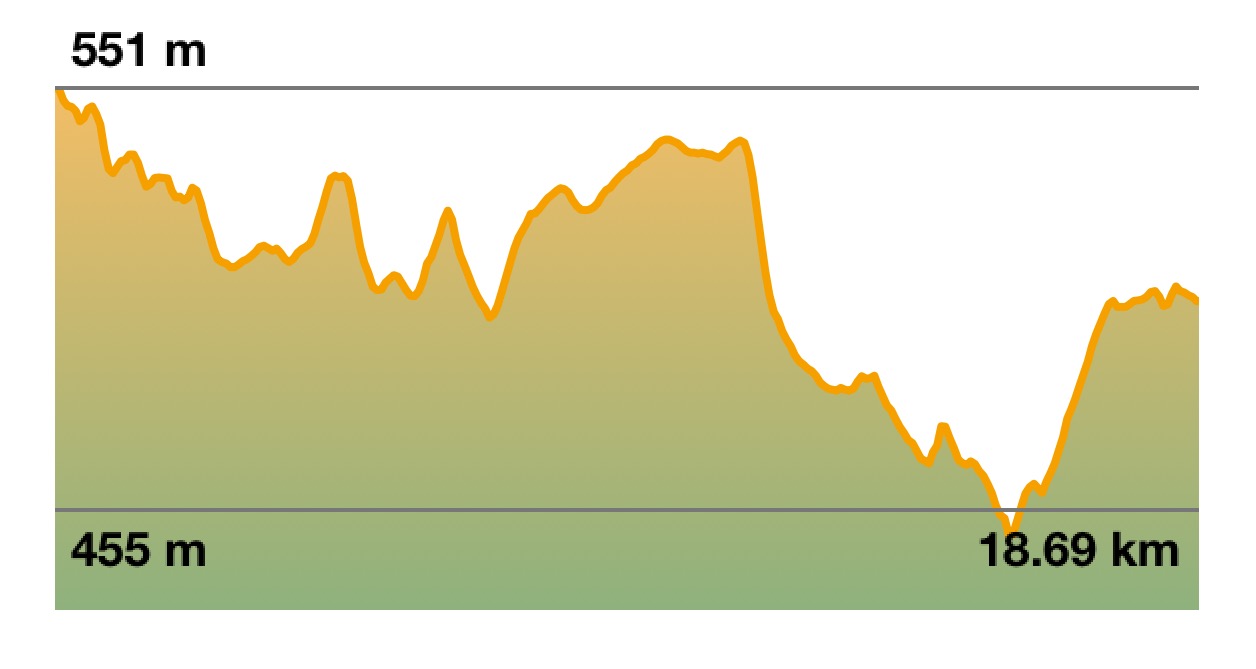
Ruta de la Lana, stage 3, Sax to Caudete , 32 km


Distance 33km (which included wandering about town)
Elevation gain, 169 m
Elevation loss, 45 m
Total distance, 89.1 km
Daily average 29.8 km

We wanted to leave this morning too early to partake of the breakfast included in the cost at el Fuente de Curo, but there is the opportunity to drink coffee or cold drinks, fruit, and dulces.  None of it much good for me, but I helped myself to a couple of biscuits and an apple.

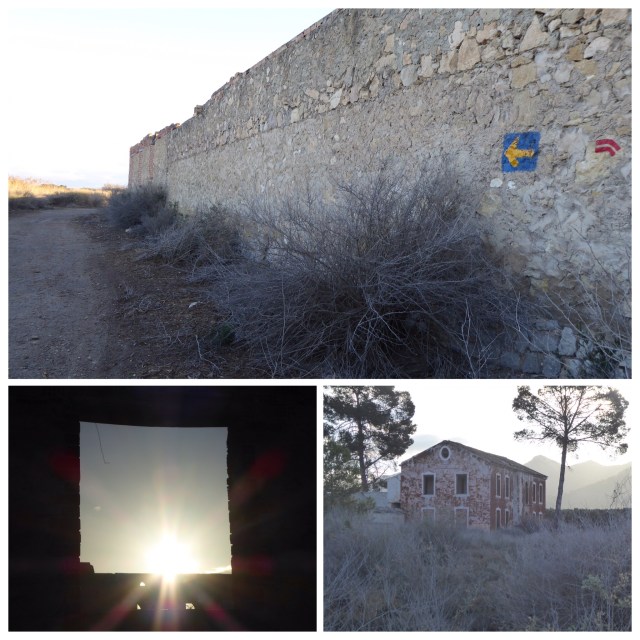
When we walked out at around 07:00, the sun was yet to rise and there was a bitter breeze.  We walked almost immediately into the countryside on a narrow quiet road and continued for 5 km before encountering a track 

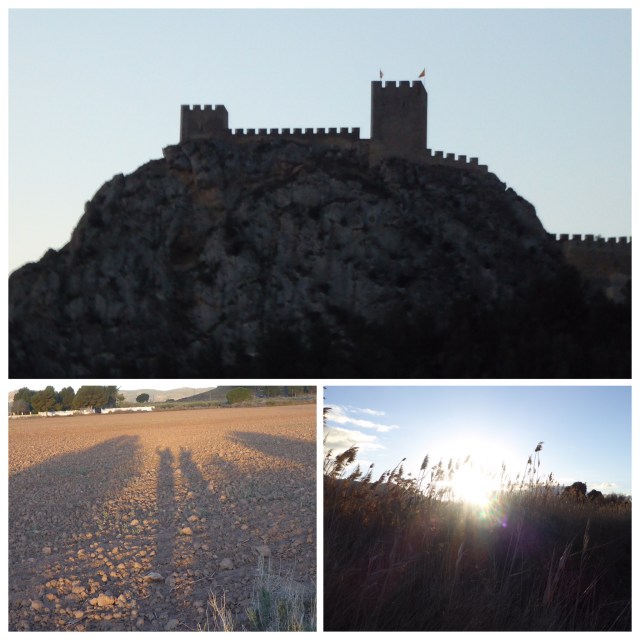
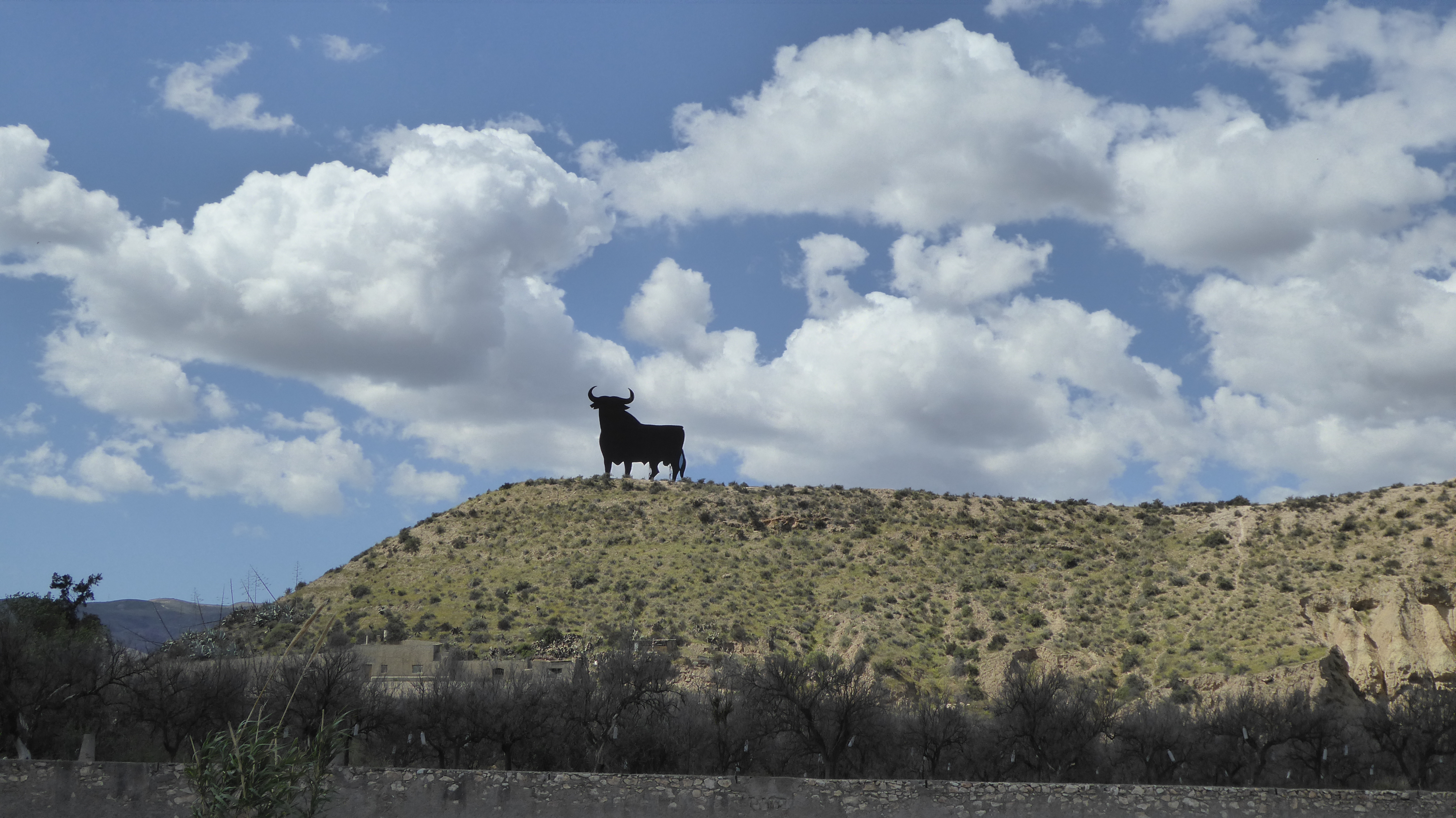
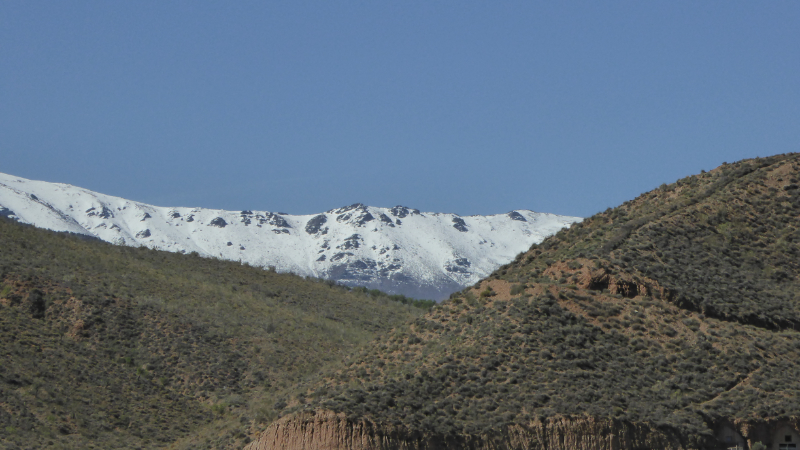
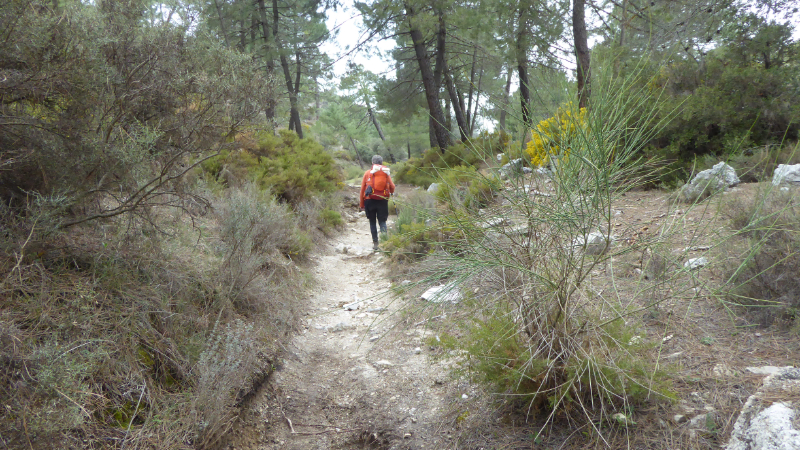
Once off-road we are walking through very scrubby land on a soft dirt track.  We look back towards Sax and the outline of the castle is very dramatic, as is the red-tinged cloud rising above the mountain ranges.

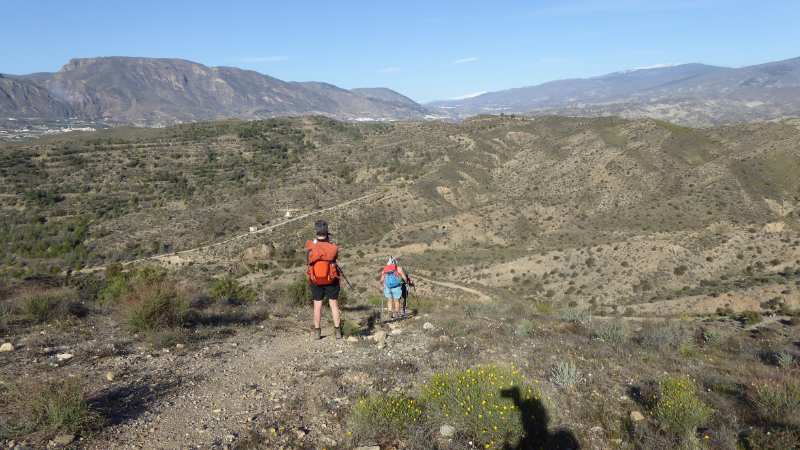
It is lovely when the sun eventually rises and warms the back of my legs and creates the first opportunity on this camino for a shadow photo.

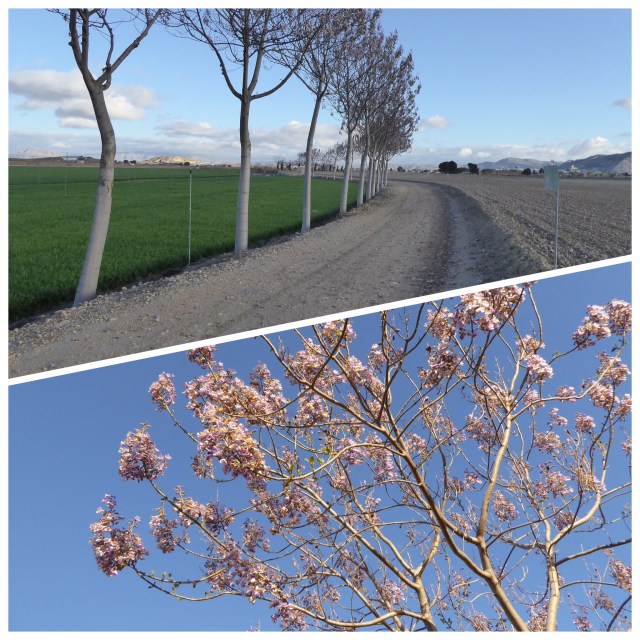
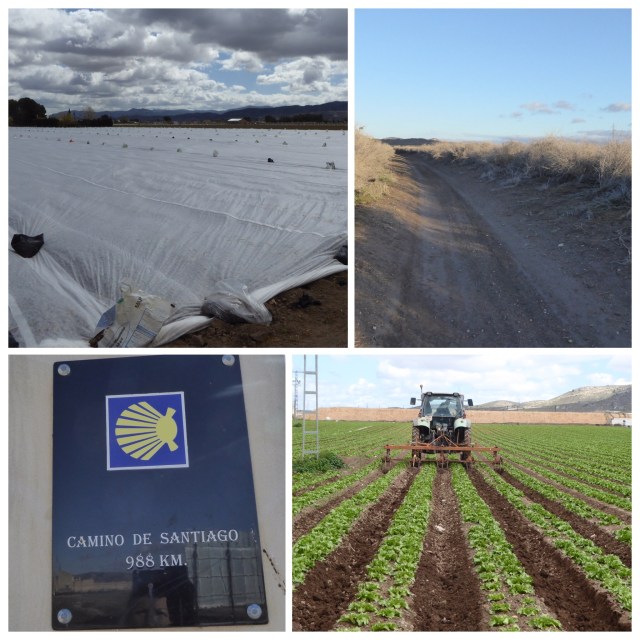
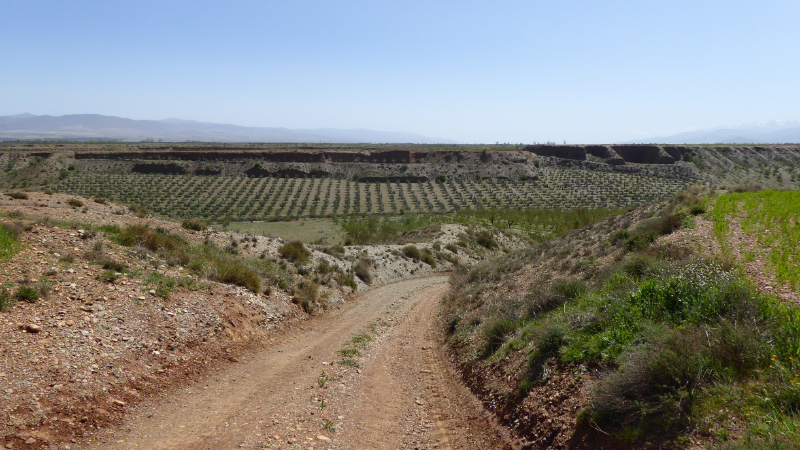
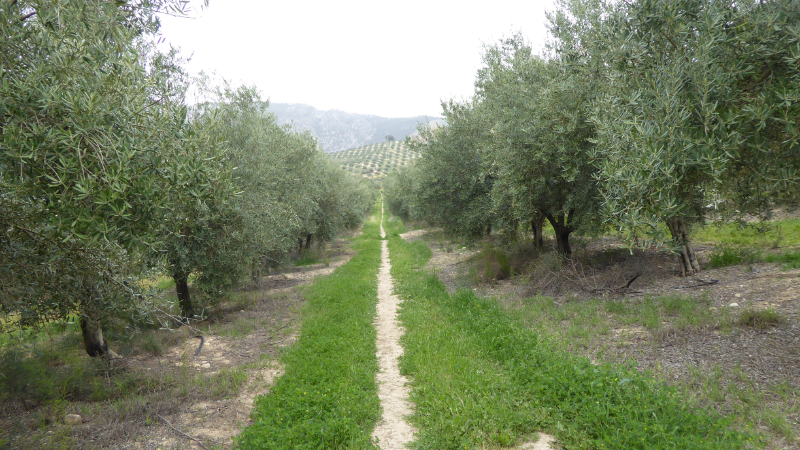
The track is very flat and very uninteresting. No wild flowers to distract me. No animals to commune with. And if it was hot – absolutely no shade. We slog on in a very beige landscape. But eventually the scrubland becomes ploughed, ready for planting and then I finally see a green field.   It’s funny how the simple things in life can cheer you up no end – the green fields of cereal crops in the lovely sunshine totally lift my spirits, especially as we are now walking between fields along a track lined with beautiful flowering trees.

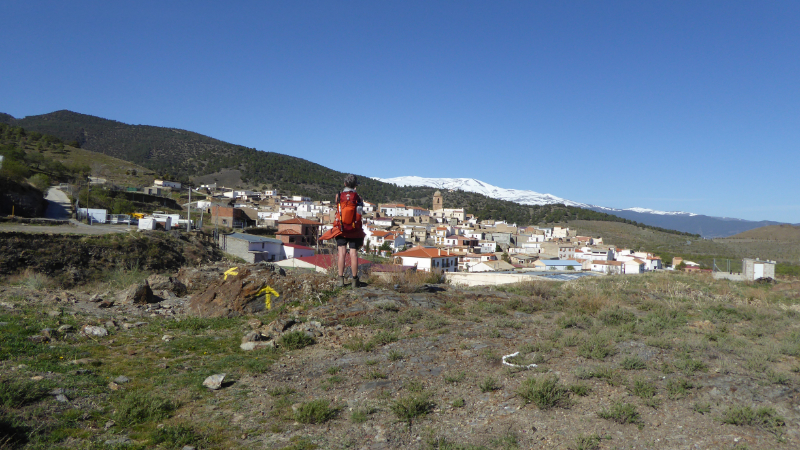
At 10 km we are back on the road for the approach to the town of Villena. At 14 km we stop for hot drink and toast. There is a church of Santiago but it is closed at 10:00.  This is another sprawling town that runs for several kms. On exiting there is a major roundabout to be negotiated – a bit scary!  But we discover that if we had approached it from the left-hand side there are zebra crossings to ease the way. Also I could see from my map.me app that there is a diversion to the left that takes us on track, rather than immediately next to a busy main road.

It strikes me that thus far on this camino the only towns we have passed through have been sizeable. Sadly, no characterful villages.

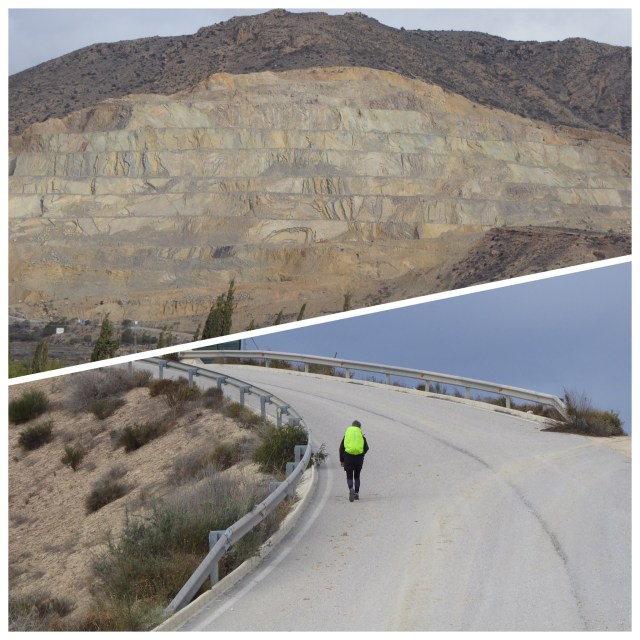
The second half of the walk from Villena to our destination of Caudete is totally unremarkable. Long, straight tracks that pass by some agricultural land. I see strawberries planted under plastic, peas, onions, cabbage and some vineyards. But it is a long slog, battling against an ever-increasingly strong and bitterly cold wind. The sun pops out every now and then, but all too briefly.

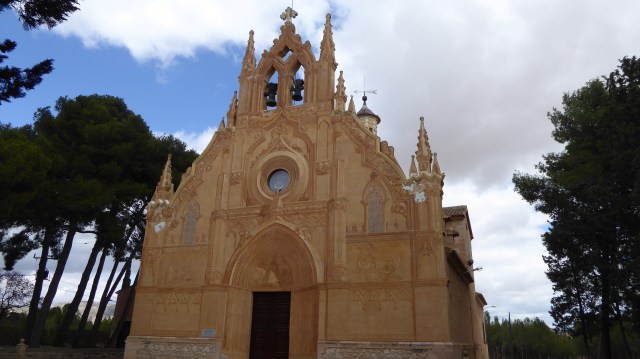
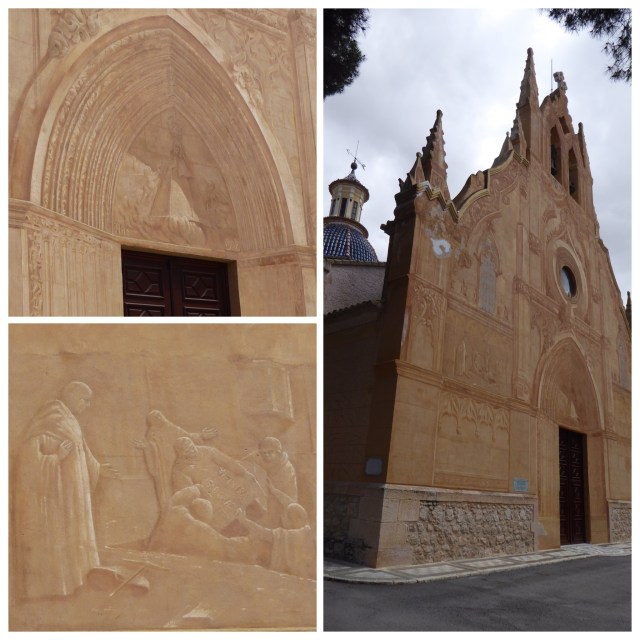
At the entrance to Caudete we find the Santuario de Nuestra Señora de Gracía. The facade appears carved of stone, but on closer inspection we discover it is entirely flat, all a trick of the eye, a clever trompe l’oeil. 

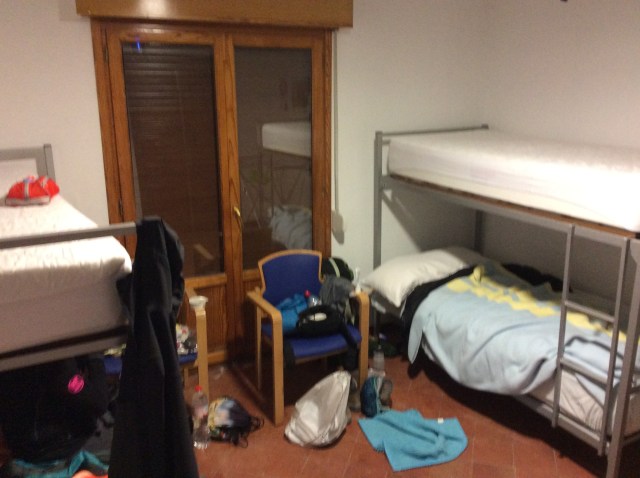
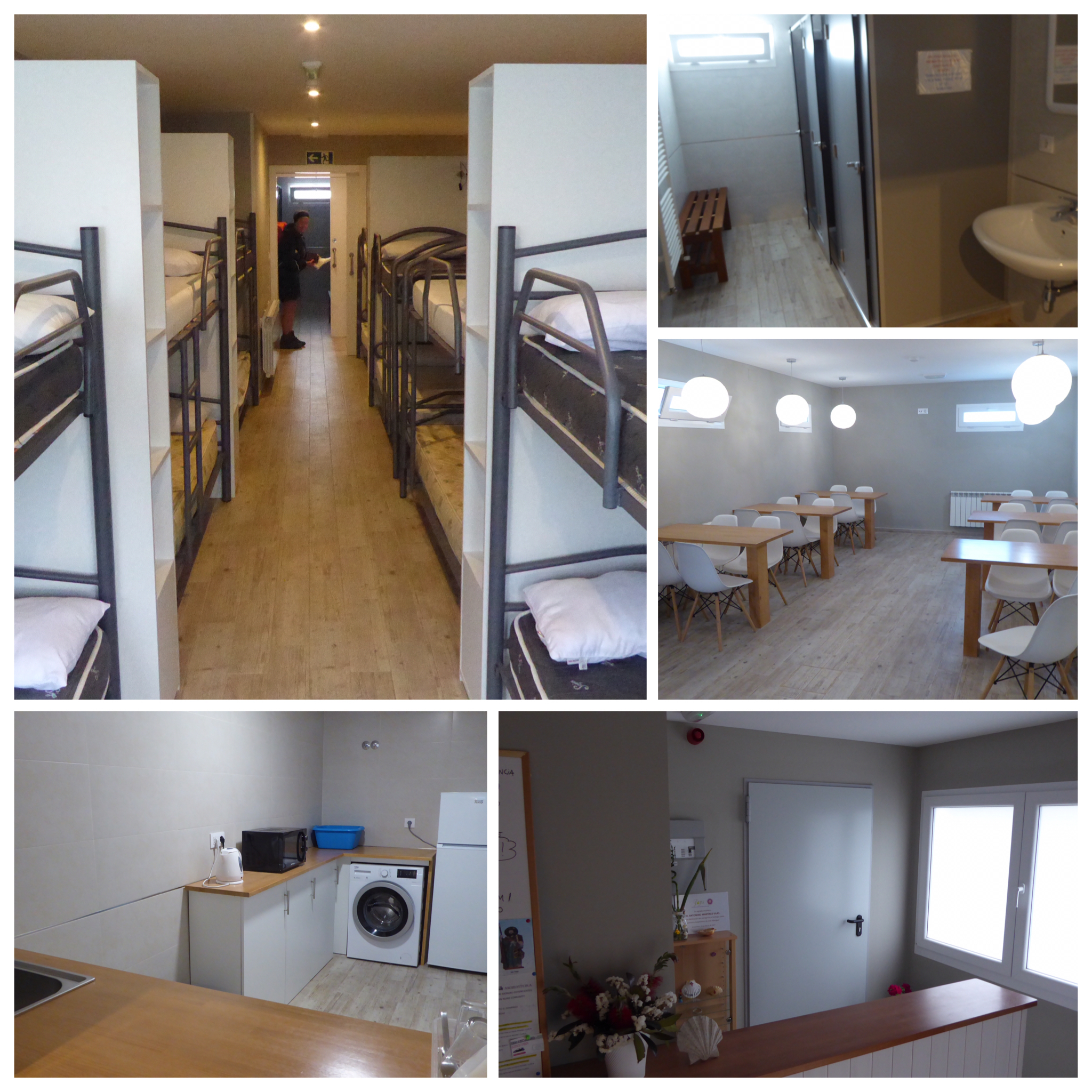
I contact Javier who runs the albergue at Caudete mid morning to warn him of our arrival, and he requests that we ring again when we reach town. The albergue is situated at the very top of town, adjacent to Santa Ana church. Ring Javier, ideally the day before arrival, 634307571. It is a stone building and on this cold day, it is, unsurprisingly, cold. But there is plentiful hot water, cooking facilities, two bunks and an overspill of a triple bunk in an adjacent room. Sheet, pillowcase and blankets are available. 5 euros.

The two spanish pilgrims that we met yesterday have also arrived at the albergue.

Posted in Camino de la Lana, Camino de Santiago de Compostela | Tagged , , , , , , , , | 8 Comments

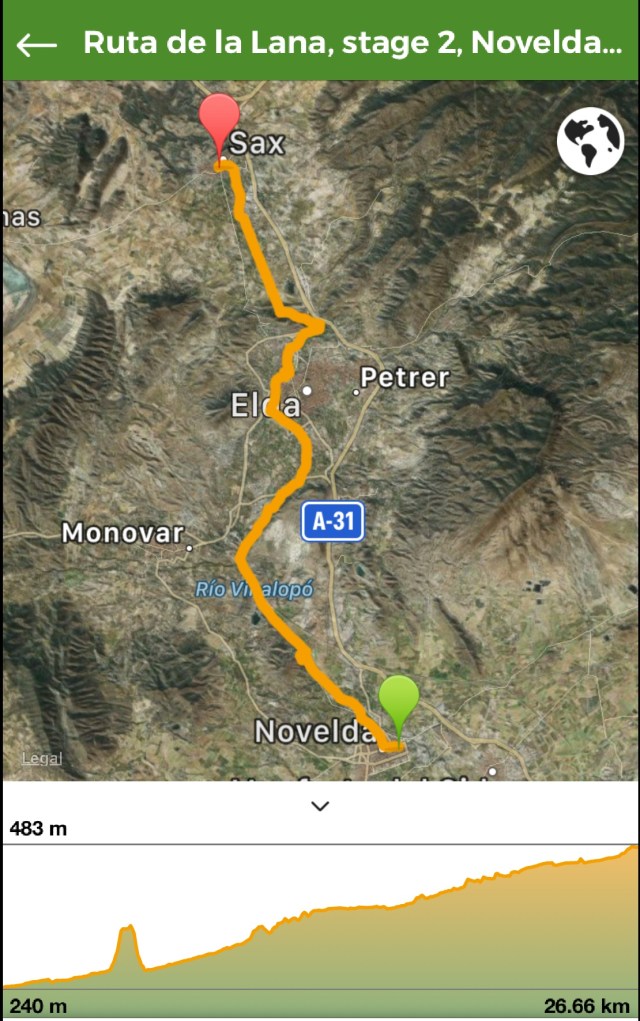
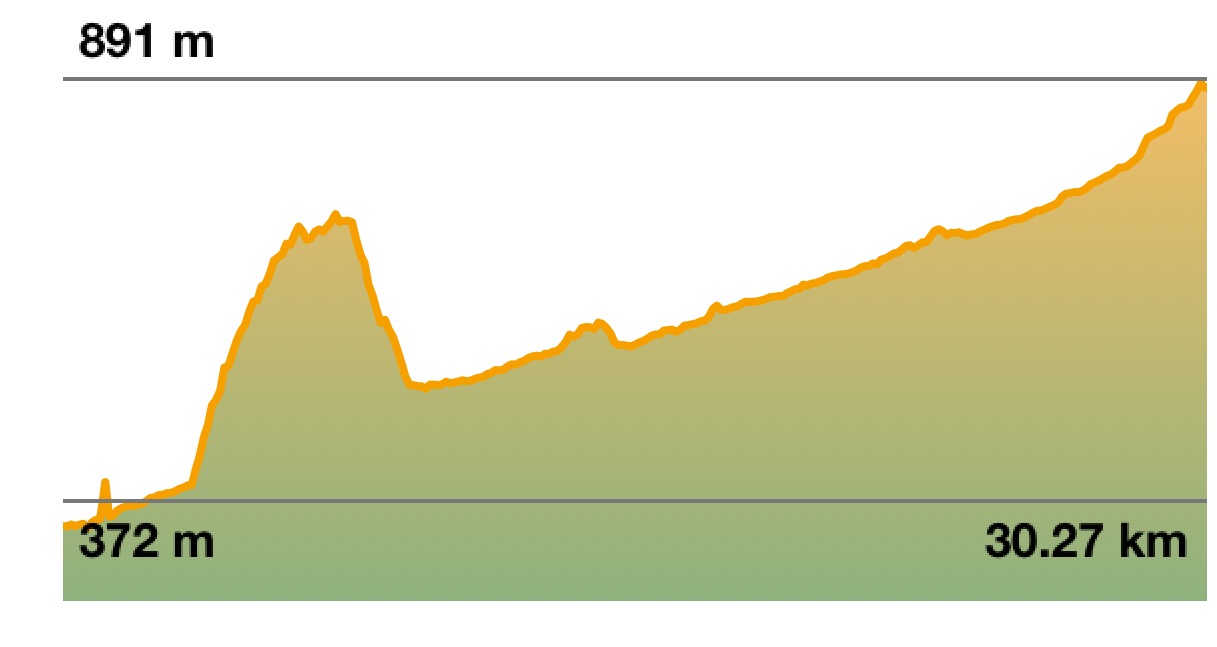
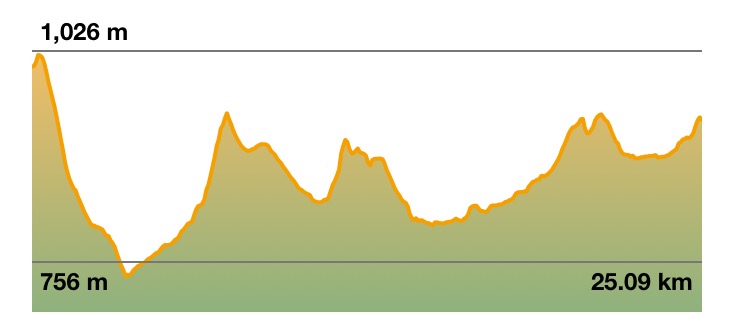
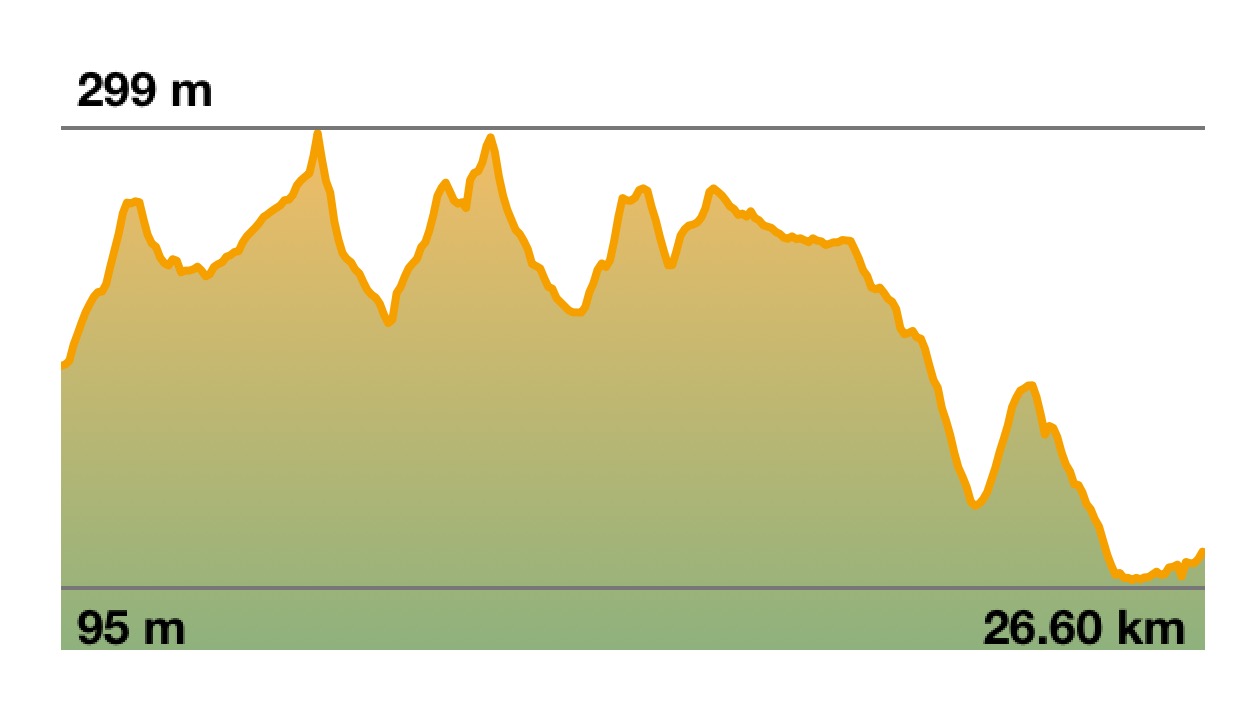
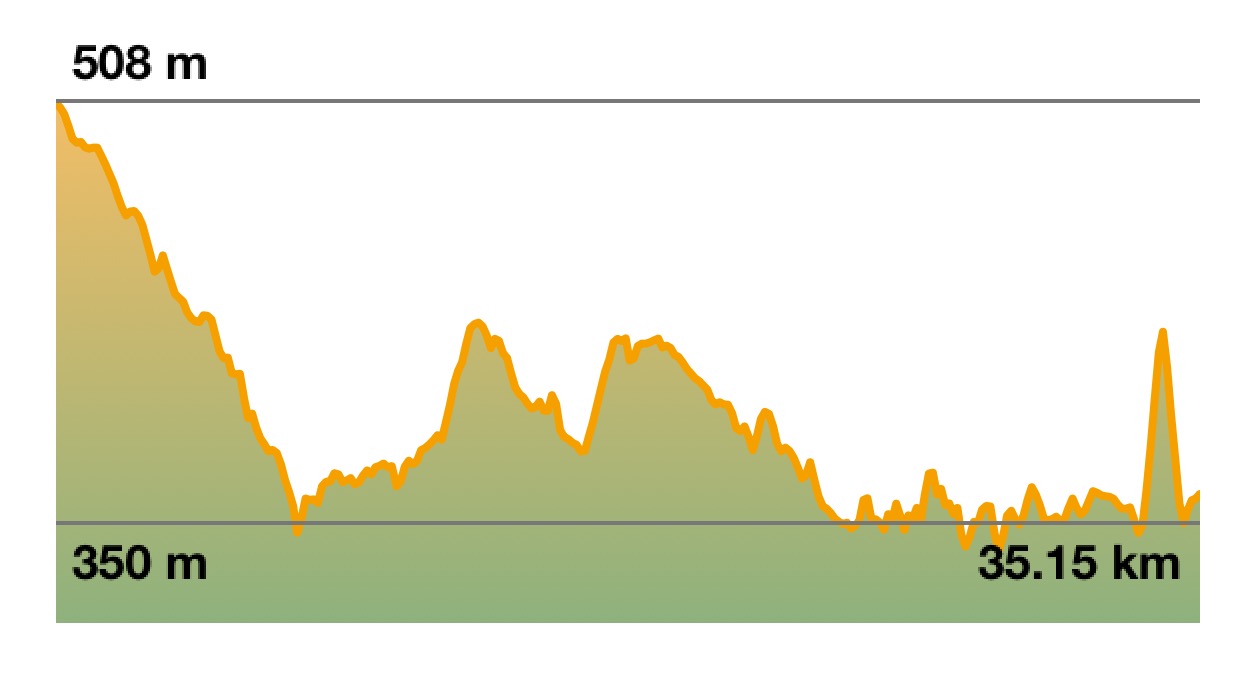
Ruta de la Lana, stage 2, Novelda to Sax, 26.5 km


Distance, 26.6 km
Elevation gain, 337 m
Elevation loss, 100 m

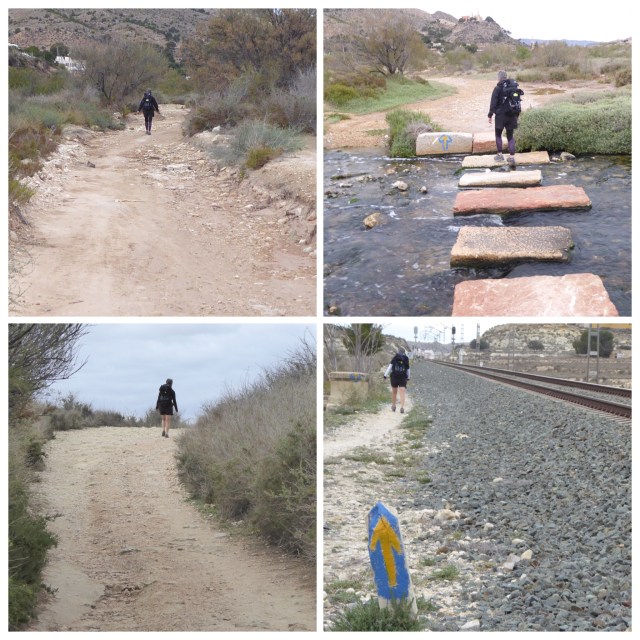
We leave Novelda at 07:30. It doesn’t take long to get out of the town and we are immediately on a riverside track. Not quite as idyllic as it sounds, the river was just a trickle and we passed by light industrial areas and close to a railway line, but it was a vast improvement on yesterday’s stage. 

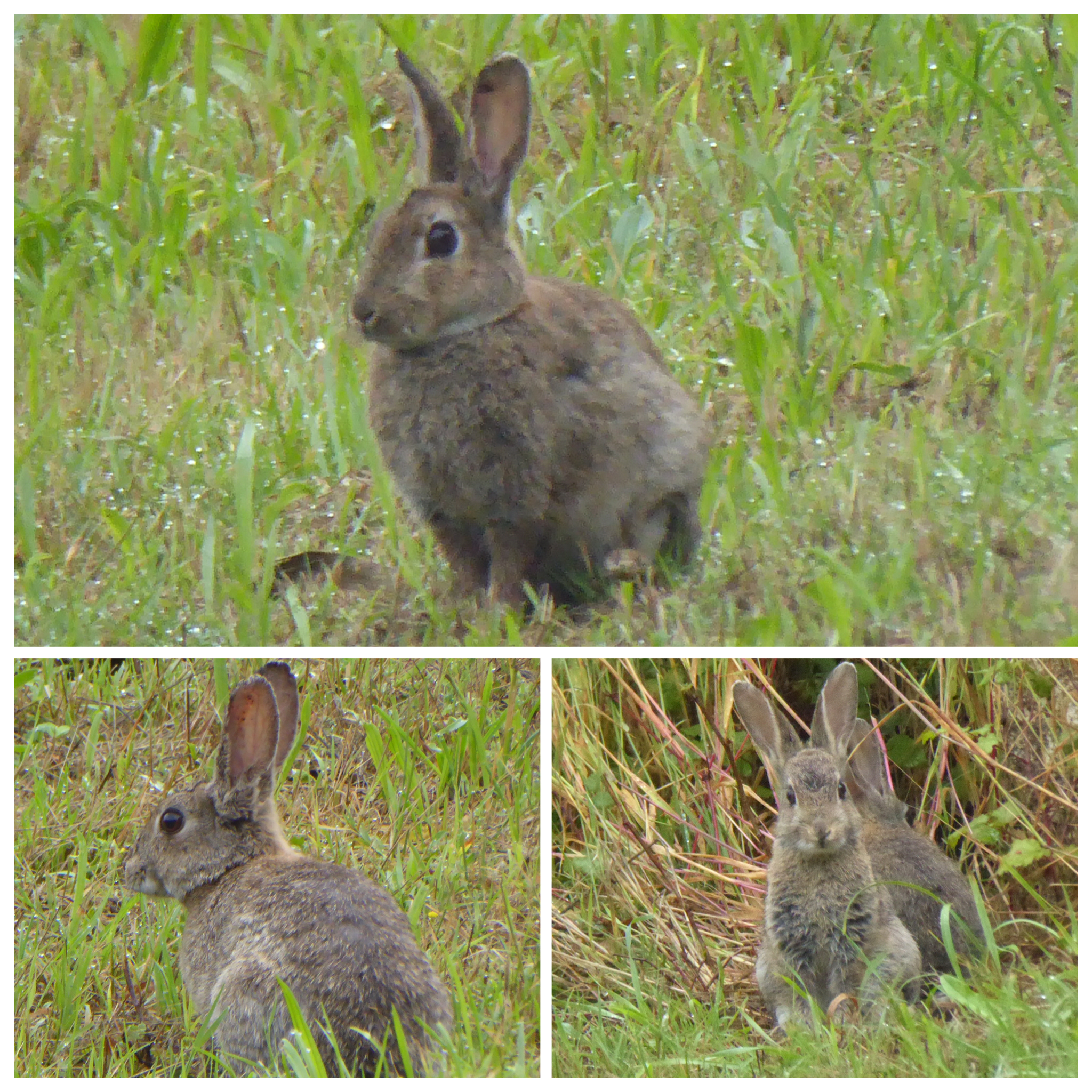
And soon the surroundings improve and we can hear birdsong and see lots of bunnies hopping across the track and all is well with my camino world.

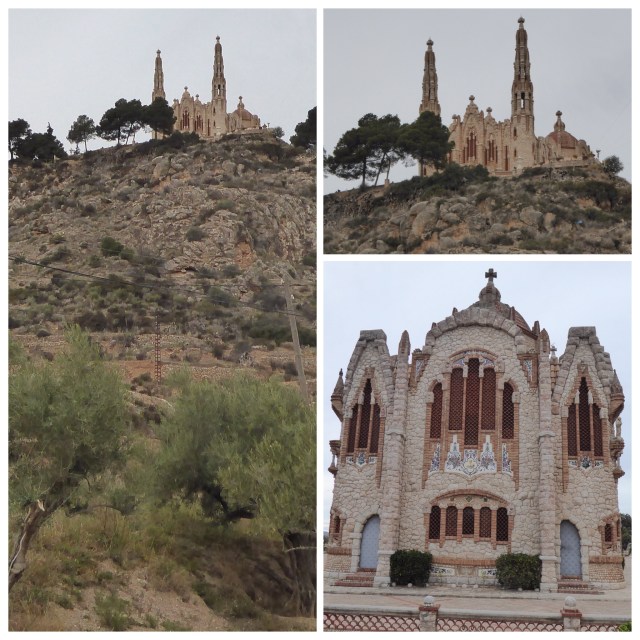
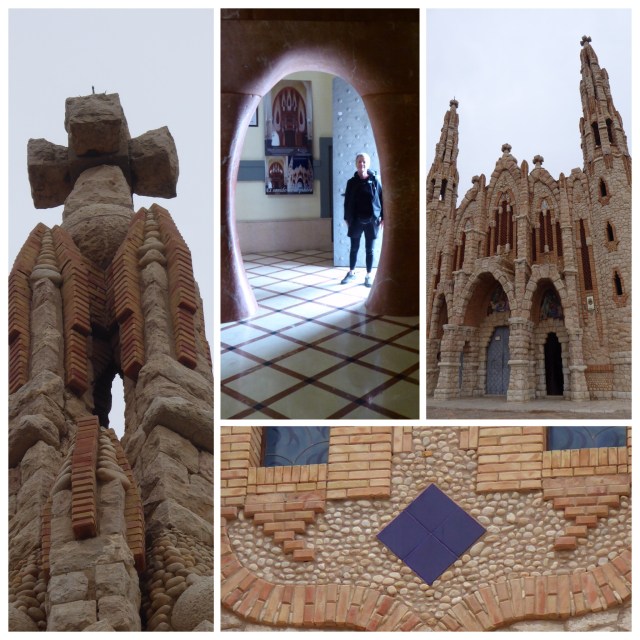
Immediately we leave town the outline of the Santuario de Santa María Magdalena  can be seen on the skyline. We have seen images of the church in tourist flyers and it looks very Gaudi-esque. It’s situated high on a hilltop. I don’t really understand why these places of worship are situated in such inaccessible places, but I guess they are meant to test the strength of faith.  As we got closer we realised that it wouldn’t be too much of a diversion to go take a look.  We found a route from the camino path to the road that lead to the sanctuario and then a winding track that climbed over rough ground to the church. I found a good hiding place at the bottom to leave my pack and set off unencumbered. 

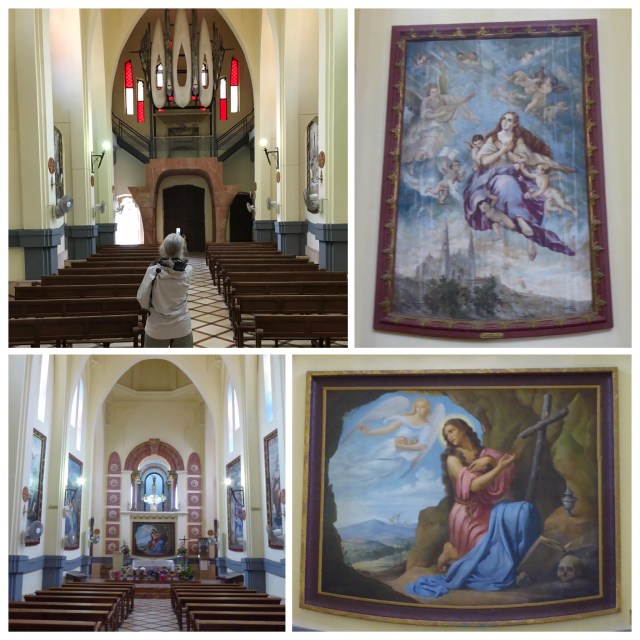
What a gem!  Built of local stone with pebble decorations and two soaring towers in the style of the Sagrada Familia. And to add to our delight we found it unexpectedly open. Inside were arches carved from marble, a marble organ, beautiful paintings and many colourful stained glass windows. It was well worth the effort 

The landscape here is very beige. Beige earth, beige slopes to the mountain ranges. There are many vineyards, some well established and some under construction. All planted with military precision and mostly enclosed in nylon netting – I’ve not seen that before. The vines are grown on long trunks about a metre or more off the ground. Señora in the bar where we are currently drinking a glass of wine tells me these grapes are for eating, not for wine. They are not a very attractive addition to the landscape but I expect that is the last thing on the farmers’ minds. There isn’t much other agriculture going on in this barren and arid area. A few almond orchards and the odd olive grove, but no cereal crops and no animals. 

My legs are a little stiff this morning and my movement isn’t very fluid. But I’m enjoying the stillness of the day – no wind and rather mild, but still cloudy. 

We are on this track for around 11 km and then take the road on the long approach to the town of Elda that we reach a few kms later and stop for a hot drink (hot chocolate made with soy milk for me) and tostada con tomate. 

Elda is another sprawling town with high rise apartment blocks and a very orderly promenade through the centre of town, but there are very few people around. A bit strange for mid-day. 

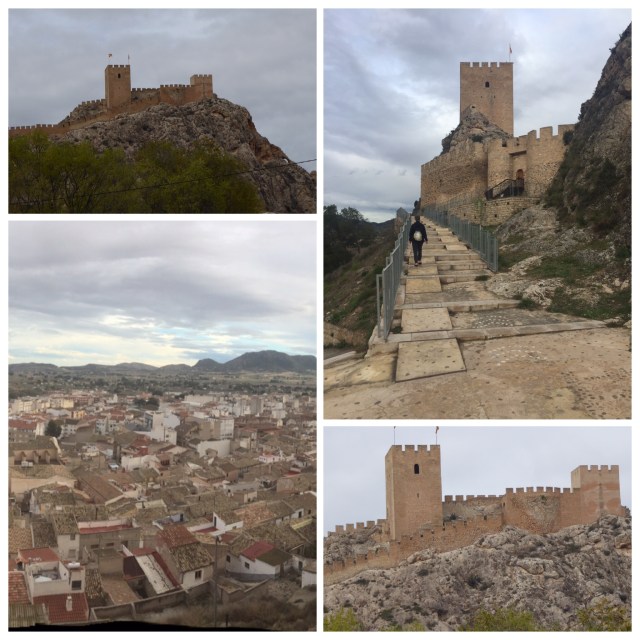
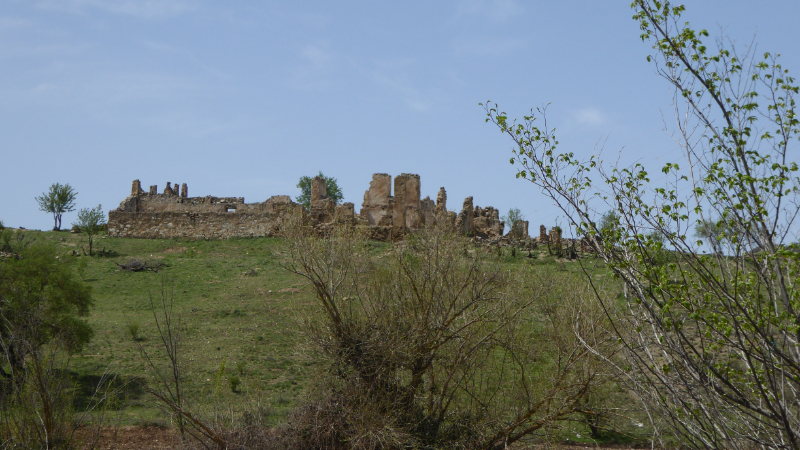
We leave town through a park alongside a dry river channel. We went a bit wrong when crossing the river. If you are planning to walk this route go over the bridge and immediately down on other side of channel.  We were off road until we reached our destination town of Sax, overlooked by a castle perched highon a cliff. 

There is no albergue in Sax. Paco recommended the hotel Fuente de la Cura at 25 euros each for a twin room. A lot above our desired budget. We tried the Hostal Los Almendros which my info quoted at 30 euros for a shared room. The place did not look very salubrious and is situated on the edge of town. We declined the host’s offer of a shared room for 40 euros, preferring to pay a bit more for a lot more comfort.  The host argued with me that his offer was far superior to the hotel – he got quite het up. I cut him off and we left.  As we were approaching the hotel this guy pulled up in his car and continued his argument. What?!  He must have been very desperate. The hotel is lovely and we are very pleased with our decision even if it means we can’t eat for a few days!

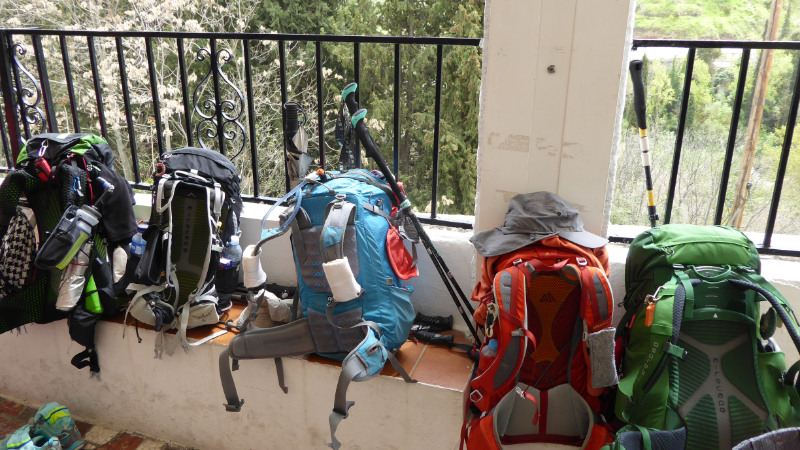
It started raining! How dare it. I quickly removed my our boots from the balcony, grabbed my shiny new umbrella and the rest is history. Climb to the castle cancelled, trip to the bar instigated!

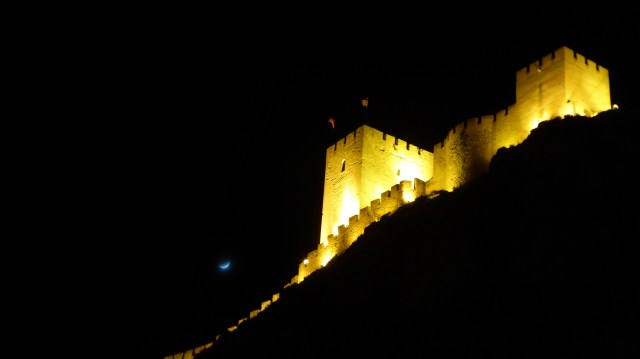
We did eventually climb up to the castle, and although it was locked, we were glad we had made the effort.

Posted in Camino de la Lana, Camino de Santiago de Compostela | Tagged , , , , , , , , | 7 Comments

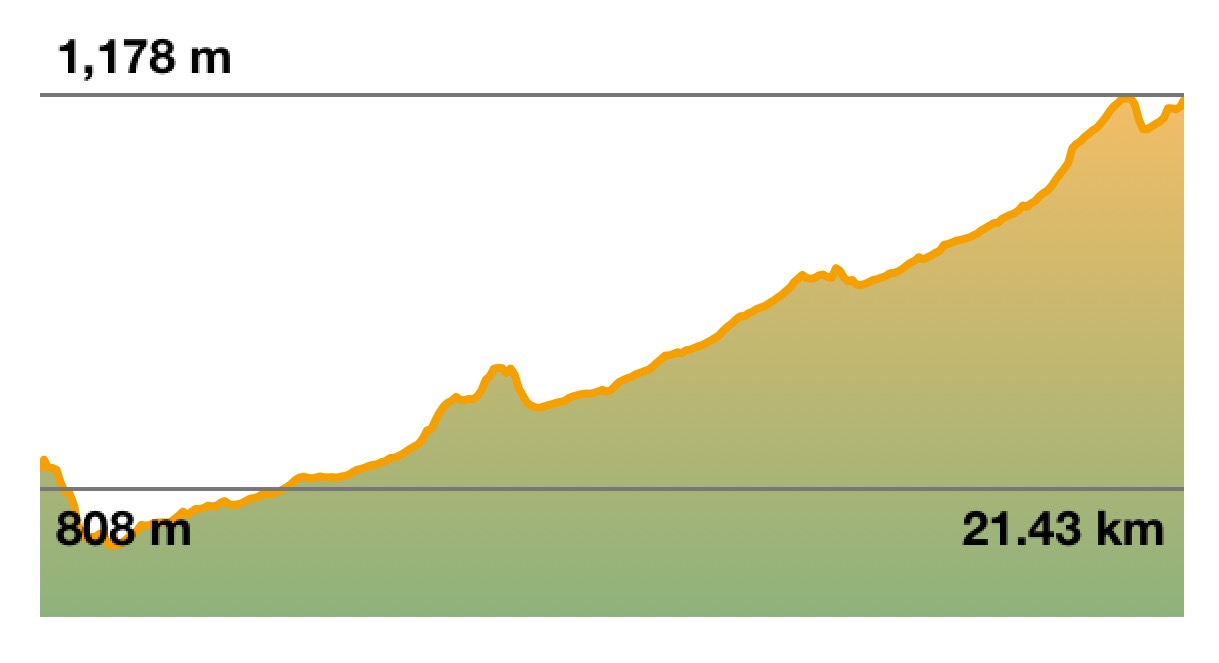
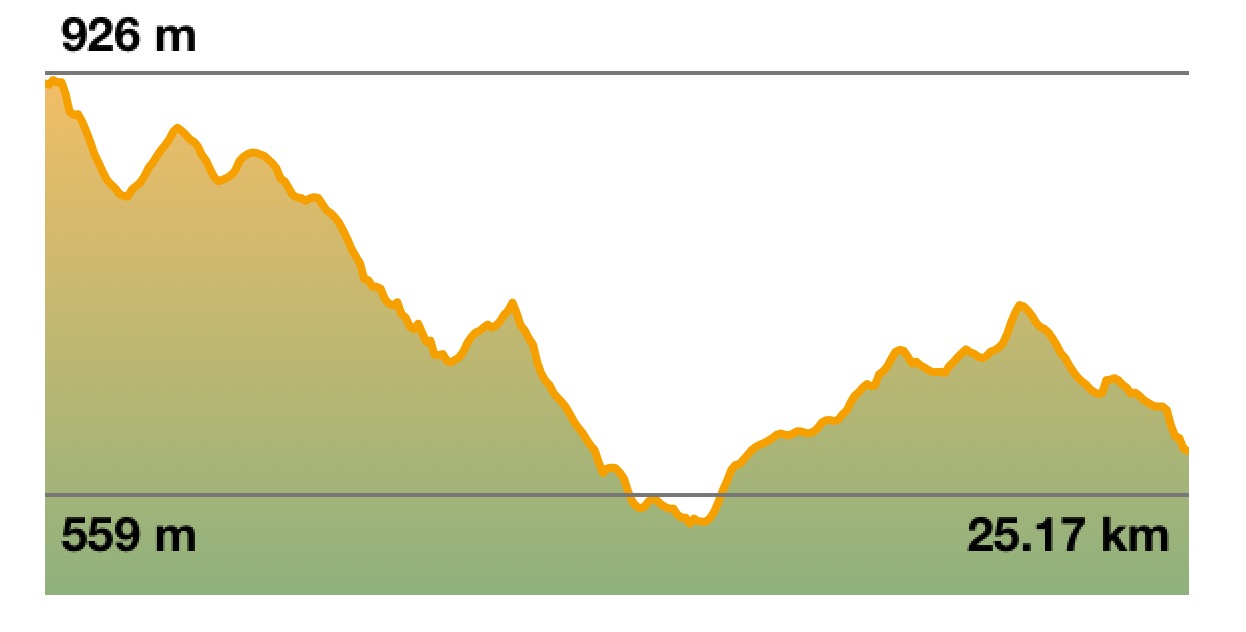
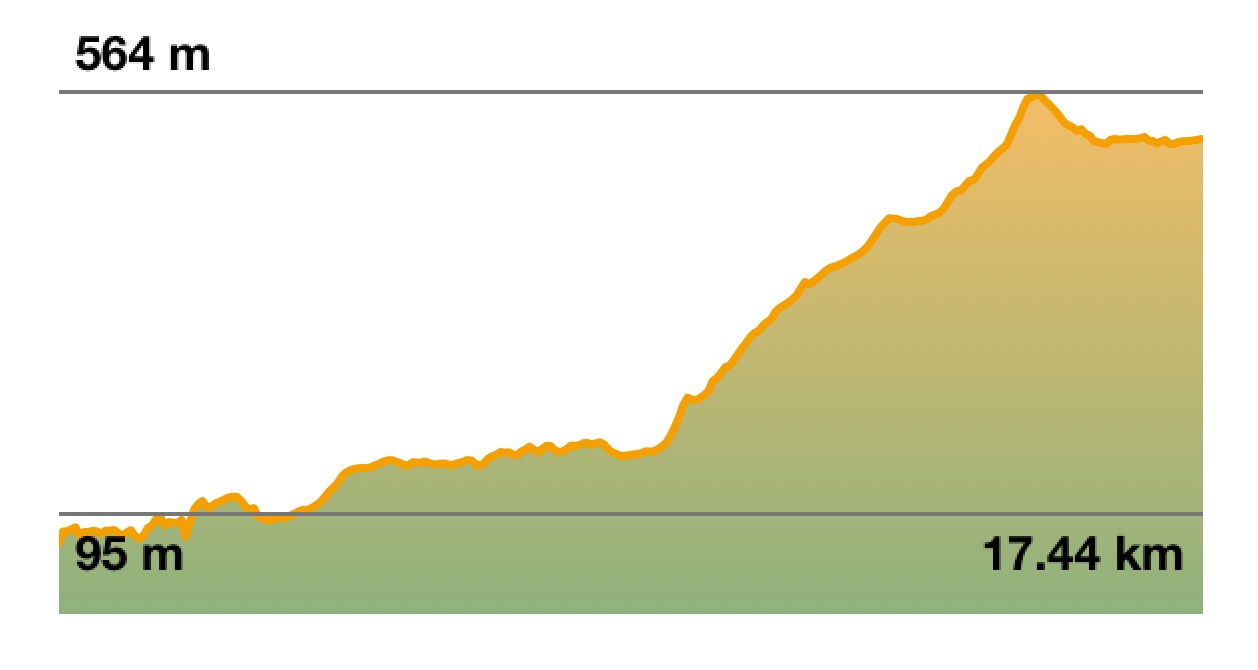
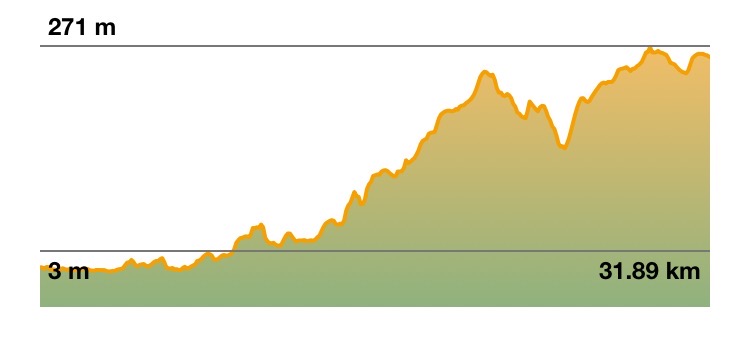
Ruta de la Lana, stage 1, Alicante to Novelda, 32 km

How annoying! I wrote my blog last night but couldn’t post it due to no signal in the apartment, and this morning there it was, gone.
So here goes again…


Distance, 32 km
Elevation gain, 463 m
Elevation loss, 279 m

As usual at the beginning of a camino, I forgot to turn on Wikiloc until we had walked a couple of kms.

The Ruta de la Lana commences at the Basílica de Santa María, the Church we visited yesterday to get our initial stamp in our credenciales. We returned to the church square later in the day for a glass of wine. So, having walked back and forth a couple of times, we didn’t feel the need to do it again this morning, so just started from our accommodation.

The walk out of Alicante was much the same as any other large city, endless streets of high rise buildings. The sky was a very threatening dark grey and there was a significant wind. All as predicted by the weather forecast.

After around 5 km we reached the edge of the city and entered a very dismal industrial area, which had been used at regular intervals for fly tipping and in the stregthening wind there was all sorts of rubbish whooshing around. The only highlight was a wild boar (could have been a pot bellied pig) roaming free in the streets looking for anything useful amongst the myriad of rubbish. She must have had some piglets waiting for her back at home as her teats we almost dragging on the ground.

Even when we got to the ‘countryside’ it was still very dingy with rubbish flying around in the high wind. We are walking on a quiet (on a Sunday morning) road with little or no shoulder for a few kms and it is not until 8-9 km that we step on our first track, but it is very stony and alongside a railway track and only serves to lead us to another road. The sun has finally broken through, but the wind is getting continually stronger.

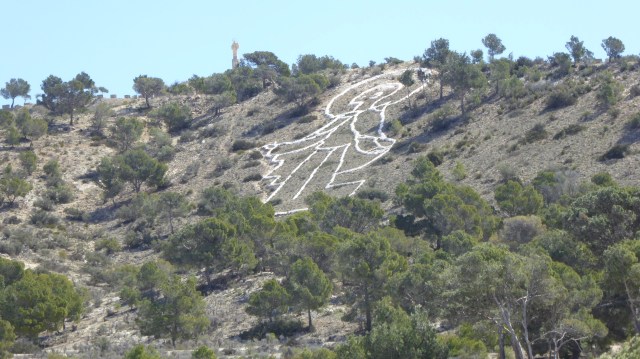
At around 18 km we are at last on an interesting track through scrubland and occasional stands of pine trees. High above us, atop a ridge, I see what is probably a chapel clinging onto the rock face. And then I make out a huge statue towering above us in the form of Rio de Janeiro’s Christ the Redeemer, but is apparently San Pascual. We come to an option to climb a bit higher to get up close and personal with the saint, but don’t find it too difficult to turn in the opposite direction and head instead downhill towards the first town on this stage – Orito at 24 km. On looking up to the statue from this angle I can see another giant form of San Pascual etched into the hillside.


We had planned to stop at Orito for the night, but we have heard good things about the albergue in Novelda and reckon we have another eight km in our legs, so after stopping for a beer, we continue the 4 km through Montfort del Cid, and the final 4 to Novelda where I phone the hospitalero (Paco Serra, ideally phone the day before on 629668829 or 965600842). Paco is a star and arrives on his bicycle within five minutes. The albergue is in an apartment block, three bedrooms each with two singles, two bathrooms, sitting room and fully functioning kitchen, central terrace with washing machine. Donativo. Thank you Paco and Novelda.

We wandered around the sprawling town, mostly newly built, but with some interesting older buildings and churches and a very pretty main square. Definitely worth the extra effort which also gives us a shorter day tomorrow.

Posted in Camino de Santiago de Compostela, Ruta de la Lana | Tagged , , , , , , , , | 18 Comments

Here we go again…

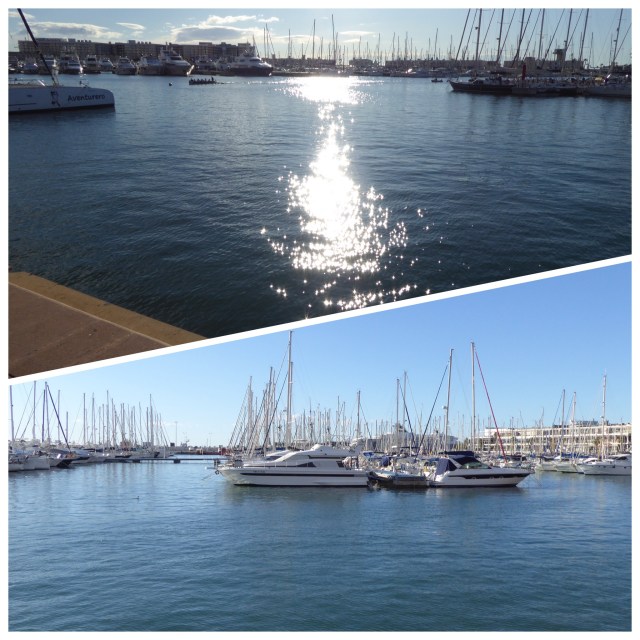
Camino number seven is about to commence. I’ve spent the last couple of days enjoying the company of friends, both walking and socialising, and yesterday I finalised my camino packing and we set off for Málaga.  Before my 01:30 bus departure, we visited the Van Gogh Alive experience – ‘a multi-sensory exhibition’ (very enjoyable – see this link) and ate supper at one of the many restaurants lining Málaga’s marina.  The 7.5 hour bus journey wasn’t  as grim as I had anticipated, with reclining seats and a good driver, I even managed a few hours’ sleep.

I arrived at Alicante bus station only a few minutes late at 09:00 and was welcomed by strong sunshine, blue sky and a beautiful sparkling sea.  During the walk to my accommodation I reacquainted myself with the unaccustomed weight of my pack.  I’m staying at The Market Hostal – 13 euros for a substantial lower bunk in a room for four, with good bathroom facilities and kitchen/sitting area.
My camino pal Nina, who you will remember from last year’s walk, had arrived from Denmark the previous evening but is staying in different accommodation.  We wasted no time in meeting up down by the beach and making our way to the Basílica de Santa María, the official starting point of the Ruta de la Lana. At the exact moment we arrived, the door was unlocked from the inside and we were invited in to have our credencials stamped.

The sun played hide and seek behind the clouds and it was alternately deliciously warm and rather chilly, but generally good weather for climbing the innumerable steps up to the Santa Bárbara castle. There are wide views of the city from on high, but my first visit to Alicante did not leave me in awe – there are a few lovely domed rooftops of churches, but largely the buildings are modern and ugly.

We spent most of the day together until I felt the need for a snooze to catch up on lost sleep and once settled I didn’t really fancy going out again so have bunkered down to write this and hopefully have a good night’s sleep.

There were heavy showers here yesterday and today and I am hoping that the forecast is correct for our first day’s walk tomorrow, with dry, but cloudy weather. It’s just a pity that there is a promise of strong winds – definitely not my favourite walking conditions.

Posted in Camino de la Lana, Camino de Santiago de Compostela | Tagged , , , , , , , | 23 Comments

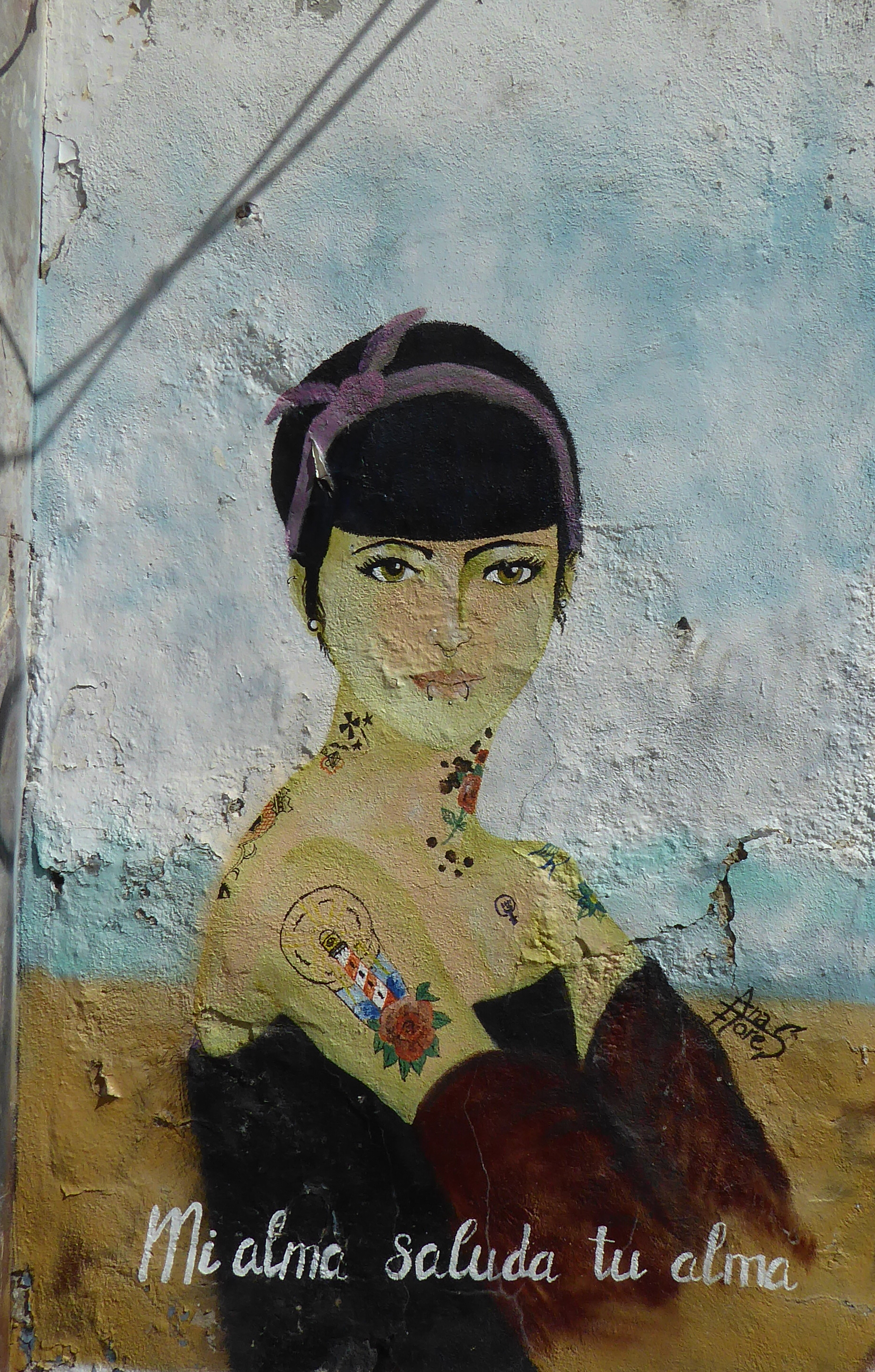
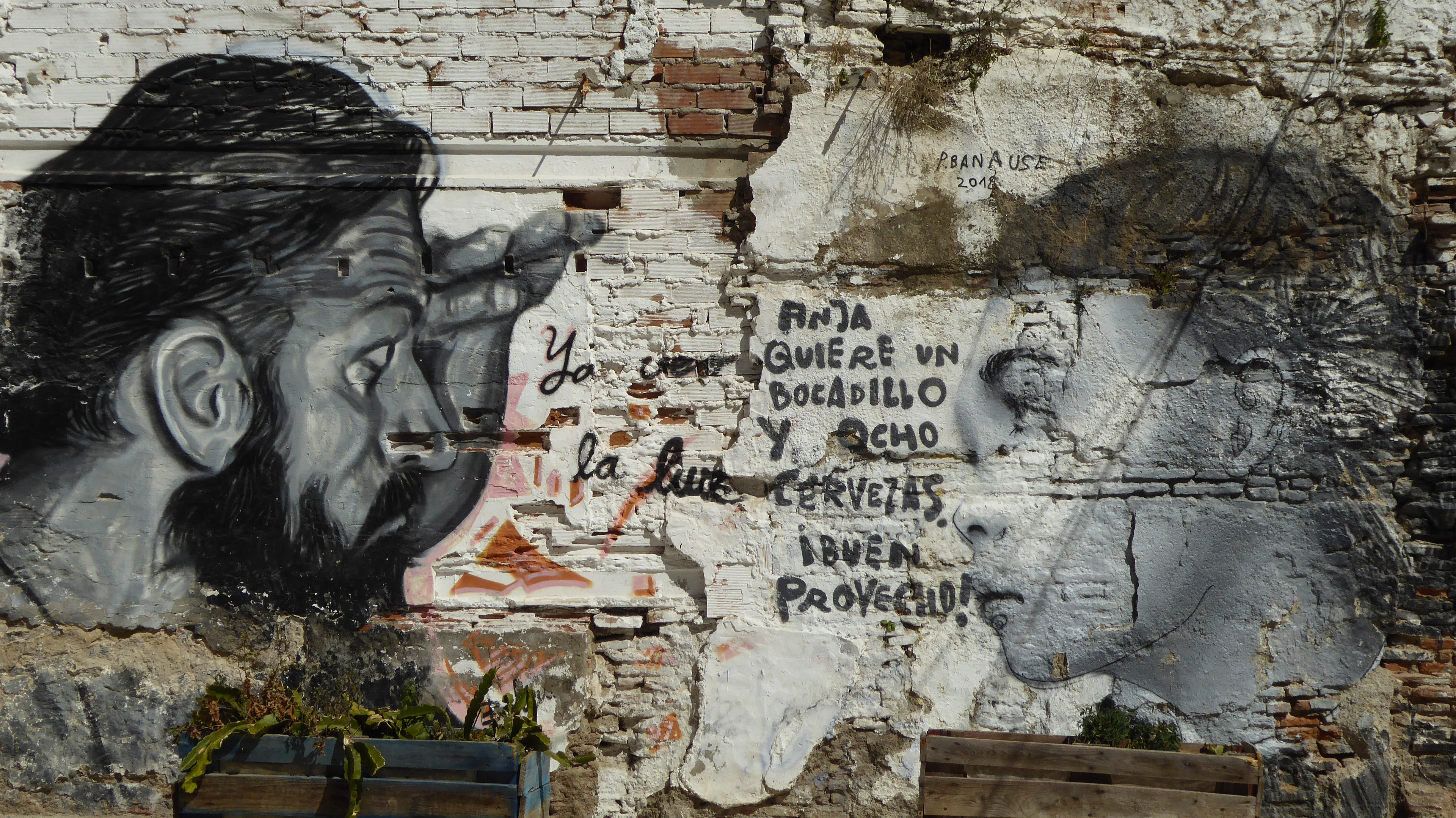
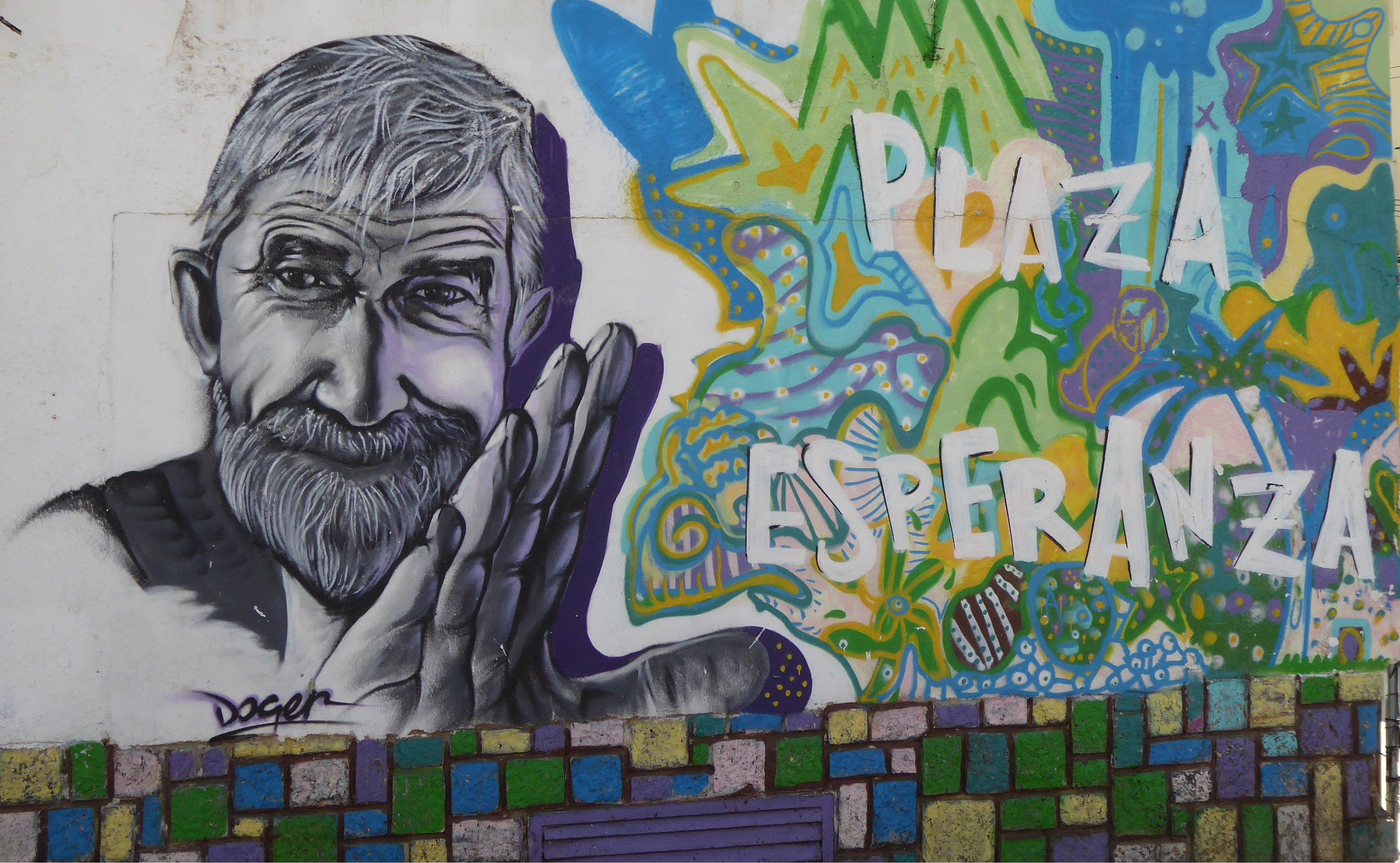
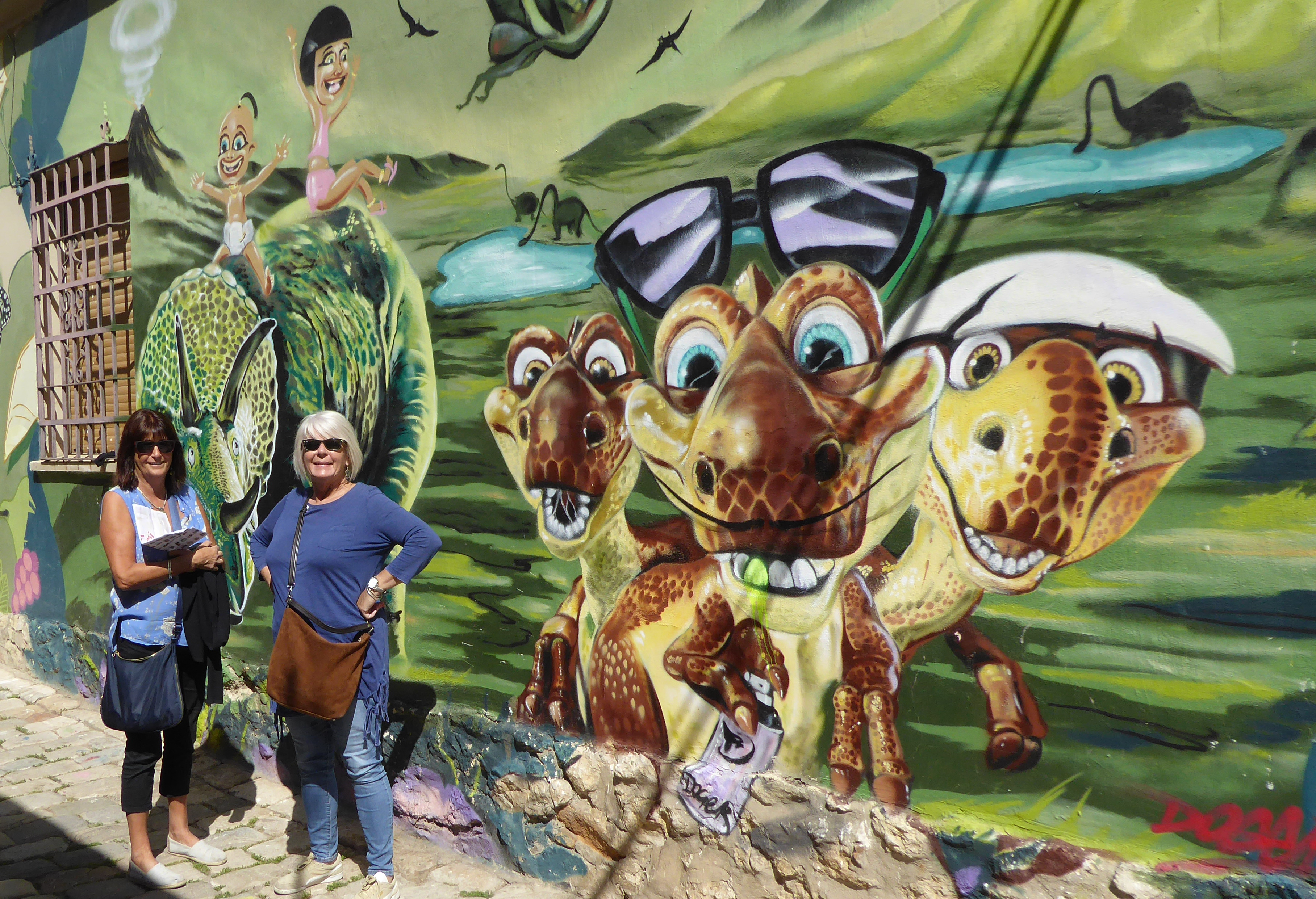
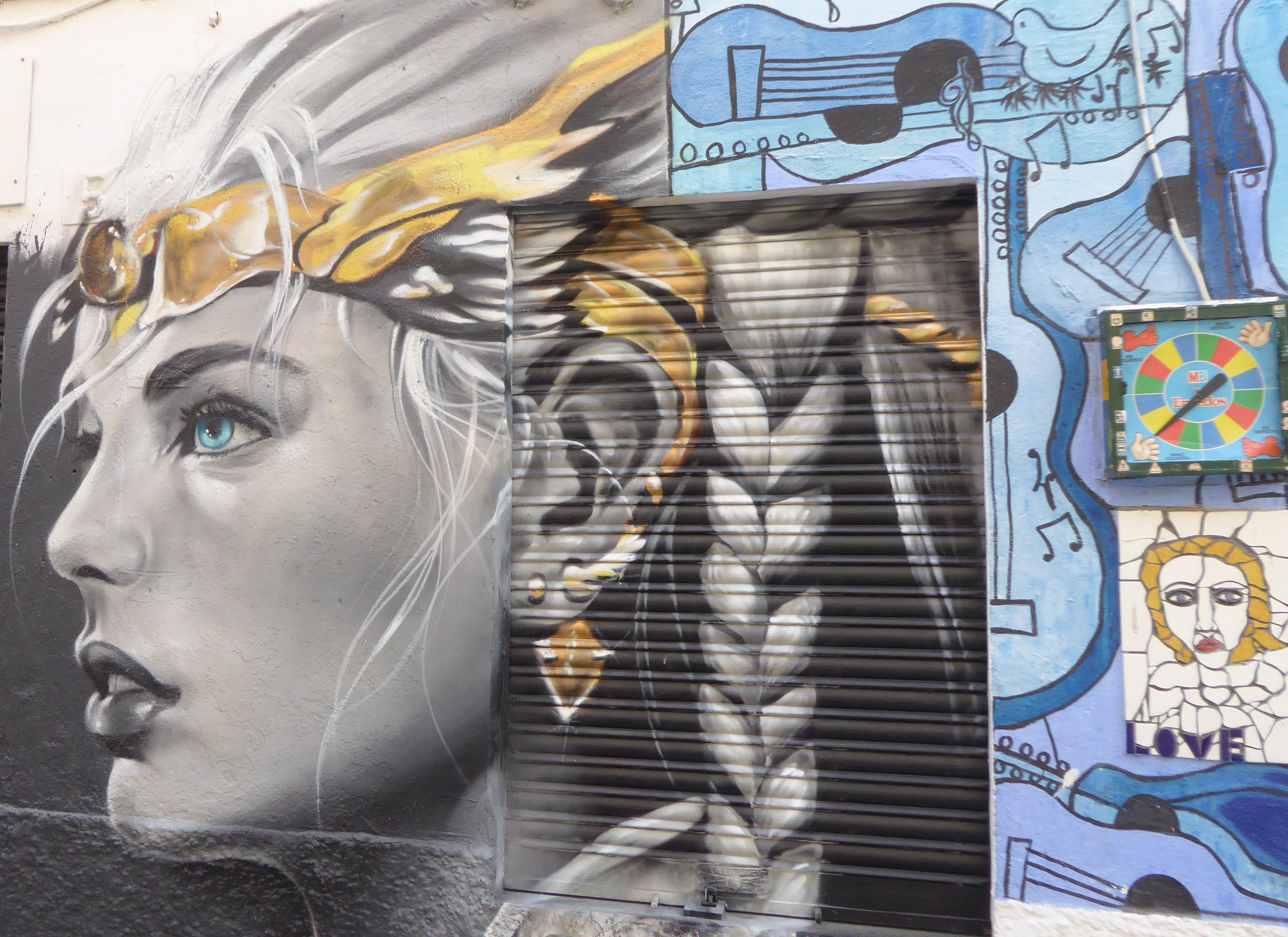
Málaga Street Art

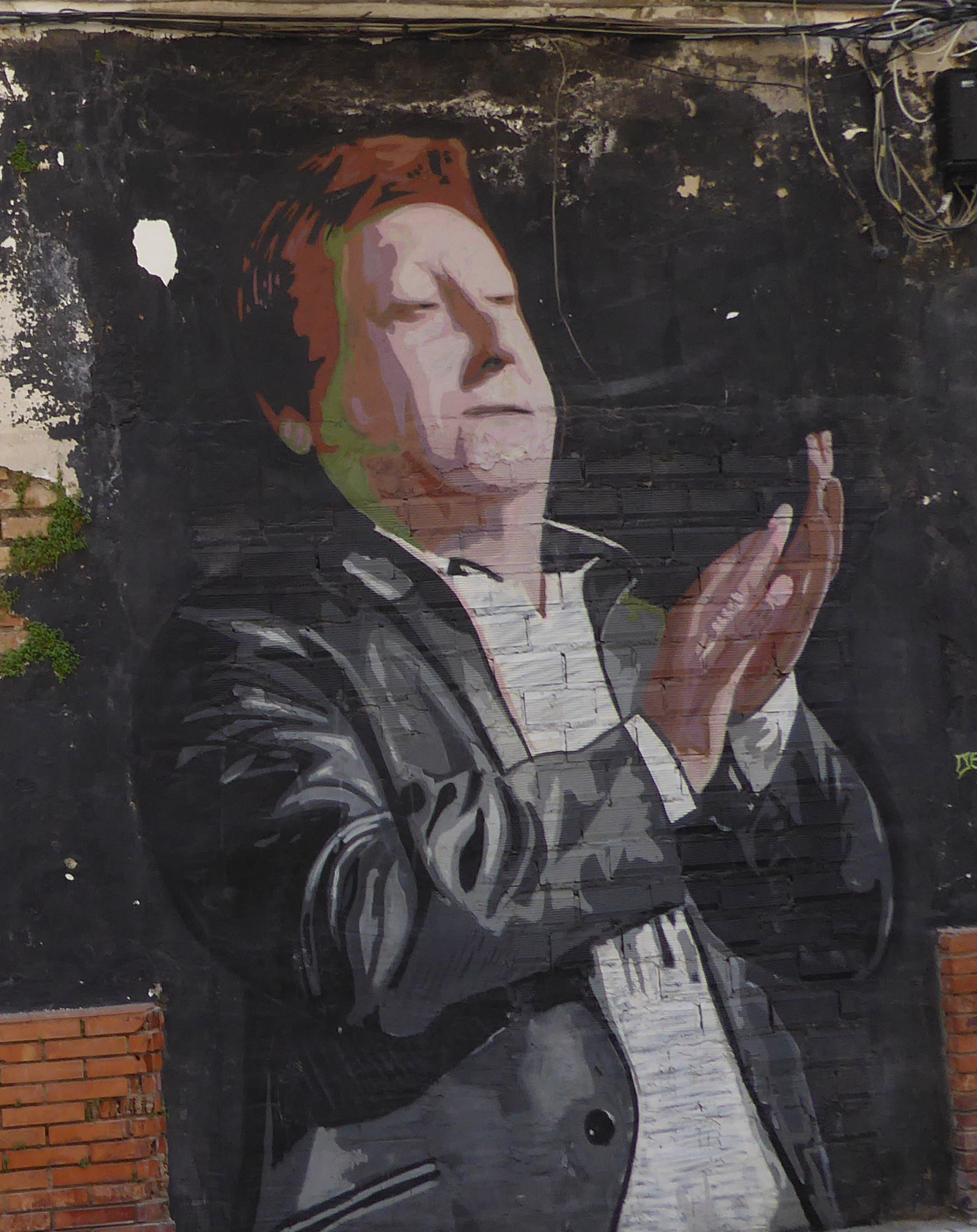
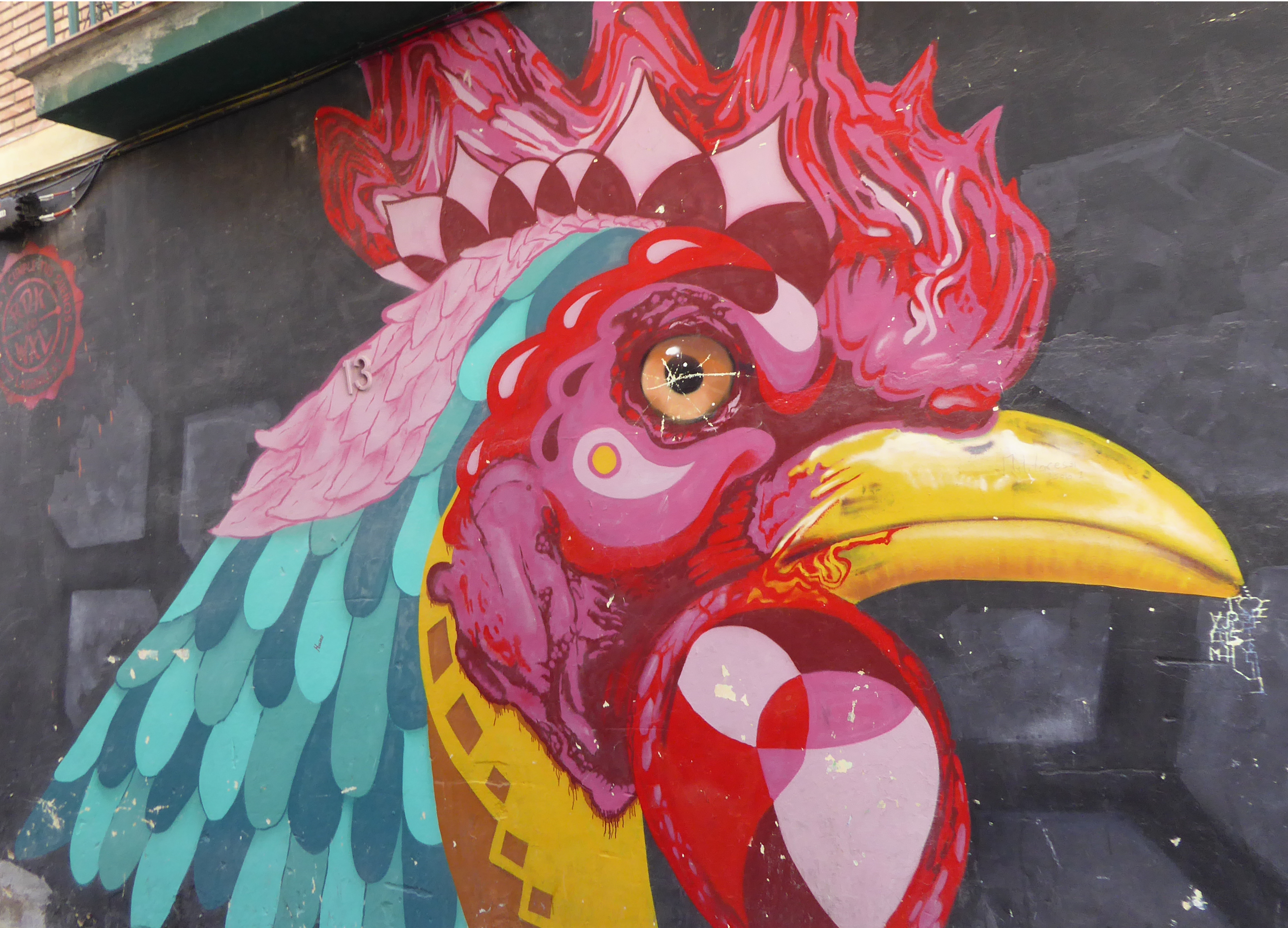
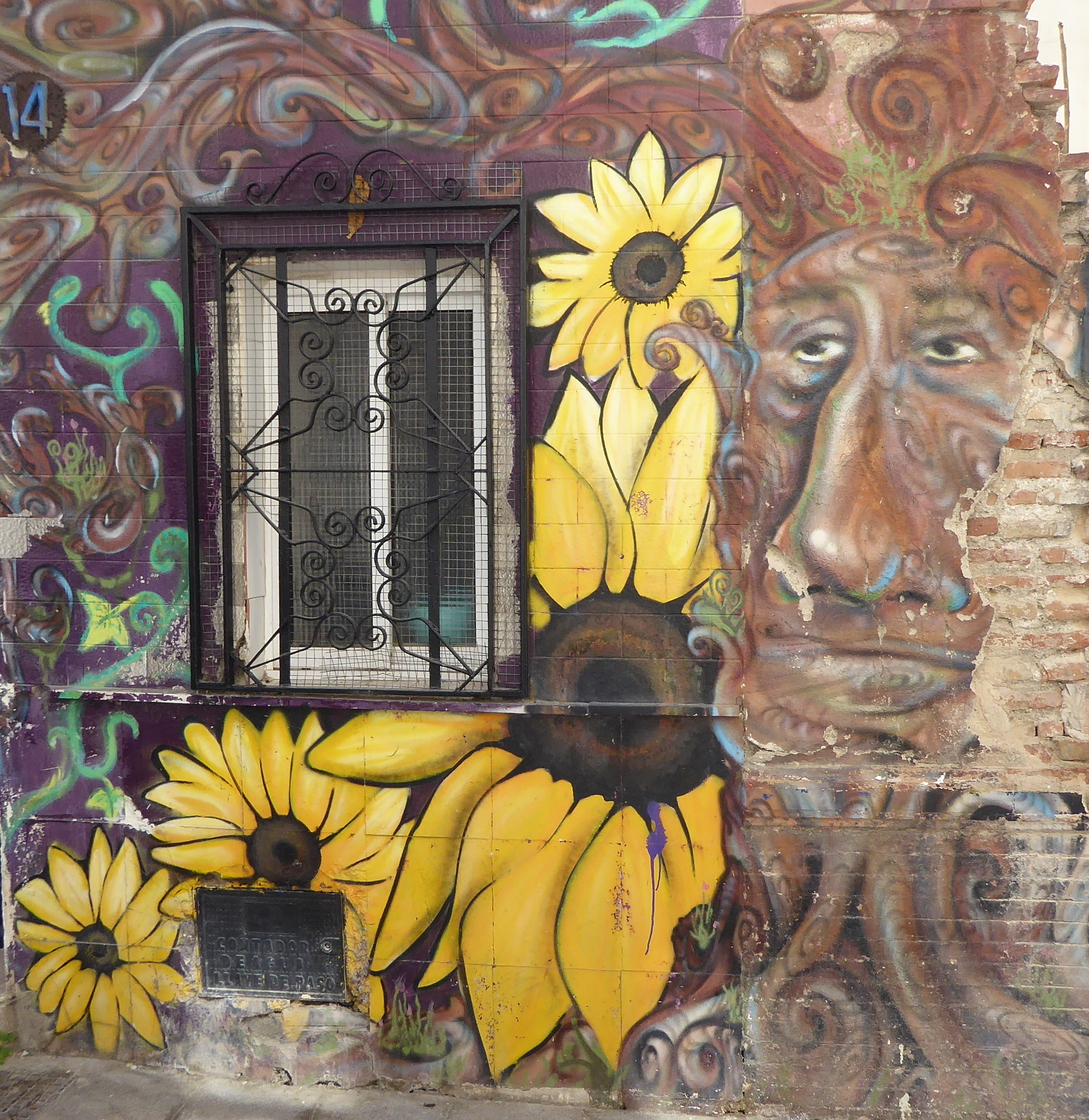
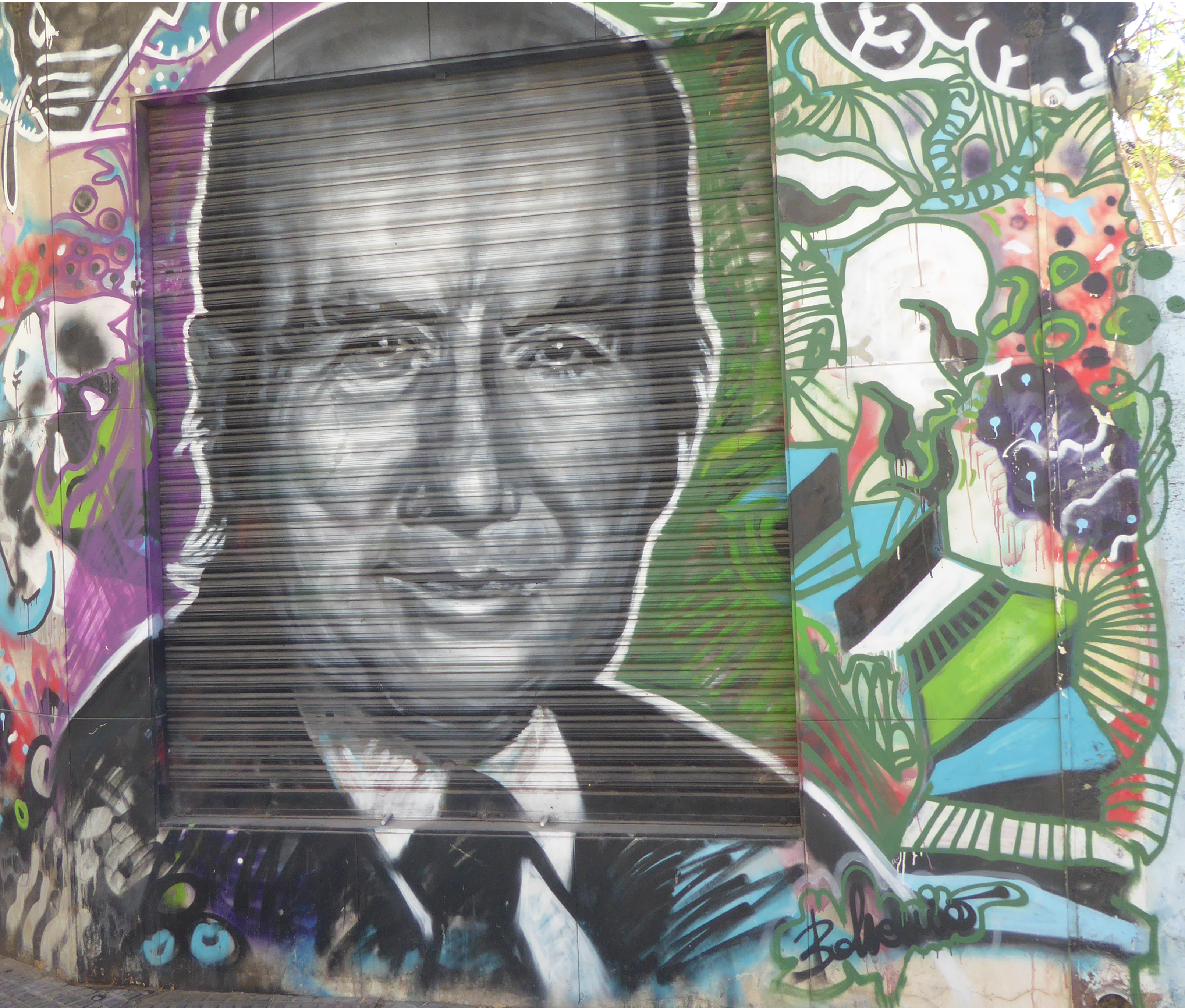
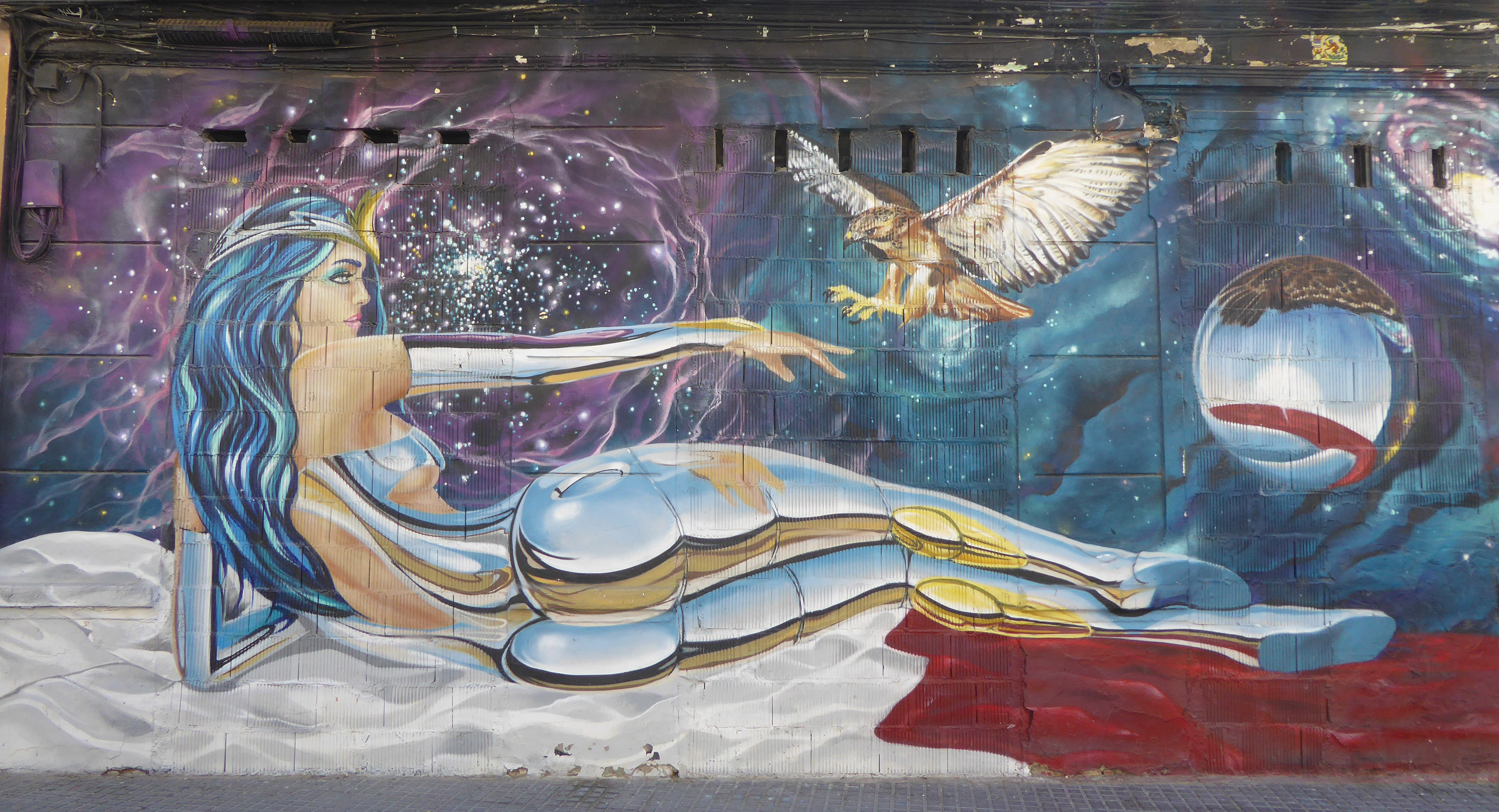
I took a trip to Málaga today with a couple of friends.  One drove, the other guided us and I took the photos.  The area known as Lagunillas is absolutely full of street art.  (The area known as Soho also abounds with street art, but of the commissioned kind.)  If interested, you can read about it here.  And if not, I hope you will enjoy the photos that follow…

Posted in A view of life | Tagged , | 12 Comments

2019 Camino

The countdown has started!  One month from today I will step out on my seventh camino.  Or I should say, on the first of a trio of caminos.  

Camino 1 – Ruta de la Lana (the wool route) (27 stages, approximately 680 km)) which starts in Alicante (there is an alternative start point in Valencia).  This camino heads north (and slightly west) to Burgos, passing mid-way through Cuenca, which is a city I have long wanted to visit and was probably the reason why I chose this camino.  Alicante is also the starting point for the Camino Sureste.  Of course the end point, at Burgos, is on the Camino Frances (the most popular and most walked camino route) which I try to avoid due to my preference for solitary walks.  So at this juncture I will hop on a bus to…

Camino 2 – Olvidado (forgotten way, 196 km).  This camino starts in Bilbao and winds through various mountain ranges to Ponferrada (also on the Camino Frances).  I will be joining the Olvidado just after the half way point at Cistierna where there will be ten stages to reach the end.  Conveniently, this camino ends where another starts…

Camino 3 – Invierno (winter route, 265 km). Starting from Ponferrada it is the route that in ancient days was recommended in the months when there might be snow on high ground. The route dips below the Camino Frances and near its end joins with the Camino Sanabrés for the last couple of days into Santiago. Another ten or 11 stages.

If I complete these caminos according to my plan (and we all know what can happen to ‘best laid plans’!) I may have time to walk a fourth camino (Fisterra) and so have the satisfaction once again of walking from coast to coast.

The map I have used for this little animation is available as a poster from the Wise Pilgrim website.

Very sadly, my dearest camino pal Marilyn cannot join us this year, but I am delighted that Nina, who I first met on camino last year, and with whom I have visited in Denmark in the interim, will be making up 50% of Team Lana (or Lala, as we have christened it!).

Marilyn, we will miss your smiling face so much. But there will be other adventures to share.

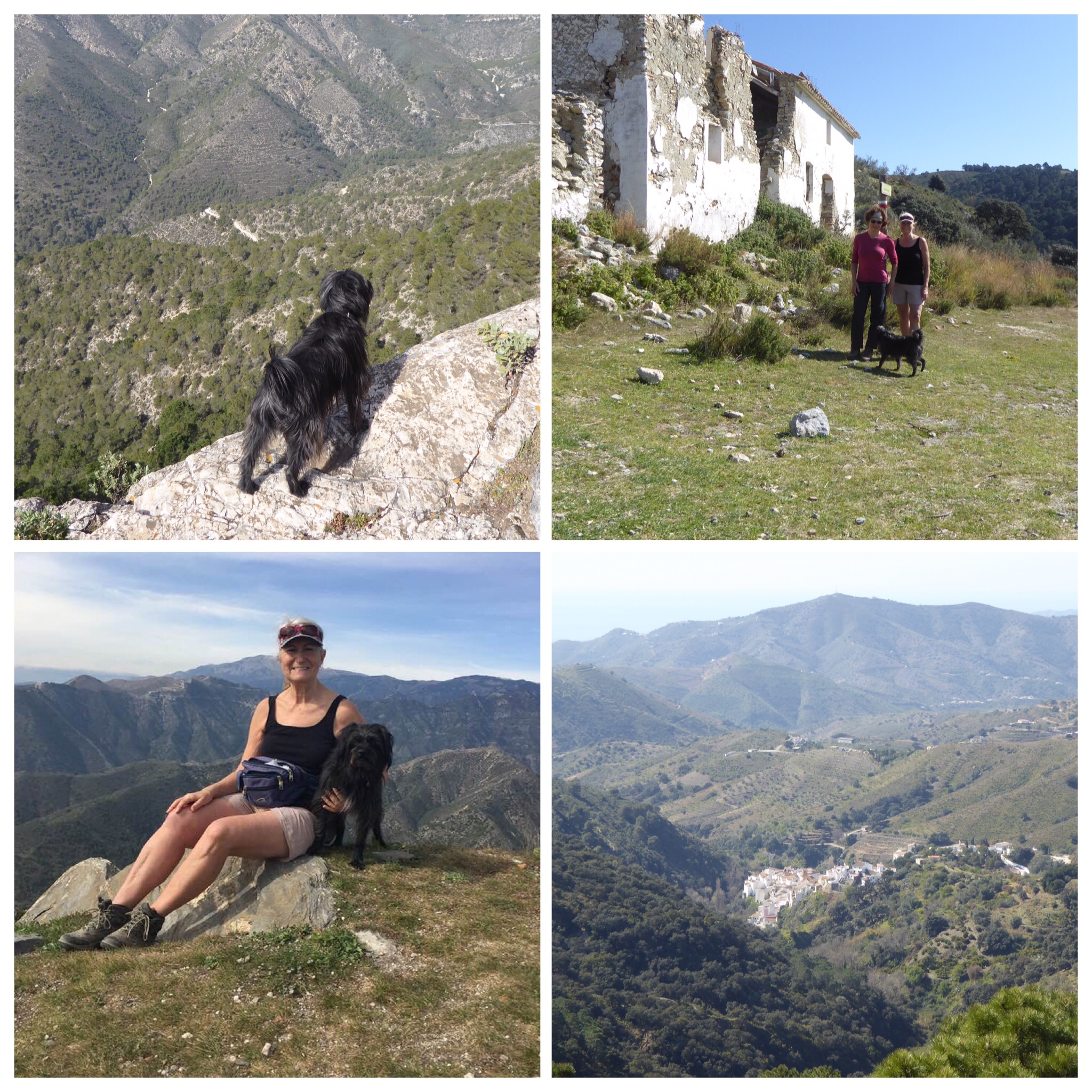
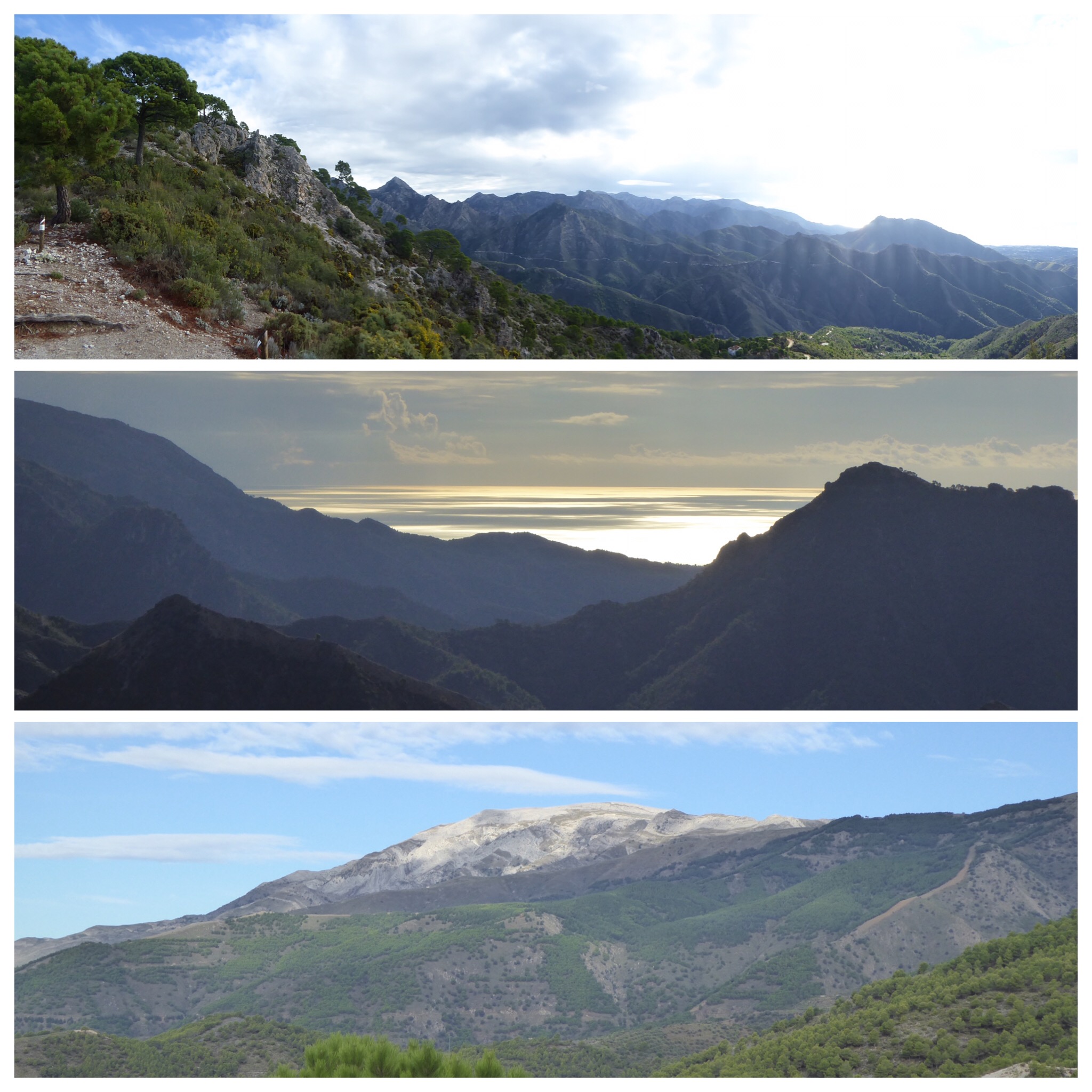
I have been making the most of the fabulous Andalucian weather over the last  couple of months and have taken many long walks in the mountains hereabouts, under blue skies and warm sunshine.  Sometimes alone (without human company that is, I always have my chum Roly by my side) and sometimes with dear friends, but always with an appreciation that I am able to do it and a determination to make the most of my good health whilst I am lucky enough to have it.

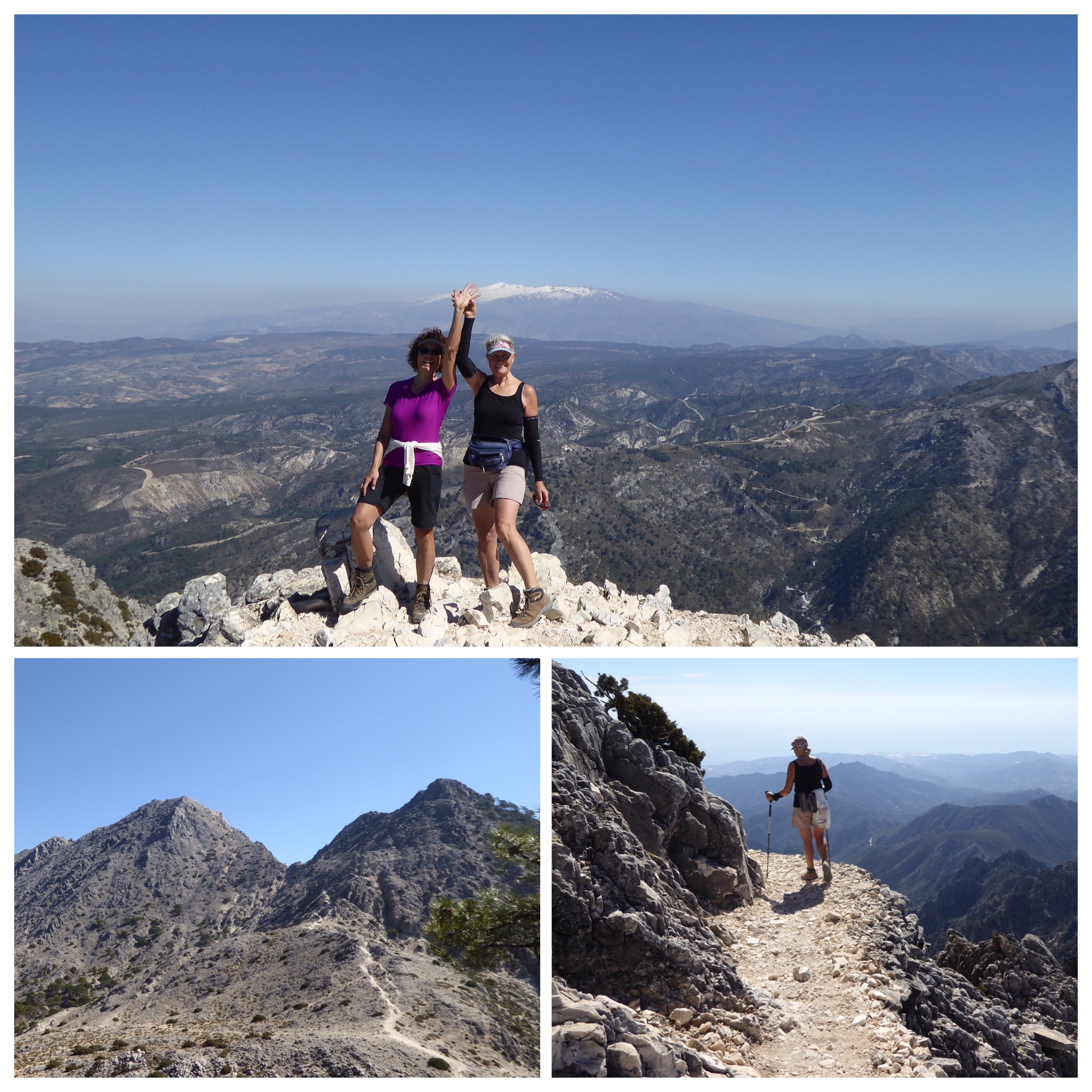
From the summit of Cerro Lucero in the Almijara mountain range with the snow topped Sierra Nevadas in the background

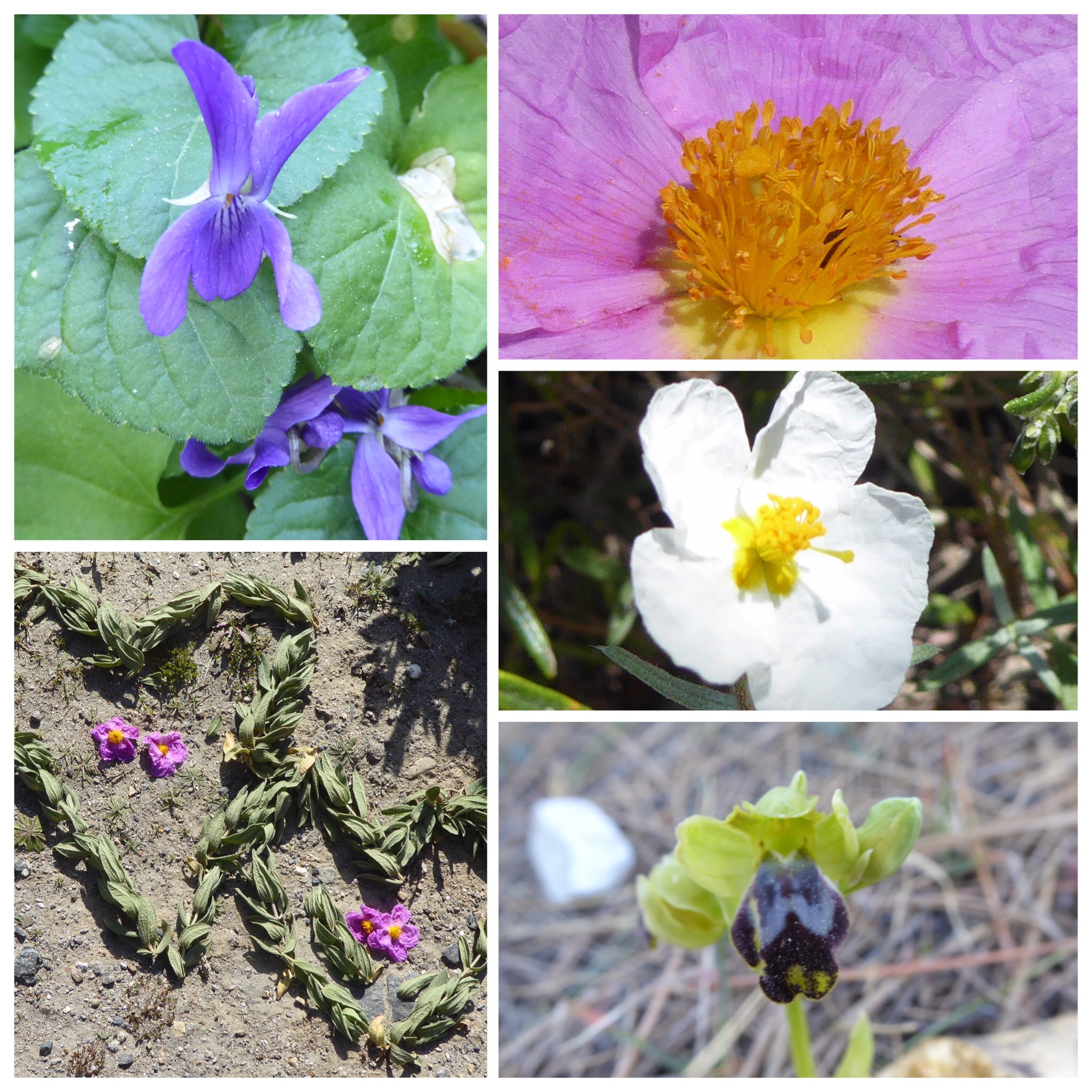
Early spring flowers. The hearts were spotted on a track on St Valentine’s day – how sweet!


Having made plans on paper, and going some way to getting walking-fit, I still need to round up my gear and check that I have all I need and that it is in good order.  There won’t be many changes from last year.  Perhaps a new fleece and shoes for the evenings.  I’ve treated my rain jacket with a waterproofer, had my boots repaired, replaced the broken tip on my pacerpoles and sprayed my bedding with permethrin.

So, let the countdown begin – 31…

and I’ve just been told by the kind folks at Google that 7 April is World Health Day – an auspicious date to begin 50-ish consecutive days of exercise!


Posted in Ruta de la Lana | Tagged , , , , , , , , , , | 41 Comments

Keeping stress at bay

Happily I live a fairly stress-free life. I do worry about the mess the UK is in at the moment, and other alarming political trends. And then of course there’s the state of the environment and the worry of what conditions we are leaving for future generations. I try to do my bit towards making amends to the planet, but am all too aware that perhaps I could/should do more.

However, the camino is something that I don’t stress about. I am an old hand – I know what works for me and what doesn’t, and many of the items I purchased for my first camino will still serve me on my forthcoming seventh. However, there is one item that I have to renew each year and it does cause some stress. I HATE buying new walking boots. Not only the horrible expense but more so the lottery that the boots, which seemed a perfect fit in the shop, might turn out to be instruments of torture!

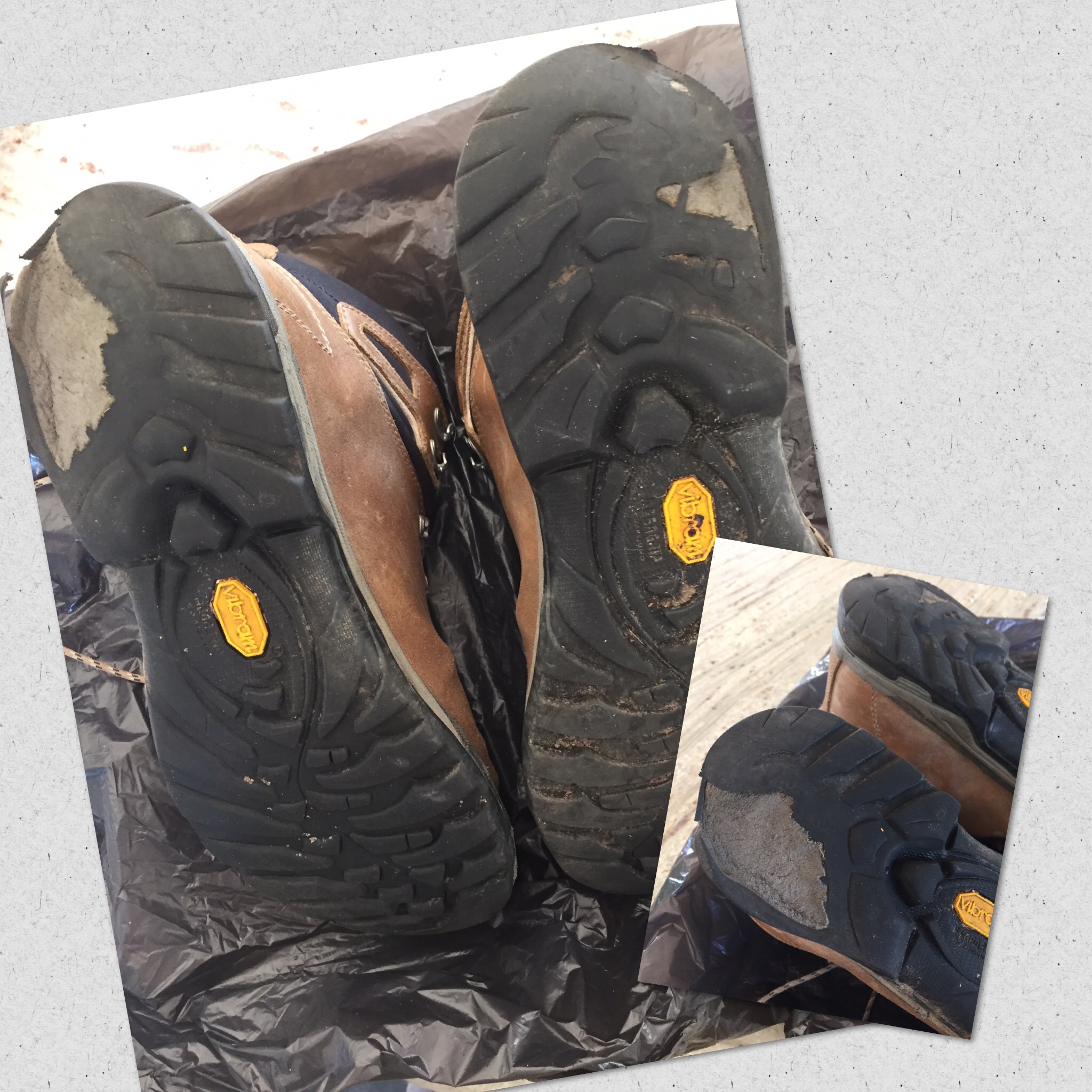
I seem to be hard on my boots, the soles normally show signs of wear well before the end of my camino, although almost without exception the tops look like new. I am envious of those pilgrims who tell me that their boots last for two or even three caminos. How can that be? How can I be so hard on my walking boots?

Last year’s Asolos (Thyrus model) were the most comfortable boots I have worn, without any bulk from the tongue and a nice soft cuff. I suffered virtually no problems with my feet. But after walking 1,500 km from Almería I had worn through the outer and well into the mid-sole at the outside of the heel. This is caused by under-pronation also known as supination (occurs when the foot rolls outwards at the ankle. Some under pronation is normal during movement or when exercising.) I think my problem may be caused by the insoles I use which have a substantial arch support that I probably don’t need. Perhaps I need to consult a specialty shoe store to get some advice.

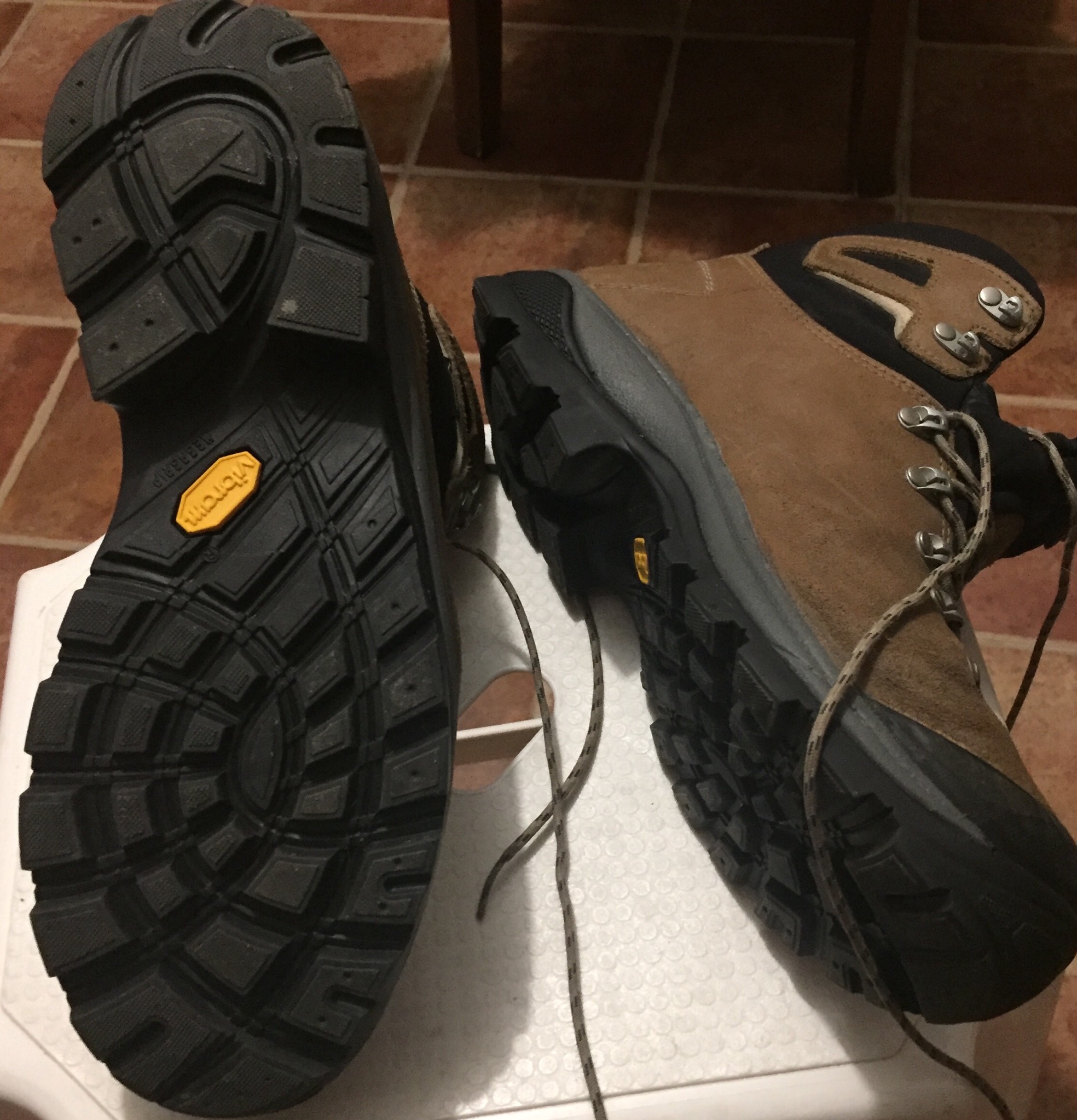
Anyway, I was loathe to go through the process of buying a seventh pair of walking boots and decided instead to make the not inconsiderable expenditure to have my treasured Asolos repaired. After some research on the camino forum I sent them off to LSR (lancashiresportsrepairs.co.uk) for which service I paid £66 + £8 return shipping. I have to say that the job they have done looks absolutely excellent – completely replacing mid and outer vibram sole, and they look like new. They don’t need wearing-in as they are tried and trusted so I don’t need to put any wear on them until I set off in April. If the new soles last well it will definitely be money well spent.


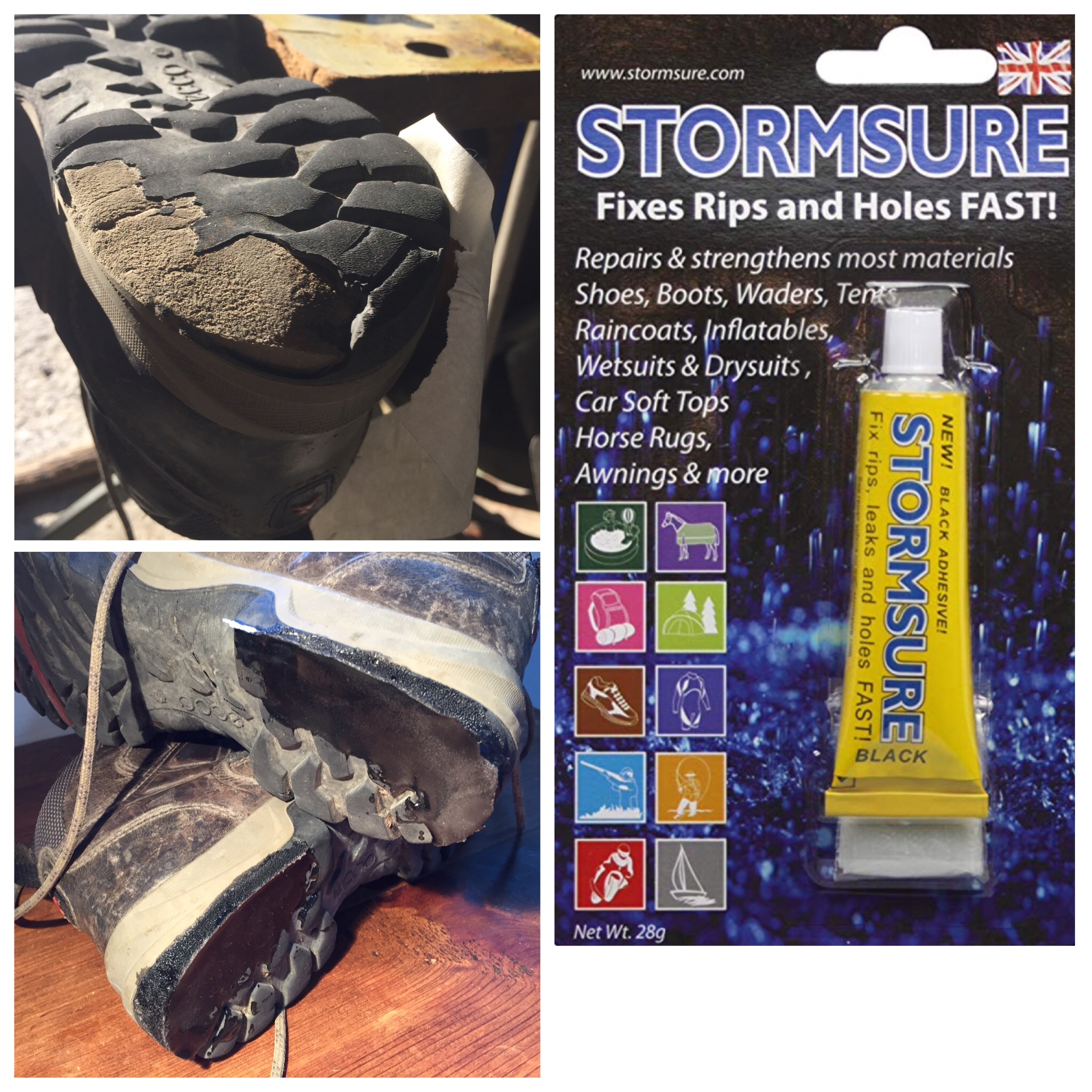
In the meantime I gleaned a new idea from the above mentioned forum thread about repairing boots that I thought I would give a try. There is a handy video link detailing the process, which involves applying the necessary amount of special glue to the damaged part. I used a brand called Stormsure in black and used a full 28 gram tube on my well worn old Eccos. It would have been better to build up the required depth in a series of thinner layers, rather than doing it in one go as I did. But it did a reasonable job. I gave them a test run (walk!) this morning on a 12+ km very rough stoney track. They stood the test well. I don’t think I would want to trust this sort of repair for a full camino, but it will enable me to wear my existing boots for some time to come for an outlay of £10. I’ll let you know if it turns out to be a very short term solution.

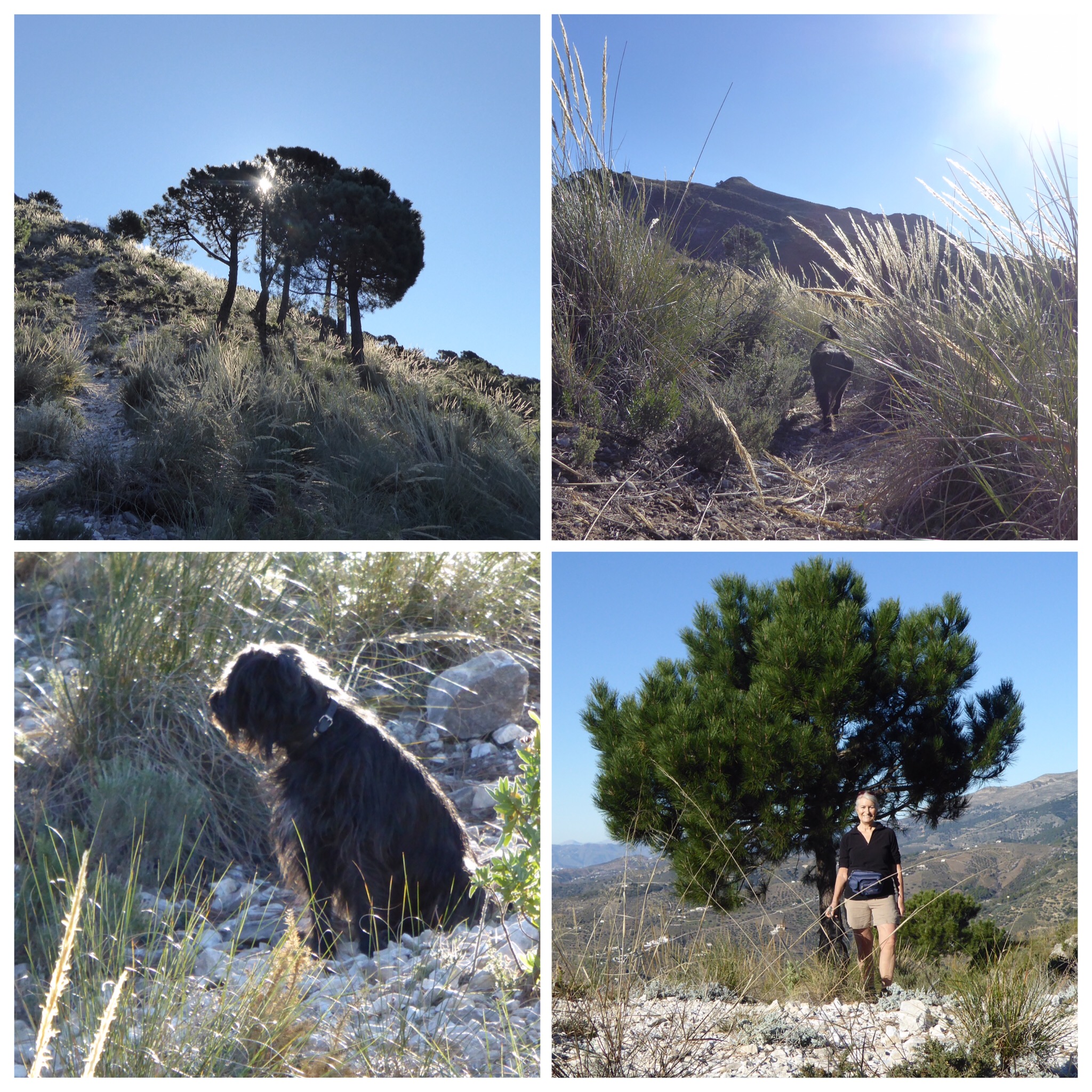
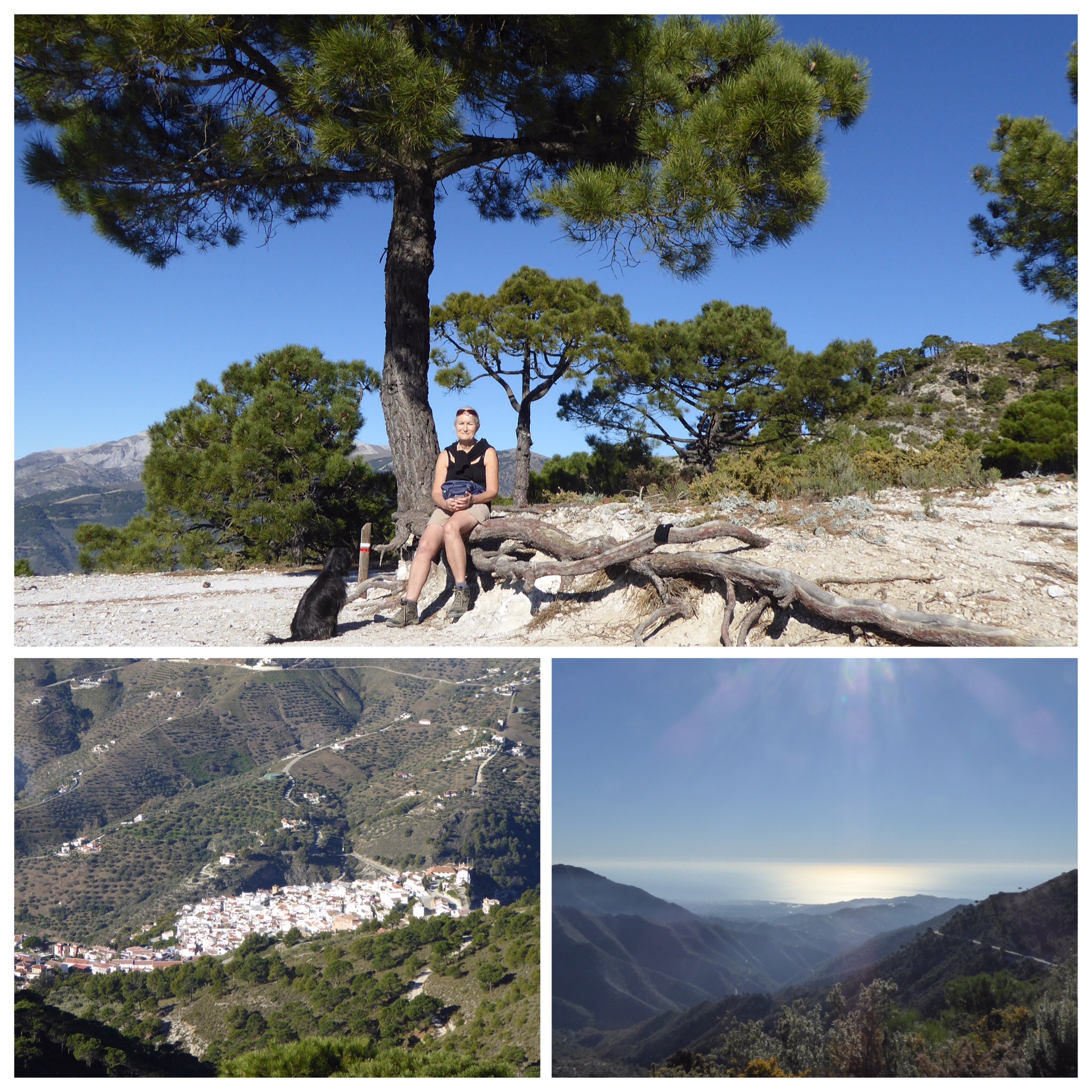
A few photos from today’s walk – yet another glorious January day (note the shorts and sleeveless shirt!)

Posted in A view of life | Tagged , , , , , , , | 19 Comments

A bridge too far!

I hope everyone who reads this blog has enjoyed the Christmas festivities (or whatever alternative name you have for this season) and that 2019 will bring you health, contentment and some adventure.

But I know some people will have had a heartbreaking time and will find it hard to imagine that life will ever be joyful again. Hold tight, there are many people who love you and hold you in their hearts.

I spent eight days of Christmas with my youngest daughter and family where I ate and drank way too much and was woken early every morning, surprisingly not by indigestion but by one or both of my grandchildren for a cuddle. I’m making the most of these times as all too soon I expect my virtually eight year old grandson will decide that snuggling up to Nana isn’t really very cool. I didn’t see my older daughter as she spent a full week over Christmas volunteering for Crisis at Christmas, running the kitchen which served three meals a day to homeless people in London, a total of 2,000 meals over seven days. What a star!

We returned to Spain just in time to celebrate the new year with wonderful friends at a local restaurant (El Pámpano) where we were treated like family with good food (they were happy to cater for my vegan diet), more drink than any of us could do justice to, and party bags including the traditional twelve grapes to pop into the mouth one at each chime of the clock at midnight (try it – not as easy as you might think, especially as they always have seeds which you don’t have time to spit out!).

New year’s day was spent rather lazily (well, it is a public holiday after all) but today I set off for one of my favourite shortish walks alongside the Rio Cajula. Early bright sunshine shone from a clear blue sky and it was warm enough to walk without a jacket. Perfect. Roly and I set off along the track that zig-zags from one side of the stream to the other, never requiring more than two or three strides across strategically placed stepping stones to reach the other side. Unless of course there has been a lot of rain in which case there can be a fair bit of mud on either side and maybe an extra step is required. It’s fun and adds to the magic of walking alongside the running water. But maybe it isn’t so much fun for the farmers who need to negotiate the track to reach their land to harvest their avocados, olives and citrus fruit that grow along the way.

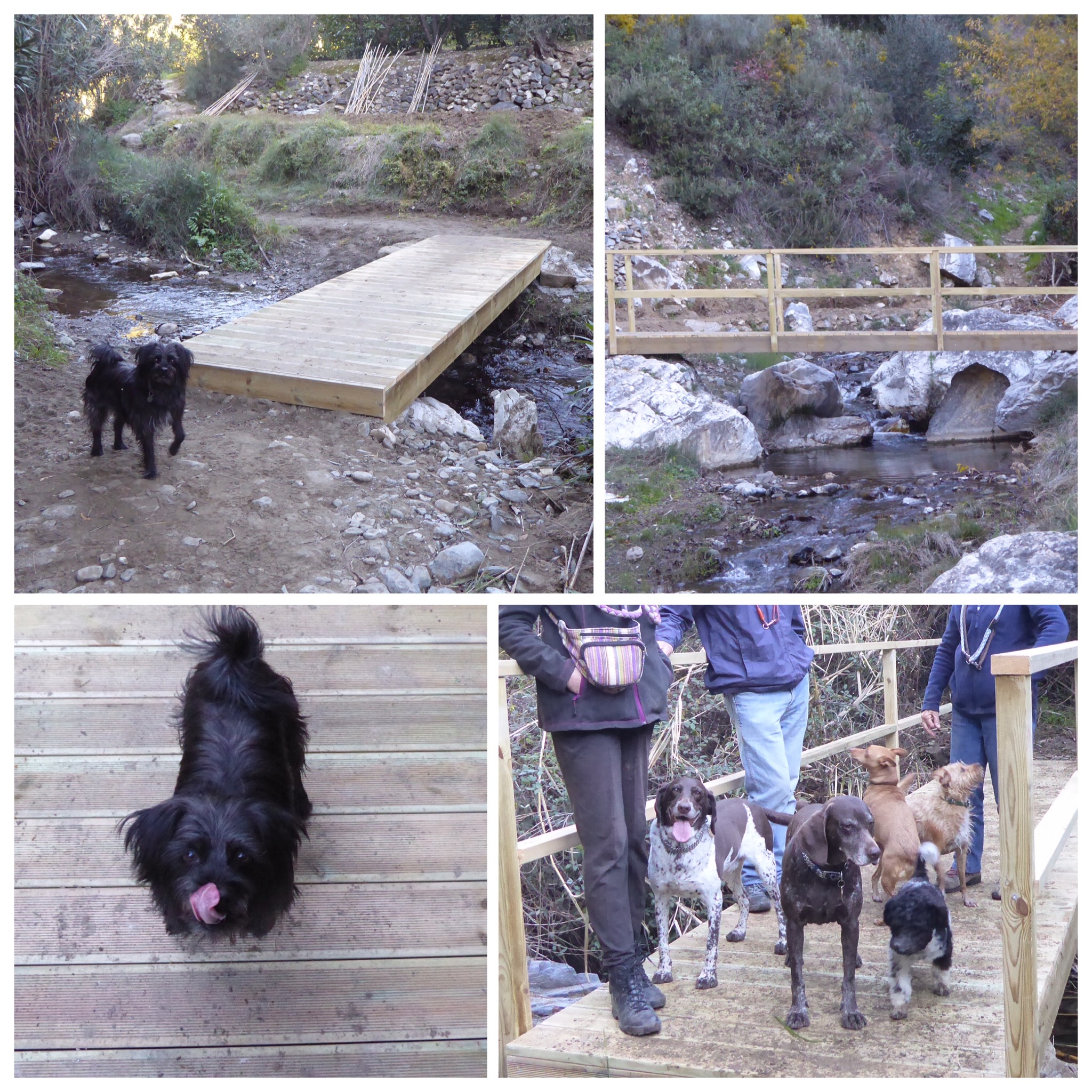
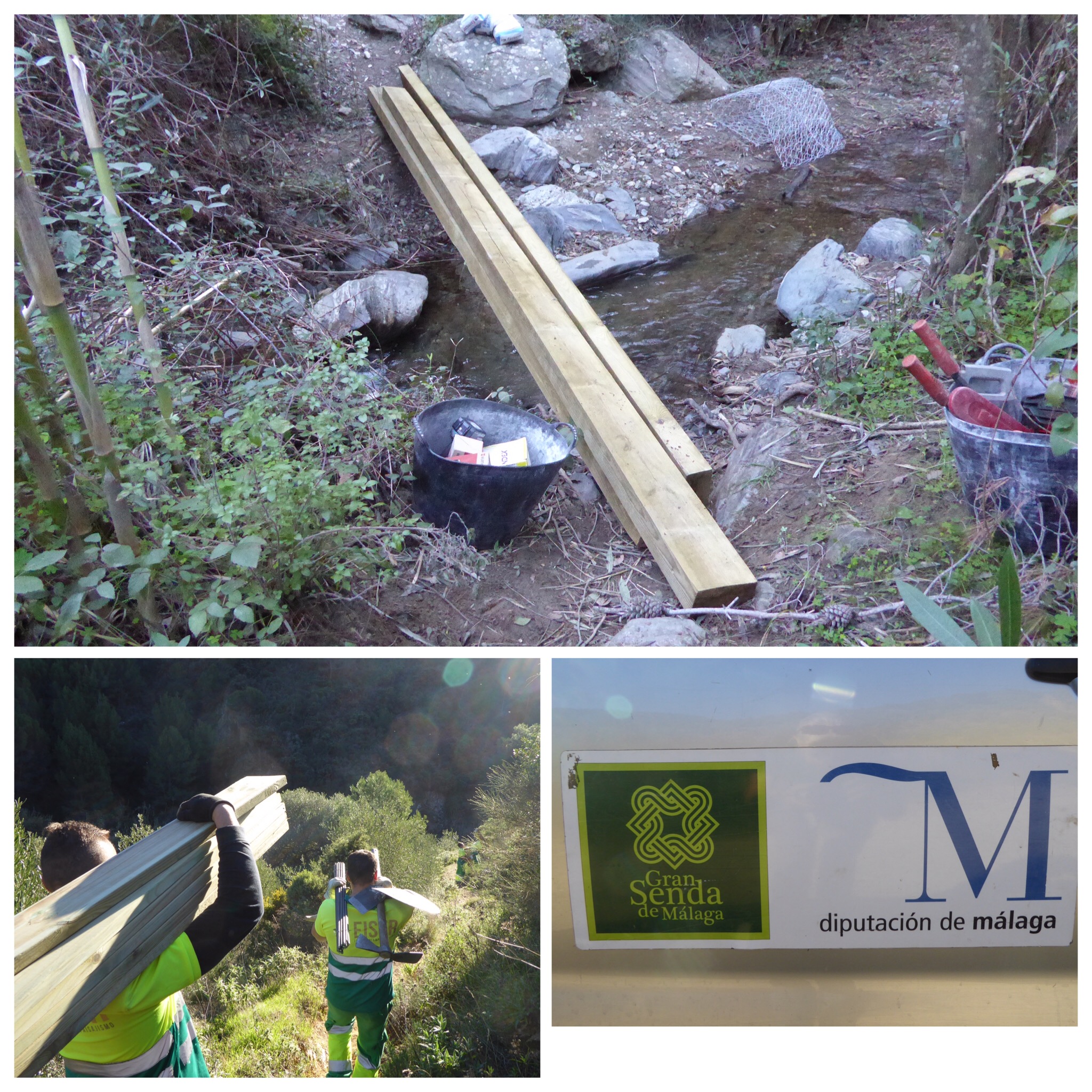
The changes I saw today weren’t a surprise as my walking pal had sent me some photos a few days ago, but nevertheless I was taken aback by the rather substantial structures that I found on my walk. All bright new wood, very secure and solid underfoot, but all rather unnecessary. Roly was very suspicious and I couldn’t persuade him to walk over the bridges at all, he preferred to cross the old fashion way and stop for a drink as he went. I did tempt him once by throwing a biscuit onto the middle of bridge number three, but as soon as he picked it up he scooted off and was back in the water. I came across some fellow dog walkers at bridge four who had stopped for a chat, just because they could. All that was missing was a kiosk serving hot drinks!

Bridge number five was still under construction and so I hopped across the water as I have always done in the past. There were buckets of tools on either side of the stream but no workmen in sight. However as I made my way from the bottom of the valley to the access track several hundred metres beyond I passed four guys carrying great chunks of wood along the very narrow, winding and sometimes quite steep and rocky footpath. Good men, and of course I thanked them for their work. The truck at the top displayed a sign for the Gran Senda de Málaga, also known as the GR249 (660 kms, 35 stages, 9 regions, 51 municipalities). My Rio Cajula walk is not part of the 249, although it does pass through the villages of Cómpeta and Canillas de Albaida.

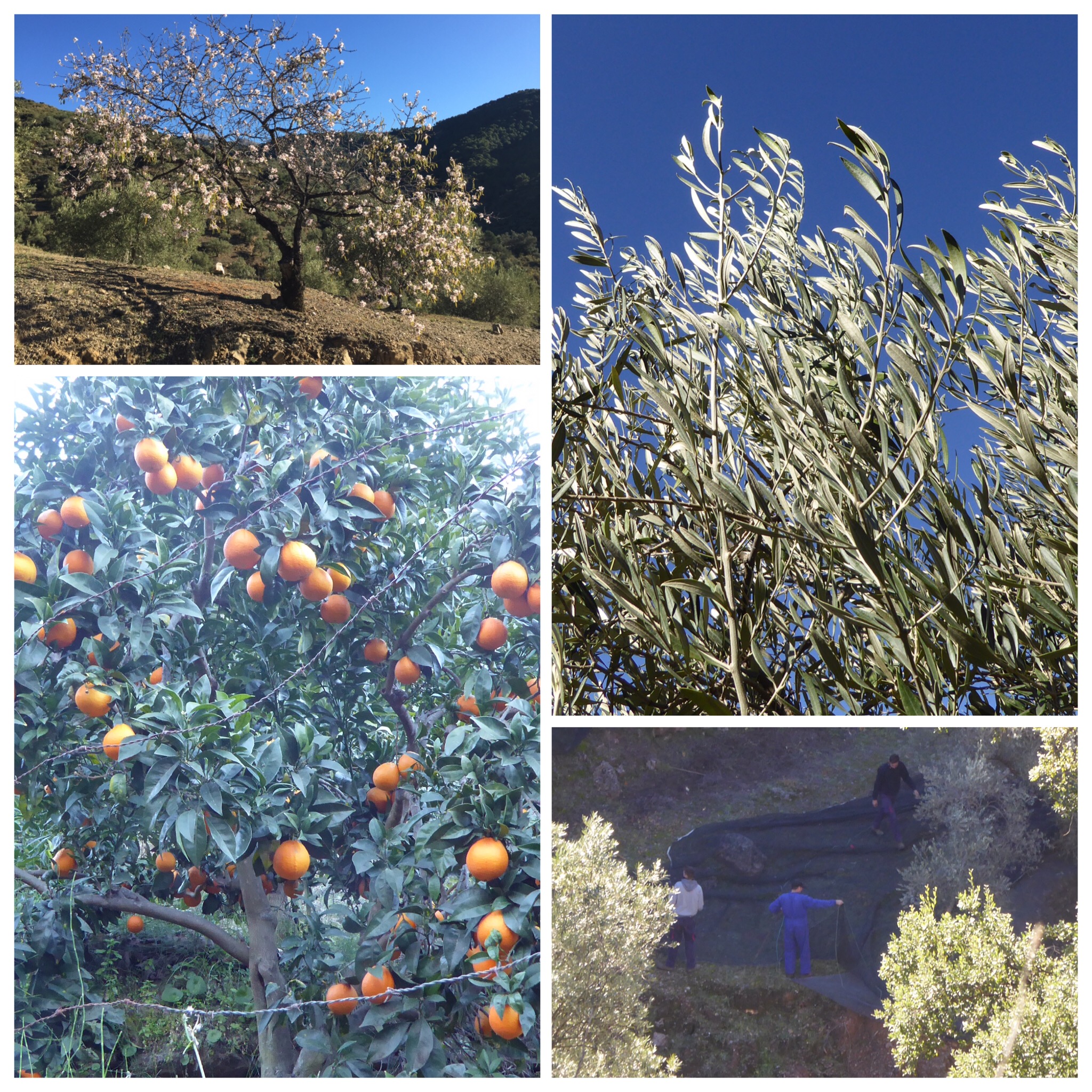
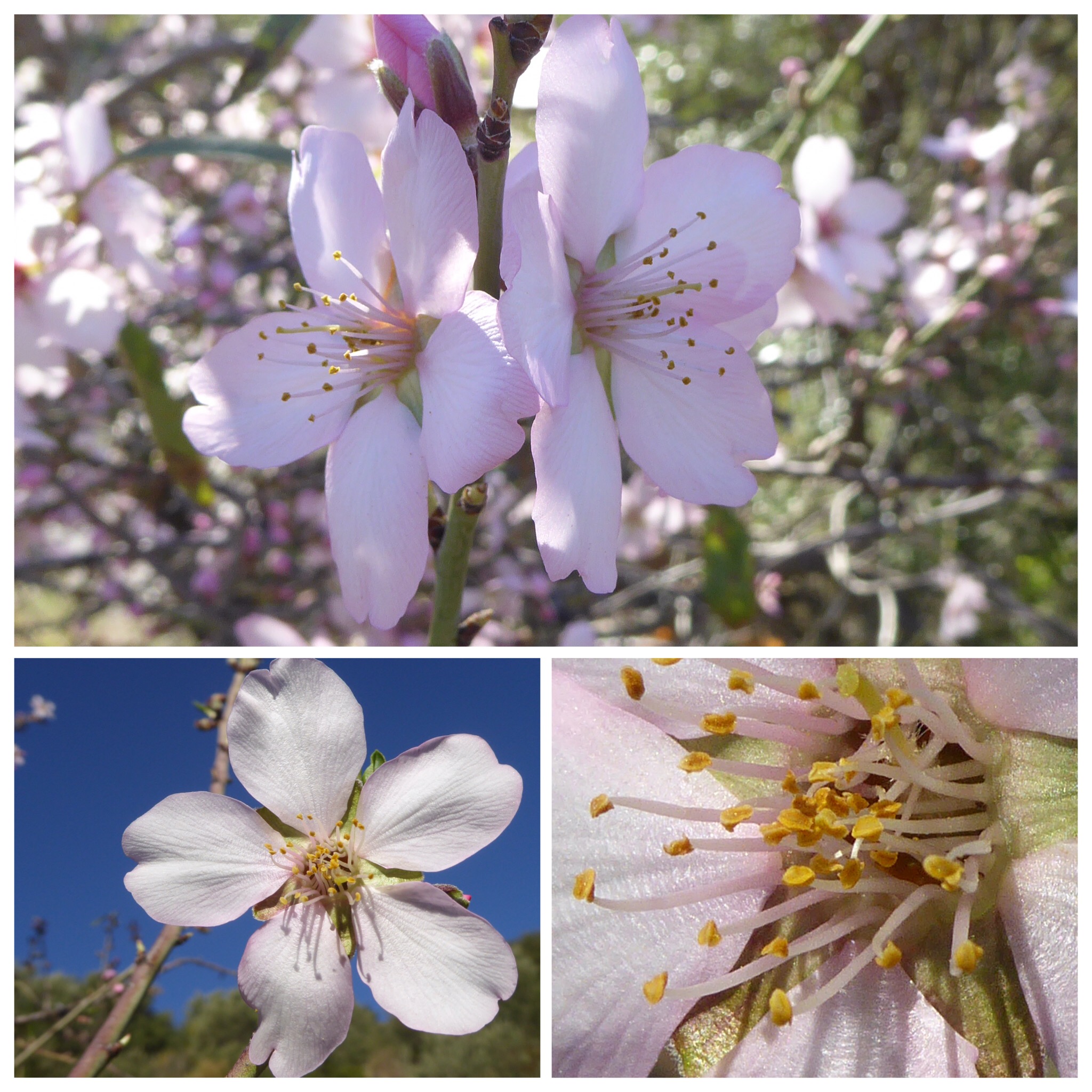
But apart from all this bridge building excitement the day itself was the star of the show. The leaves of the olive trees swaying in the light breeze were glinting silver. Oranges at their peak of ripeness were weighing down the branches with the brightest of colours. Almond trees are coming into full bloom and look stunning standing against the blue sky with butterflies flitting and bees buzzing.

I heard loud voices and looked down into the valley where some farmers were spreading nets on the ground to catch the olives that they would knock from the trees. Roly finds shrivelled olives from last year’s crop and munches as he goes, spitting out the stones.

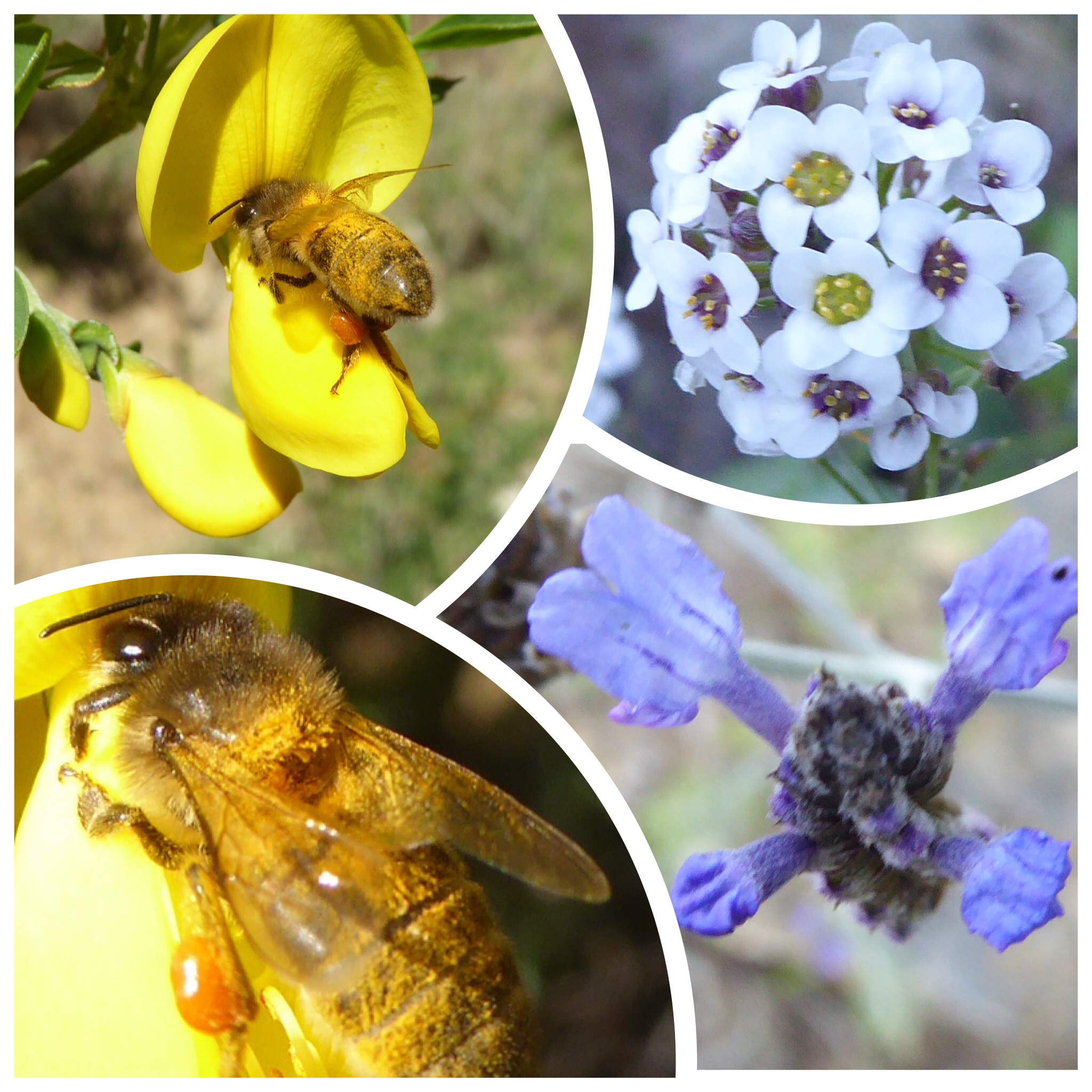
Wild lavendar and alyssum are blooming, and early broom is attracting the bees. This chap is absolutely laden with pollen and the pollen baskets on his back legs look to be bulging. He must be due to return to the hive to deposit his load any minute.

It has been a glorious start to the new year. A perfect day for a lovely walk.

Posted in A view of life | Tagged , , , , , , , , , , | 36 Comments

Calm after the storm

The weather has chucked everything at us recently. Lots and lots of heavy rain with some electrical storms included for good measure, low temperatures causing a very early show of snow at the top of our mountain (La Maroma, 2,060 metres), and some clear sunny days in between. But the weather I dread the most is heavy wind. We know a lot about wind up here. We live at 650 metres and the mountain that is the focus of the vista from our house directs some very vicious gusts in our direction. A few weeks ago we lost a tree to the gales, and we experienced even worse blasts a few days ago. So bad that we had a battle to remain upright against the force. So bad that our porch was ripped from the house (in truth a bit of a blessing because now we have to replace it was something less ugly than the corrugated iron structure that has served to shade our entrance for the last ten years and was originally built to protect horses from the sun in the stable that was once our house).

Consequently I have not walked much over the last couple of weeks and when yesterday dawned bright and sunny and the air was still as a statue I took my chance to don the walking gear and enjoy the weather. It soon became clear that it wasn’t just us who had suffered a beating by the gales.

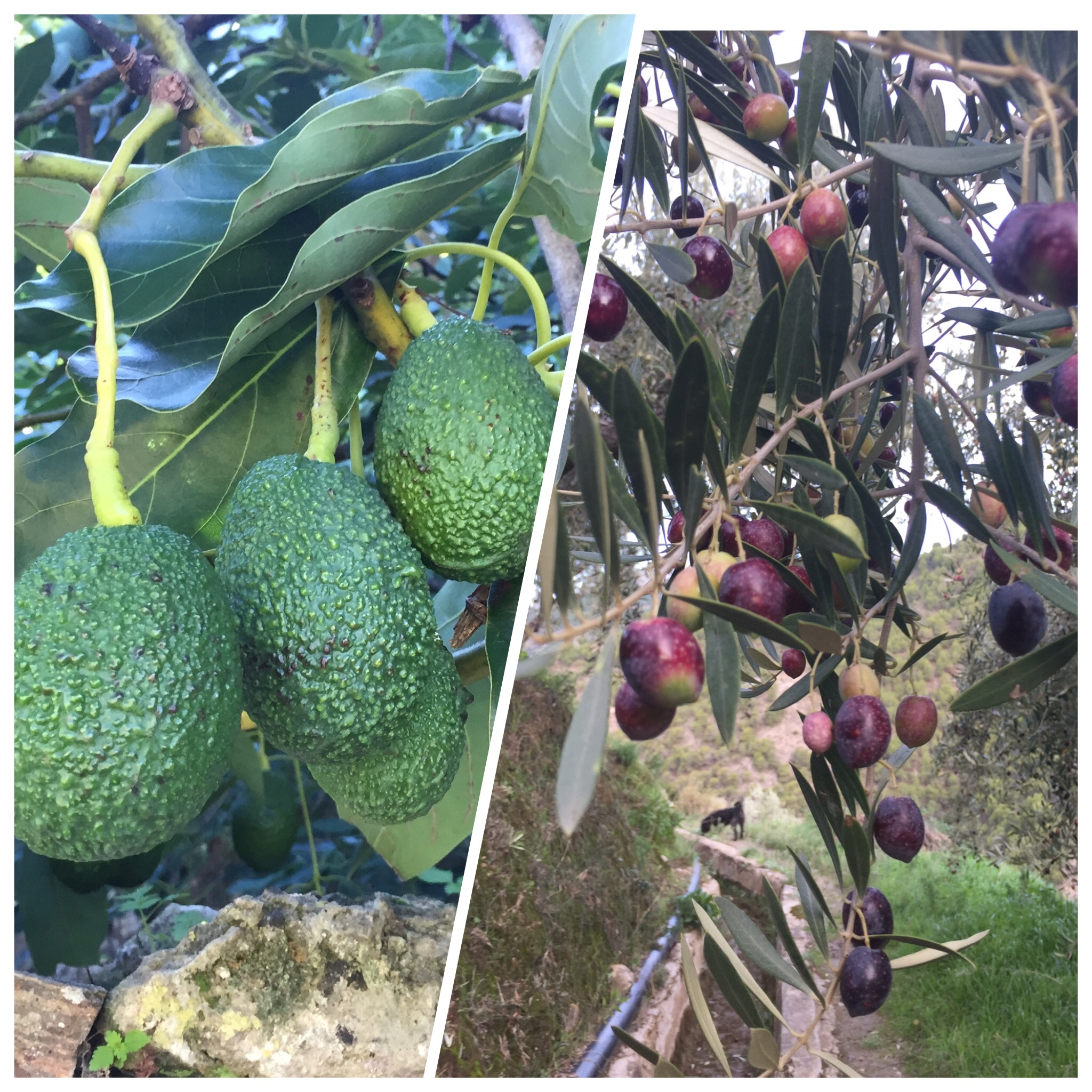
A couple of hundred metres from my door are olive groves and avocado plantations. I imagine that a week ago the farmers had been rubbing their hands together rejoicing that the recent long awaited rains had been plentiful and had plumped their fruit for a bumper crop this year. Olives and avocados are normally harvested hereabouts from December to February. I took some photos last week of the abundant fruit hanging from the trees, the olives black and shiny and the avocados slowly growing to a good size.

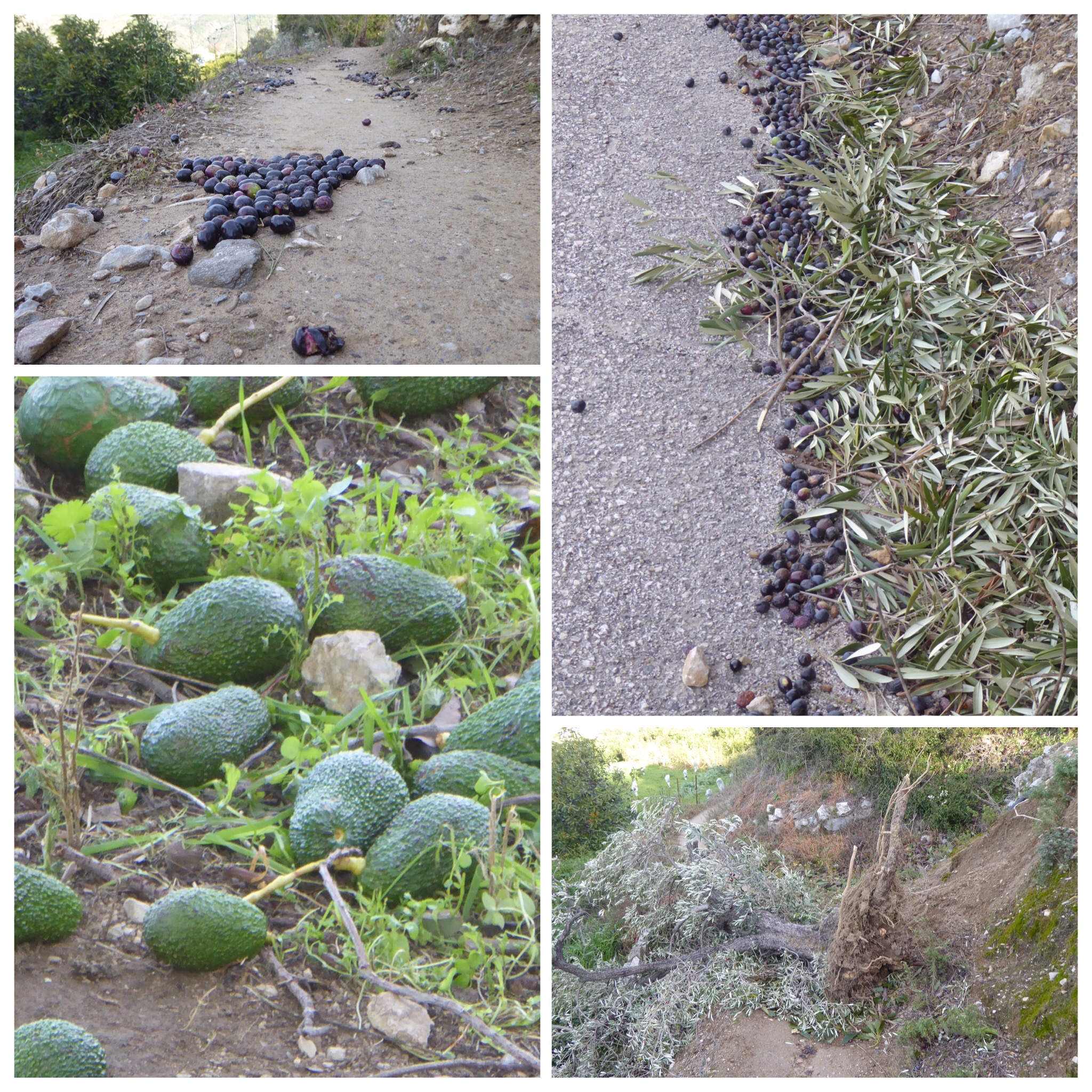
Yesterday’s walk revealed devastation along the goat track that I walk every day. There were puddles and rivers of olives lying on the track and below there were huge numbers of avocados lying on the ground under the trees. A few farmers were out and about collecting the fruit – it will ripen well but will be smaller than they would have liked. These avocados had fallen on soft ground on flat terraces and were likely to be in good condition.

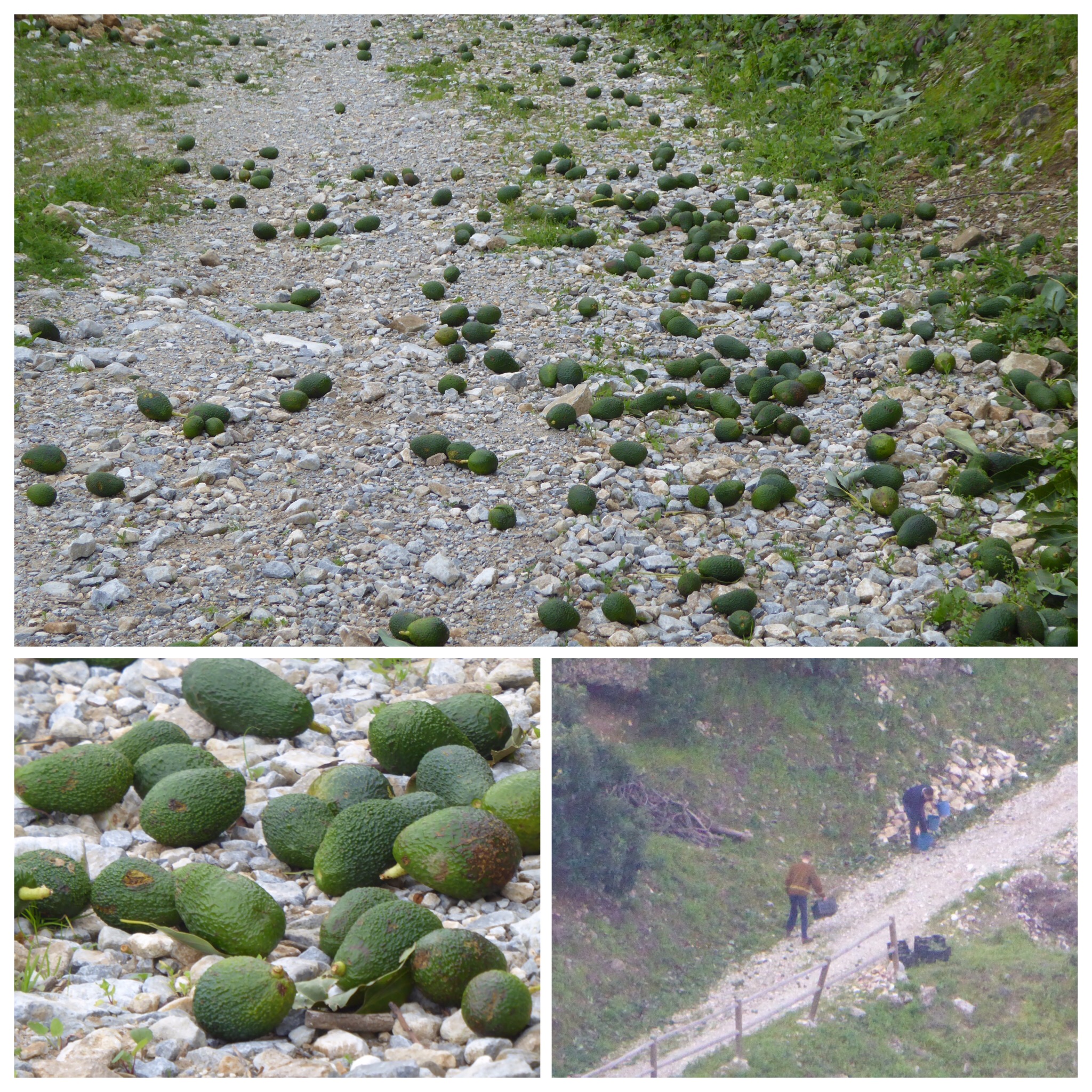
But as a walked further, descending into the valley below the village the devastation was complete. Here the trees are grown on steep rocky banks and the fruit had fallen and bounced over stones and tumbled onto the rough track at the bottom of the slope, most of them damaged and scarred by their journey and much less likely to be welcomed at the local fruit dealers. A whole year’s crop ruined in just a few hours. So sad. As I climbed up the other side of the valley I looked back and noticed that farmers had arrived to survey the damage and collect the fruit.

I steadfastly resist the temptation to pluck avocados from a tree, even though there are places I walk where I have to duck so that I don’t get clonked on the head by a low hanging fruit. However, normally I consider it fair game to pick up the odd fruit from the ground. They would otherwise be left to rot or to be eaten by the wild boar that abound in these parts. But I didn’t even think about picking up any of these wind-falls which represent much needed income to the local farmers.

A small olive tree had fallen on the first track and as I continued my walk I had to negotiate a tall pine that had been uprooted and made the path impassable, but not too much other damage was apparent in the natural park.

As Roly and I continued to gain height and enjoy the familiar views we were startled when a huge and handsome Ibex bound across the path in front of us. Roly was so taken aback that he didn’t even attempt to give chase and the Ibex was soon out of sight as it launched itself from the edge of a steep drop and disappeared from sight.

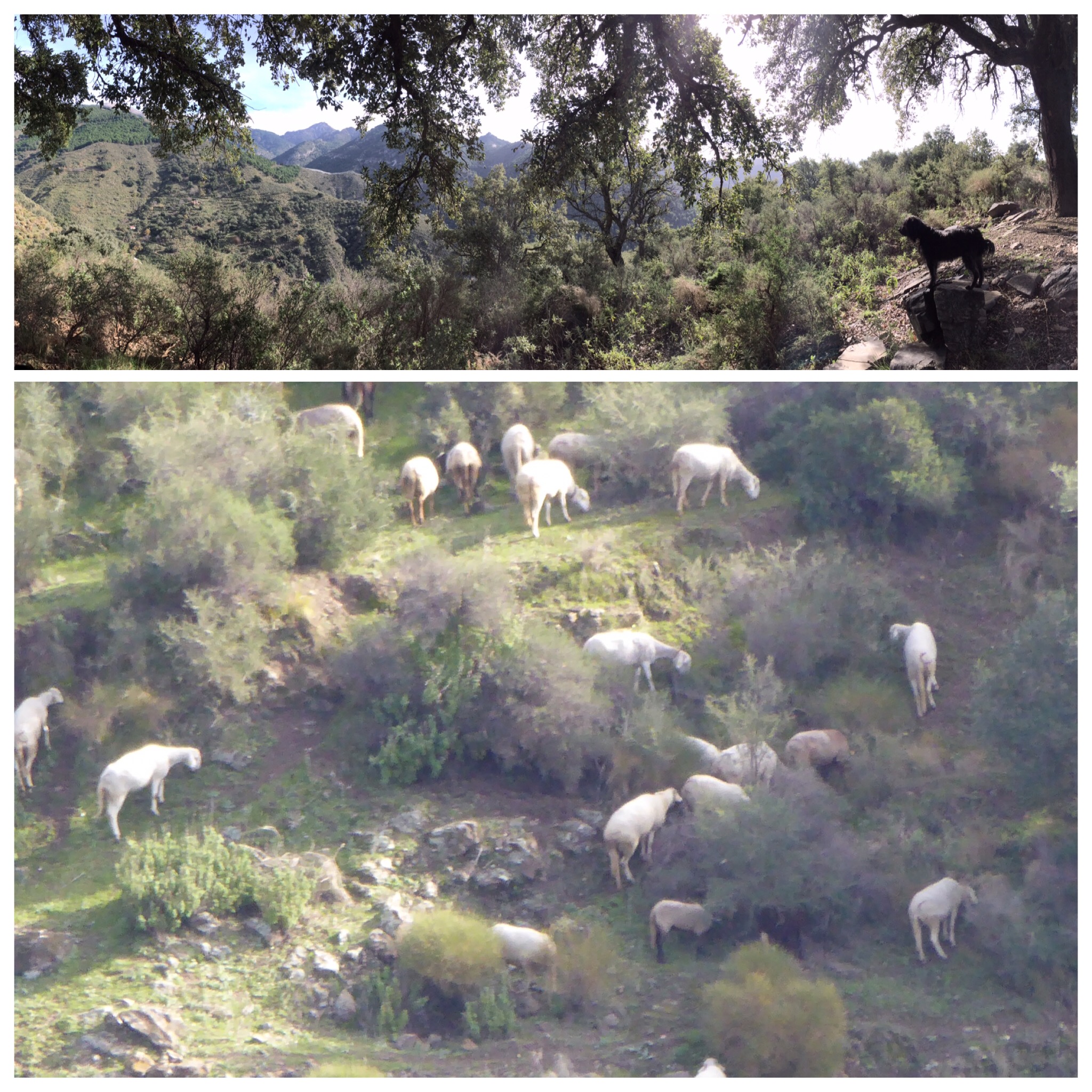
We reached our favourite resting place where there are big square stones that provide a perfect place to sit and gaze out over the hillsides from under the canopy of cork oaks towards the sheep and goats that were noisily grazing the grassy hillside of the opposite side of the valley.

When I watch the news and see images of the recent devastation in California and other areas that suffer tornados and hurricanes, severe flooding and landslides, extreme temperatures and earthquakes, I appreciate how lucky we are to be living in an area where a bit of wind is the worst that we normally experience (although we did have a serious fire in the mountains a few years ago).

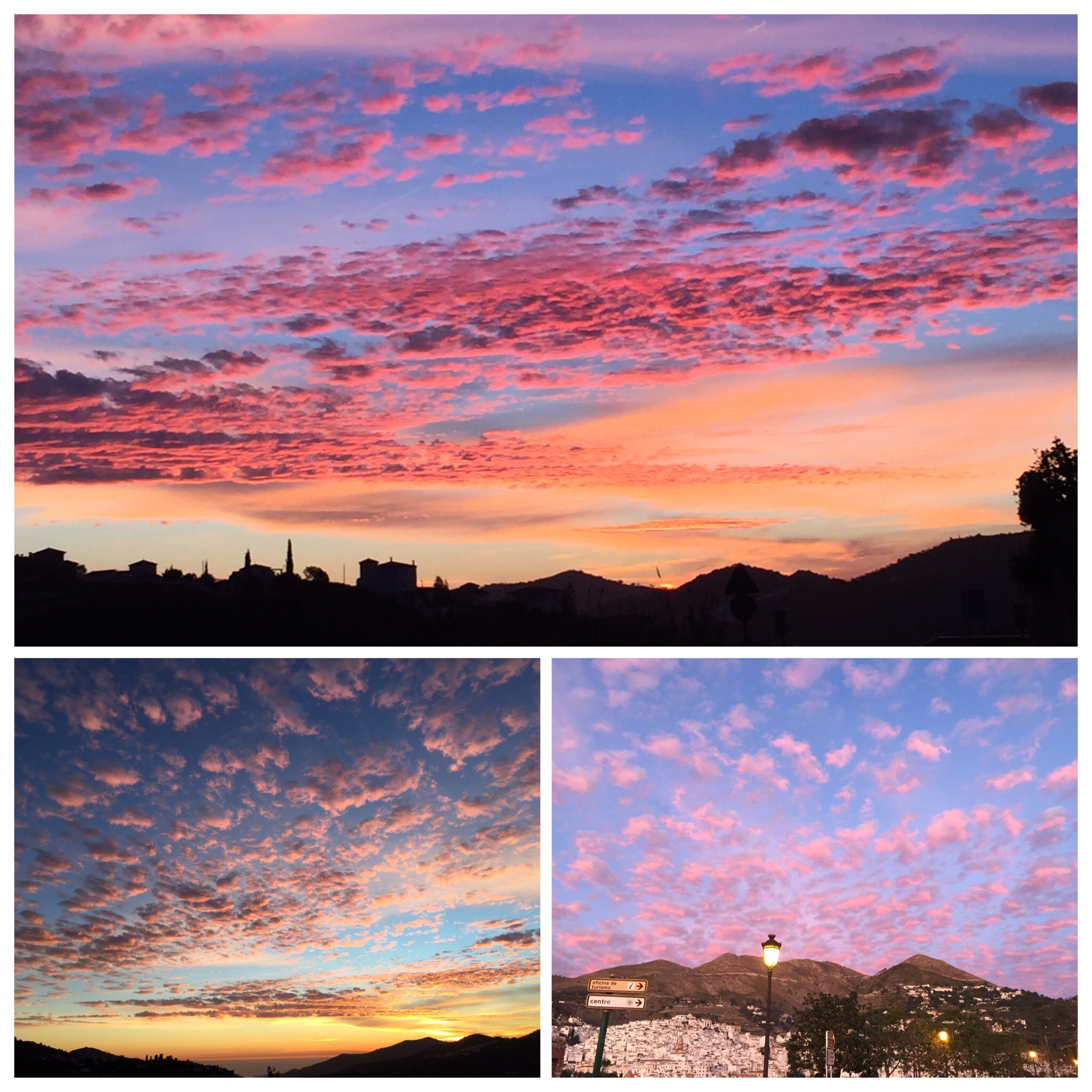
Today produced a beautiful evening sky – such vibrant colours

Posted in A view of life | Tagged , , , , | 9 Comments

Days of rain and mellow fruitfulness

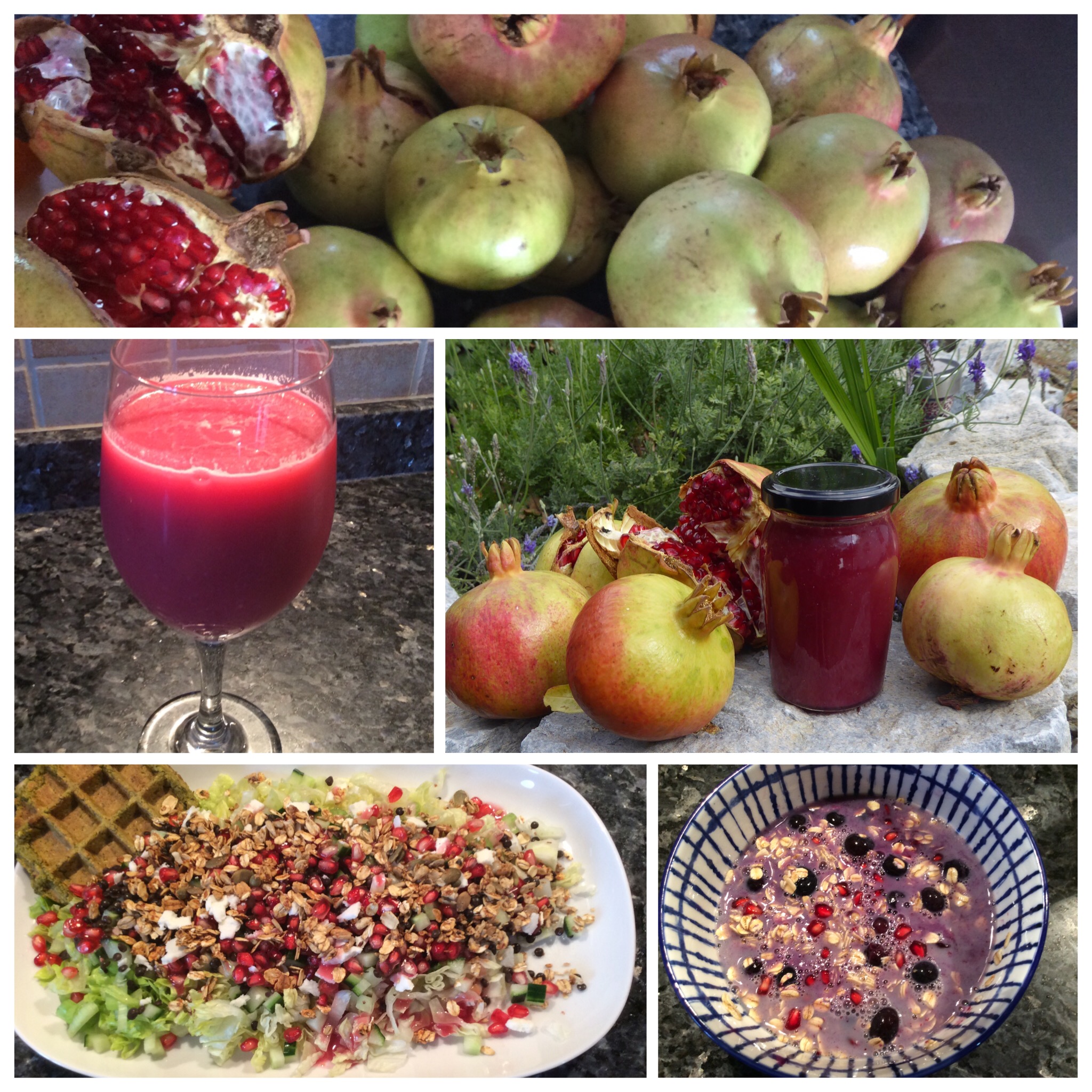
Where I live in southern Spain, autumn is not heralded by the changing colours of leaves on the trees – almost all trees hereabouts are evergreen – pines, olives, avocados and citrus.  Only the almonds lose their leaves in a very unspectacular way.  It is, nevertheless a colourful season, when oranges and lemons are changing from green to…well, orange and lemon!  And if you know where to look you will find totally neglected pomegranate trees quietly getting on with the business of ripening their beautiful and exotic looking  fruit.  The Spanish word for pomegranate is Granada and the fruit is considered one of the ‘healthiest foods on the planet, packed with nutrients and powerful plant compounds’. I remember as a child, my mother would proudly present us with a precious pomegranate once or twice a year, and we three children and our parents would share a single fruit and pick out the seeds (arils) one by one with a pin.

These days the fruits are more plentiful in grocery stores in the UK, and here in Spain they are literally hanging from the trees.  Many of these trees must be self seeded – not really surprising I guess for a tree with such an abundance of seeds!  Almost every tree is left for the fruit to over-ripen, split open, dry out and fall to the ground.  Now, I love pomegranates and I absolutely hate waste.  It literally hurts me to see food left discarded on the ground.  And so for the last few years I have collected fruit from a couple of trees that no-one else bothers with or probably even knows exist.  In the past I have deseeded and frozen the  fruit, and work my way through it by sprinkling a handful on my breakfast oats and on my lunchtime salad.  Such a huge punchy taste and what a wonderful cheery colour.  This year I have branched out and made several batches of pomegranate molasses – fabulous as a salad dressing or in a dessert.

I was very glad to be able to restock my freezer with this fruit as I was devastated to lose the entire contents of my packed freezer a few weeks ago when a power cut occurred whilst we were away from home for a few days.  About 8 kilos of apricots from my tree and countless figs both donated by a friend and foraged (with permission) from a neighbour’s plot. Plus countless ready meals prepared with love for a quick dinner.  All gone! And then to add insult to injury I had to bag it up and send it to the tip.

I so looked forward to half an apricot each morning, it was like a circle of sunshine every day and my hoard would last the full year until the next crop was ready.  Oh well, I now have an equally punchy flavour to add to my oats, just a different colour!

The other thing that we hope the autumn brings us is rain.  And we have received an abundance of the wet stuff during the last week, albeit, interspersed with beautiful blue sky sunny days.  During recent grey days of heavy rain I have spent many hours deseeding pomegranates, and juicing some of them to make a molasses reduction.  But I also had another important task to attend to – most notably planning my next camino.  It is normal for me to have thought about and decided upon my next route at this time of year, but rather early for me to plan stages in detail and work out how many days I will be walking.  This is because I have a childminding commitment in early June and so have a set end date.  There are also a couple of camigas to keep in the loop.

And so I can share with you that I (we) will be walking from Alicante on the Camino de la Lana over around 26 stages to Burgos, where we will hop on a bus to Cistierna halfway through the Camino Olvidado (Forgotten way) which crosses at right angles to the Camino Salvador that I walked last year.  The Olvidado meets the Camino Frances (by far the most popular route) at Ponferrada where we will cross over to the Camino Invierno (Winter route) and make our way to Santiago de Compostela.  Probably 46 walking days, with maybe a day off for exploring the ‘hanging’ city of Cuenca, a place I have long wanted to visit, and a day for travelling between the Lana and Olvidado. Three lesser walked routes, so I am very, very glad that I will have the company of two camigas with whom I walked last year (unless things change, which of course is entirely possible).  Watch this space!

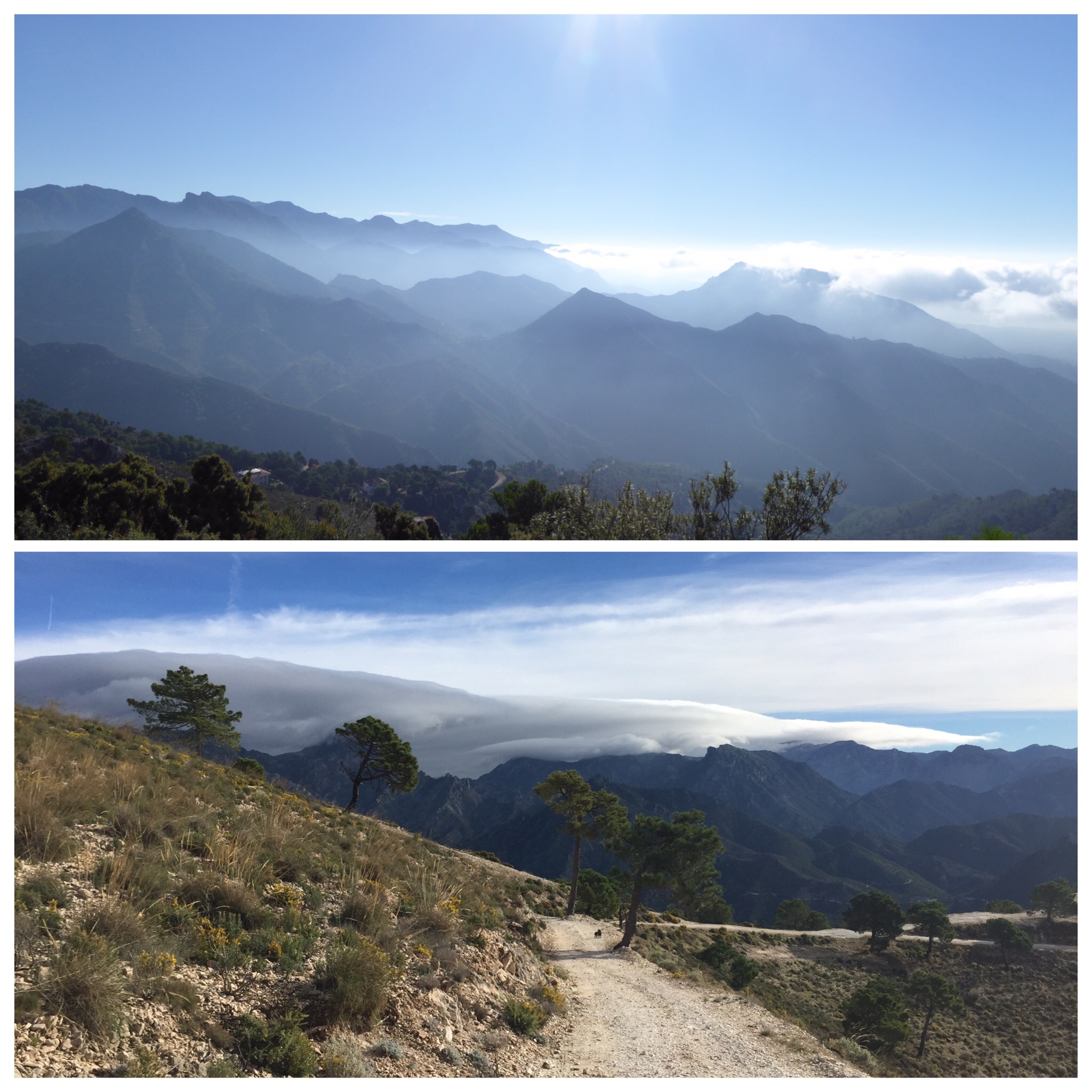
On the beautiful blue sky sunny days I took a couple of walks – how glorious it was…


Posted in A view of life, Camino de la Lana, Camino de Santiago de Compostela, Camino Invierno, Camino Olvidado | Tagged , , , , , , , , , , , , | 22 Comments

Walking the camino as a vegan

I first started eating a plant-based diet at the beginning of 2017, but wasn’t sufficiently committed to keep it up on my camino last year.  However, as soon as I returned home I jumped in 100% and haven’t wavered since.   I know some vegans decide to take a break from their restricted diet whilst walking the camino, assuming it will be virtually impossible to find sufficient sustenance in the wilds of Spain.  But I was committed to a plant only diet for the long haul and was not about to cave-in once I stepped into my walking boots.  So a little advance planning was in order, particularly as this year I would be hiking lesser walked caminos in very rural Spain and Portugal.

Having eaten a plant only diet for a year or more, and this being my sixth camino, I had a good idea of the difficulties I would face.

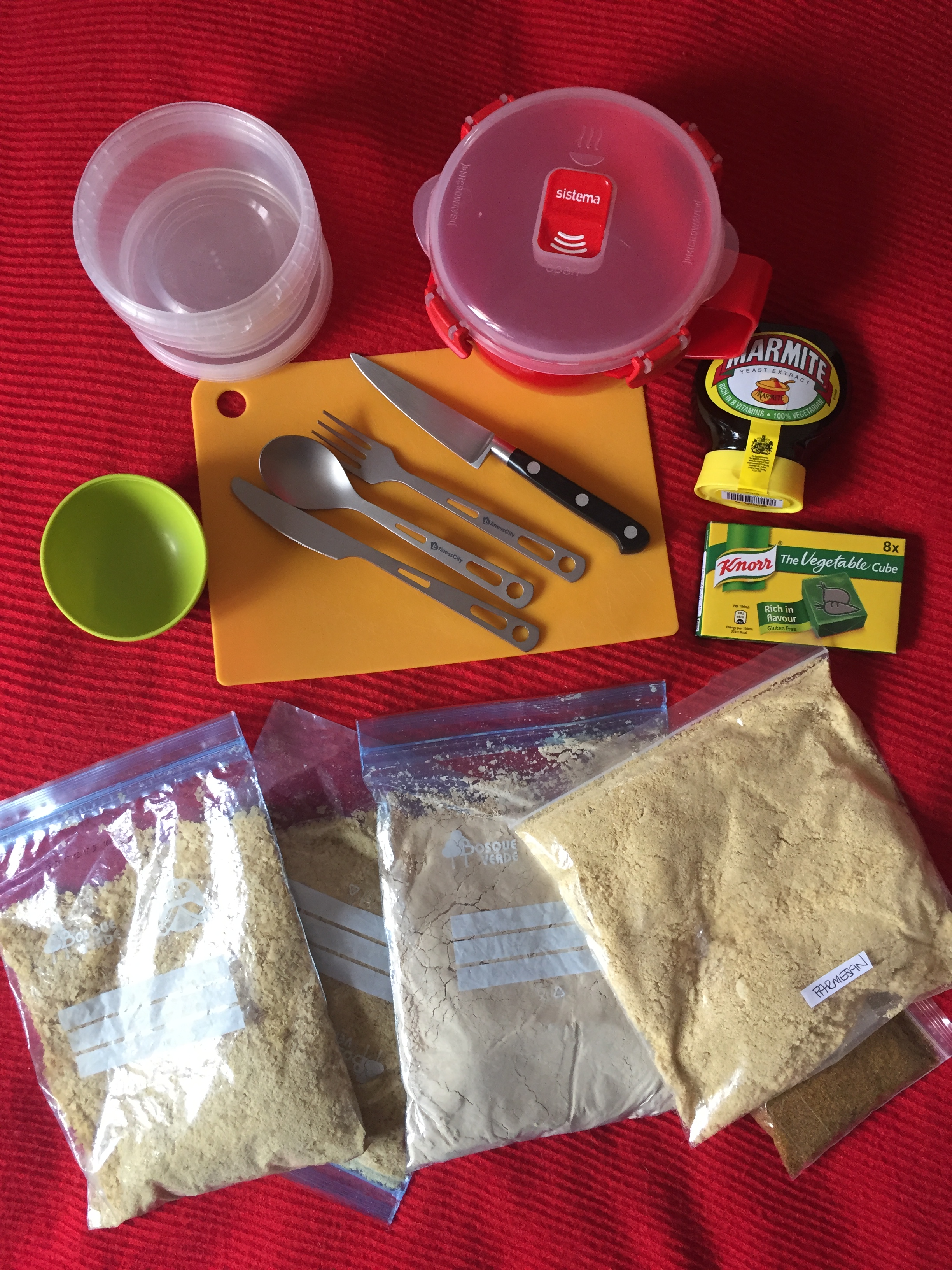
First I needed to consider what additional equipment I would take.  And these are the items that found their way into my pack

Equipment

  • Thin nylon cutting board
  • Good paring knife
  • Titanium cutlery set
  • Microwave bowl with vented lid
  • Storage pot (hummus packaging)
  • Small silicone half-cup measure
  • A small lightweight nylon sieve 
  • A square storage container big enough to carry a salad

Food

  • Peanut butter powder
  • Nutritional yeast (a vegan’s best friend)
  • Faux parmesan
  • Vegetable stock cubes
  • A small pack of spice mix
  • Marmite (because there are some things worth their weight in gold)

I think I got it just right.  

  • The knife and cutting board were used very often.
  • I could have done without the cutlery set, but there is absolutely no joy in eating from a plastic spork, and I hoped to be fending for myself more than I had in the past so considered the small additional weight worth while.
  • The microwave bowl earned its place on the many occasions when there was no kitchen, but almost without exception there was a microwave.
  • The old hummus pot had a multitude of uses.
  • The silicone dish was used to rehydrate the peanut butter powder, amongst other things.
  • I knew I would be eating chickpeas (garbanzos) and pulses when possible as they are a great source of protein and if buying in jars they need to be strained and rinsed. Consequently the sieve was put to use quite frequently.
  • The larger storage container was used less often but was useful to carry fruit that might have bruised if shoved into my pack, and it carried the occasional salad and left-over dinners.

The peanut butter powder (which I didn’t know existed prior to researching for this camino) was a great success.  It is a fraction the weight of its hydrated cousin and lacking most of the fat whilst retaining all of its protein.  It was good on toast (with a smidge of marmite) and often added a welcome dimension to cooked meals.

Nutritional yeast is a very useful ingredient that lends a ‘cheesy’ taste to any dish.  If you are not eating a plant-based diet you would have no need to know about this wonder-food. But if you don’t eat dairy and miss cheese, you need to try this product.

Faux parmesan is the vegan’s go-to topping that can enhance the taste of any dish. I have been known (a little too often) to just eat it from a spoon.  It is made from a blend of cashew nuts, nutritional yeast, garlic flakes and salt. Yum. 

I took some of my favourite vegetable stock cubes, but other brands are easily available in any general store in Spain.

I used the spice mix whenever I cooked.

And the marmite as never an option – I even asked a camigo who was joining me later along the trail to bring me a new supply.

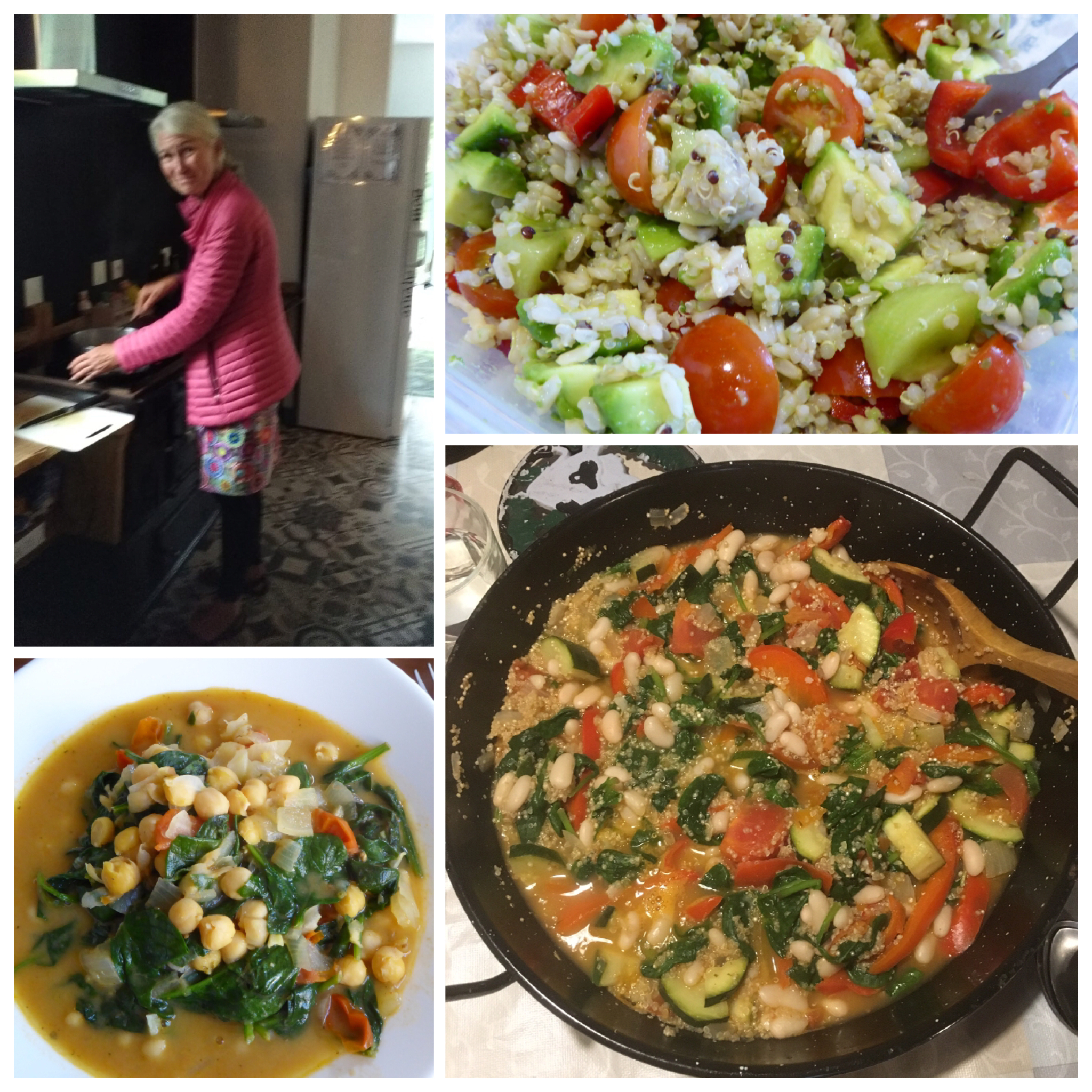
Some albergues had good kitchens with excellent equipment and I made the most of them whenever I could.  I would cook up a a storm with jar of garbanzos, frozen or jar of spinach (very rarely came across fresh), tomatoes, bell peppers, onion and garlic – always with a view to getting a good portion of protein.  Garbanzos, beans and lentils are always available in Spanish shops, even if there are no fresh goods. As are cans of tomatoes, jars of spinach, roasted peppers, potatoes and a variety of other vegetables.  Obviously fresh is best, but in a tiny village, any fresh goods may well have been sold earlier in the day so these items can be a good fall-back.  You will also always find rice and pasta.  On several occasions I cooked for 4 or 5 of us for a total cost of around 8 euros.

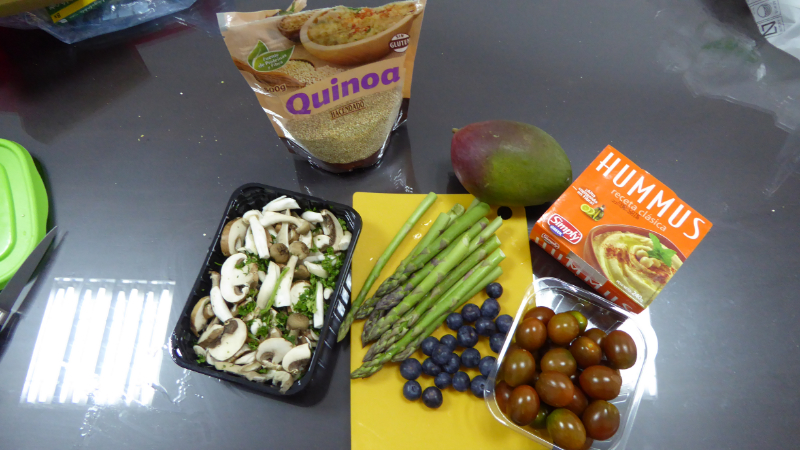
The microwave pot was great for times when a hob wasn’t available.  Dried goods can be cooked quite successfully in a suitable vented pot. Whenever I came across quinoa (only in larger cities with a good supermarket) I grabbed a packet and rinsed it in the sieve and cooked it in vegetable stock – with some onions and mushrooms and something fresh and green it is a meal packed with nutrition.

On the rare occasions that I came across a sizeable supermarket in a large town (my favourite is Mercadona) I would make a beeline for my favourite products and over-indulge in goodness that evening and the next day.  Not surprisingly, these big towns are also the places where I was most likely to find a good meal in a restaurant, but home cooking always won out if there was a choice.  In recent months Mercadona has begun to sell a few vegan products, including Seitan, vegetable burgers and falafels.  They also sell pots of cooked rice, quinoa and a rice/quinoa mix which do not need to be stored in a fridge.  I’m sure other large supermarket chains must be doing the same thing. I know Eroski sell lots of these products, including tempeh and of course tofu.  The world is opening up to us!

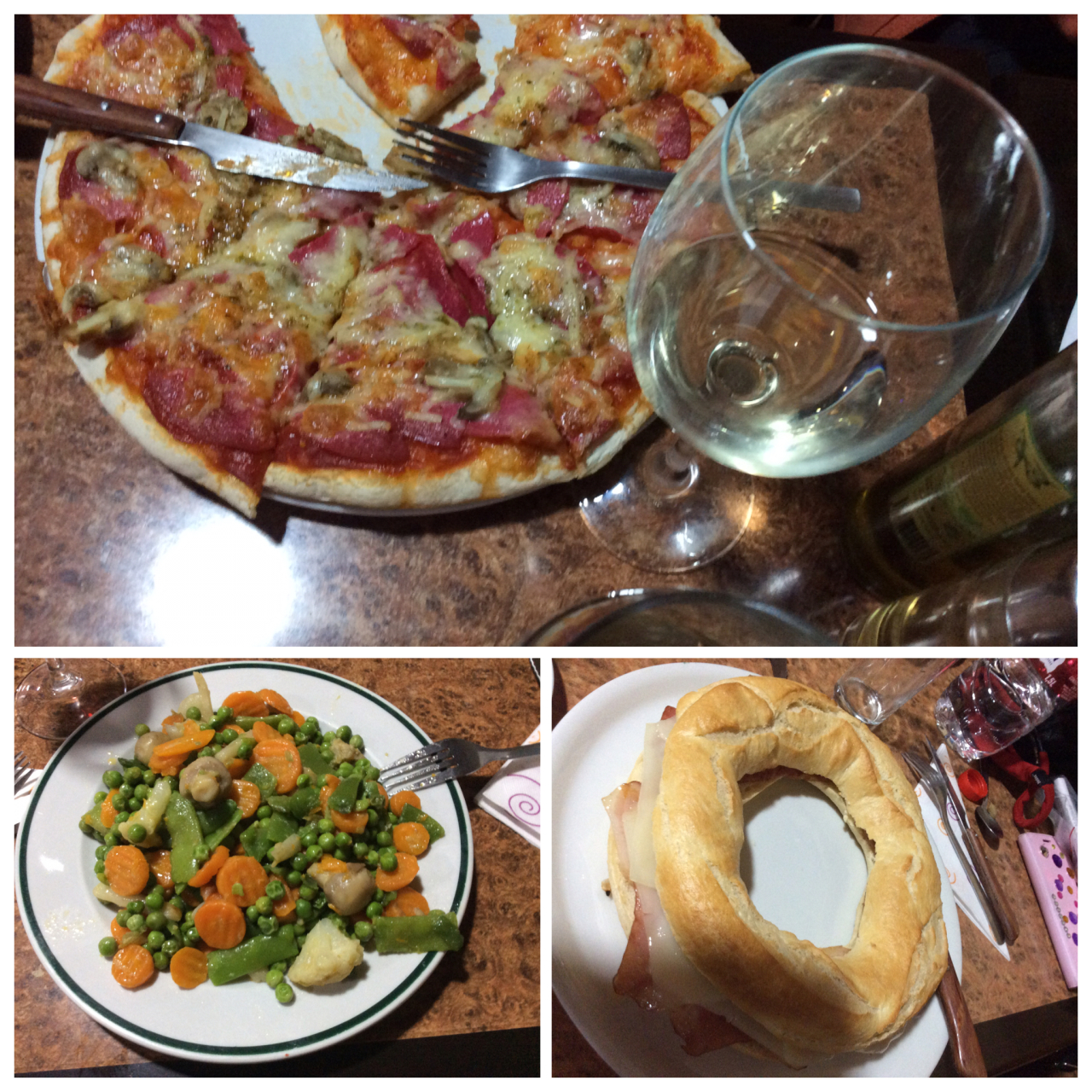
Often though, there was either no means of cooking, or no shop, or more likely a shop that was closed for the day and I had to make do with whatever I could find in local bars and restaurants.

It happened on a couple of occasions that it was just too much of a slog to walk into town from an outlying albergue to try to source some food, and we would pool our resources and dine on crisps, wraps and biscuits.

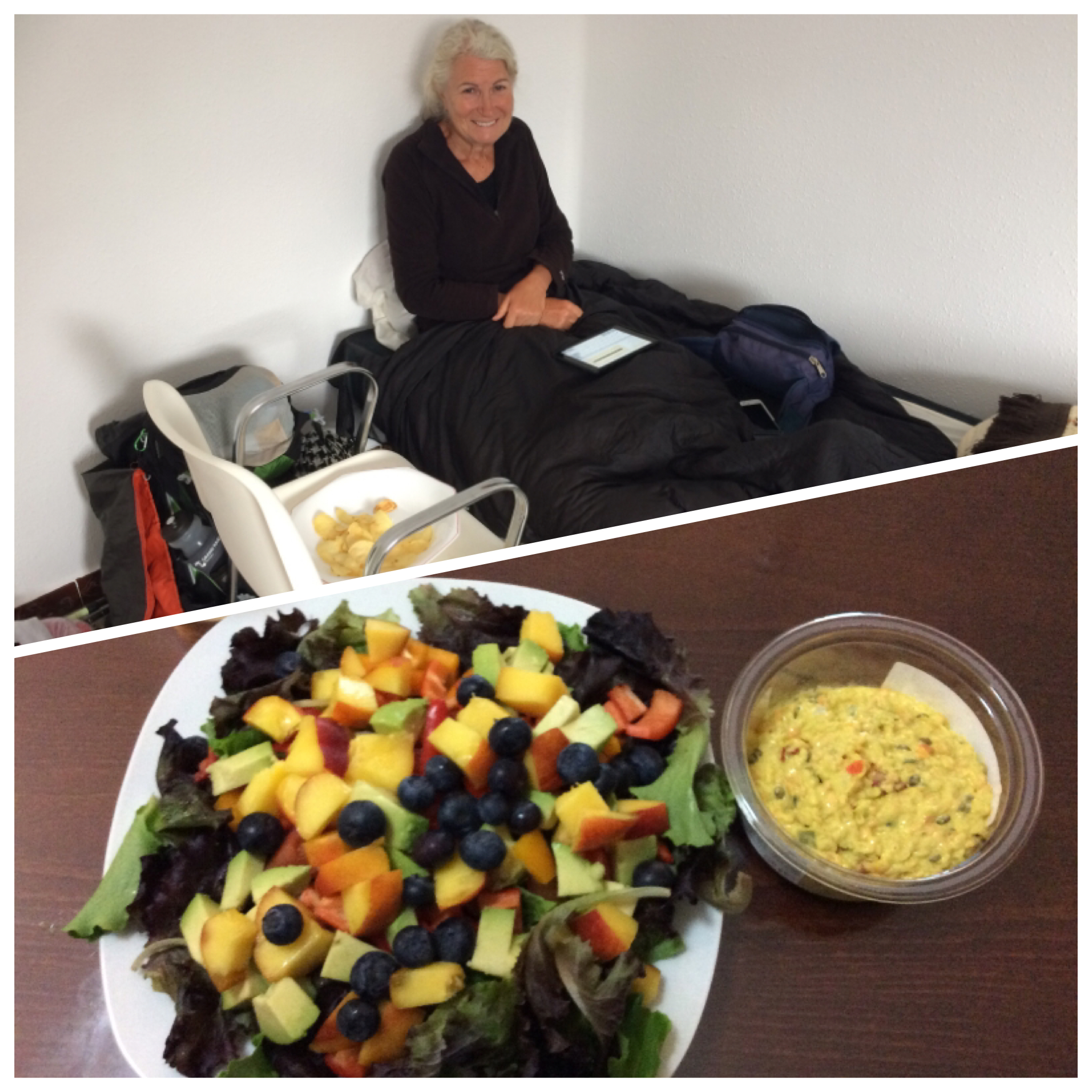
Feast or famine – a delicious salad and dip as opposed to a packet of crisps

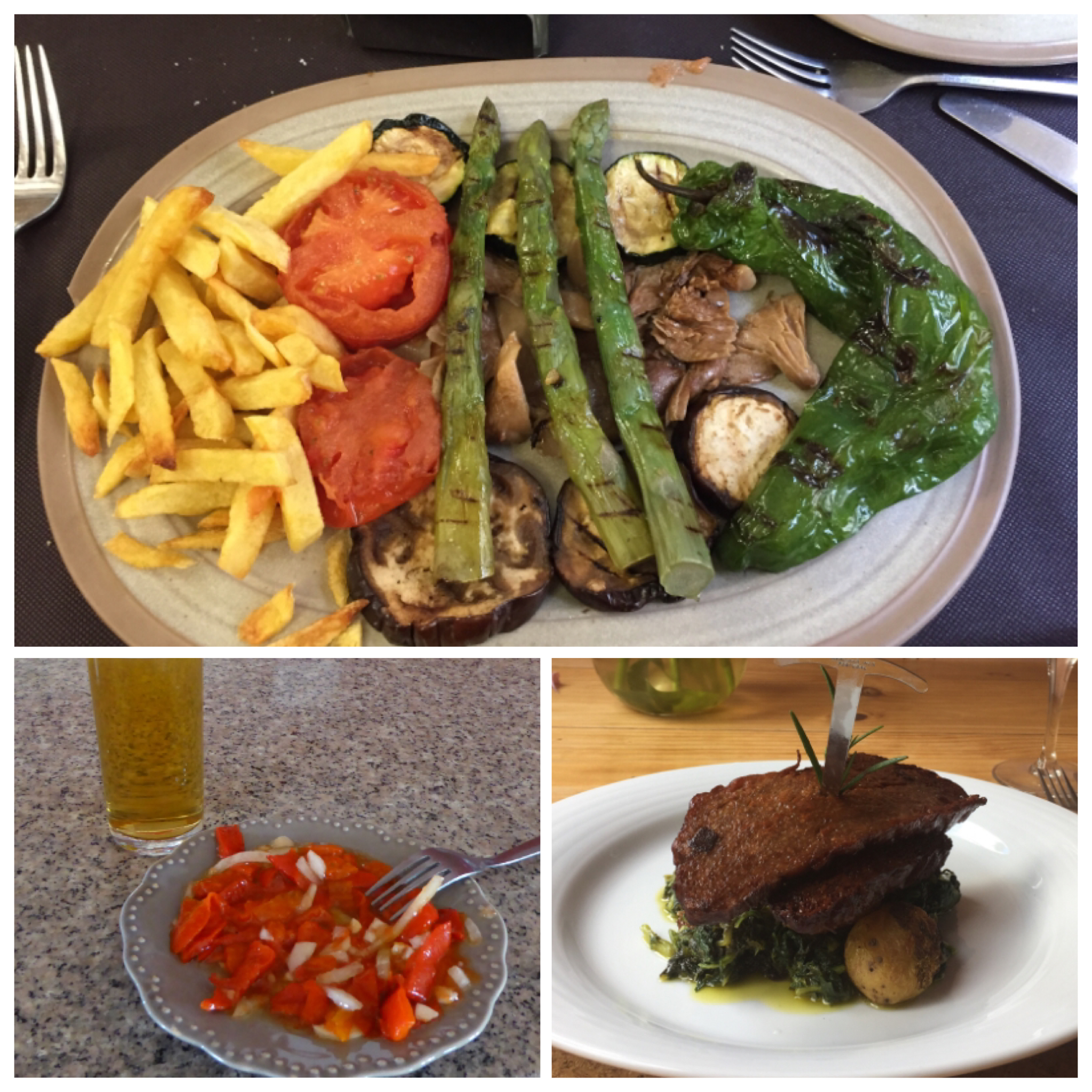
Whilst I was pleasantly surprised that no waiters ever slammed their eyes to heaven when I discretely explained my dietary requirements, for the most part they didn’t really understand the concept. I would often be asked if I wanted tuna, eggs or cheese. But without fail the waiting staff would try to accommodate me. On my first day I was offered a baked potato. Not so great without being slathered in butter, but nevertheless reasonably tasty with a sprinkling of faux parmesan. Salad and chips were a stand-by, and luckily chips in local Spanish bars are usually very tasty, if not very healthy! And I love salmorejo (cold tomato soup, similar to gazpacho but more substantial) which was available throughout Andalucia. In Portugal Caldo Verde (delicious potato and cabbage soup) was my stand-by. Occasionally I would be offered a plate of grilled vegetables, which was manna from heaven.

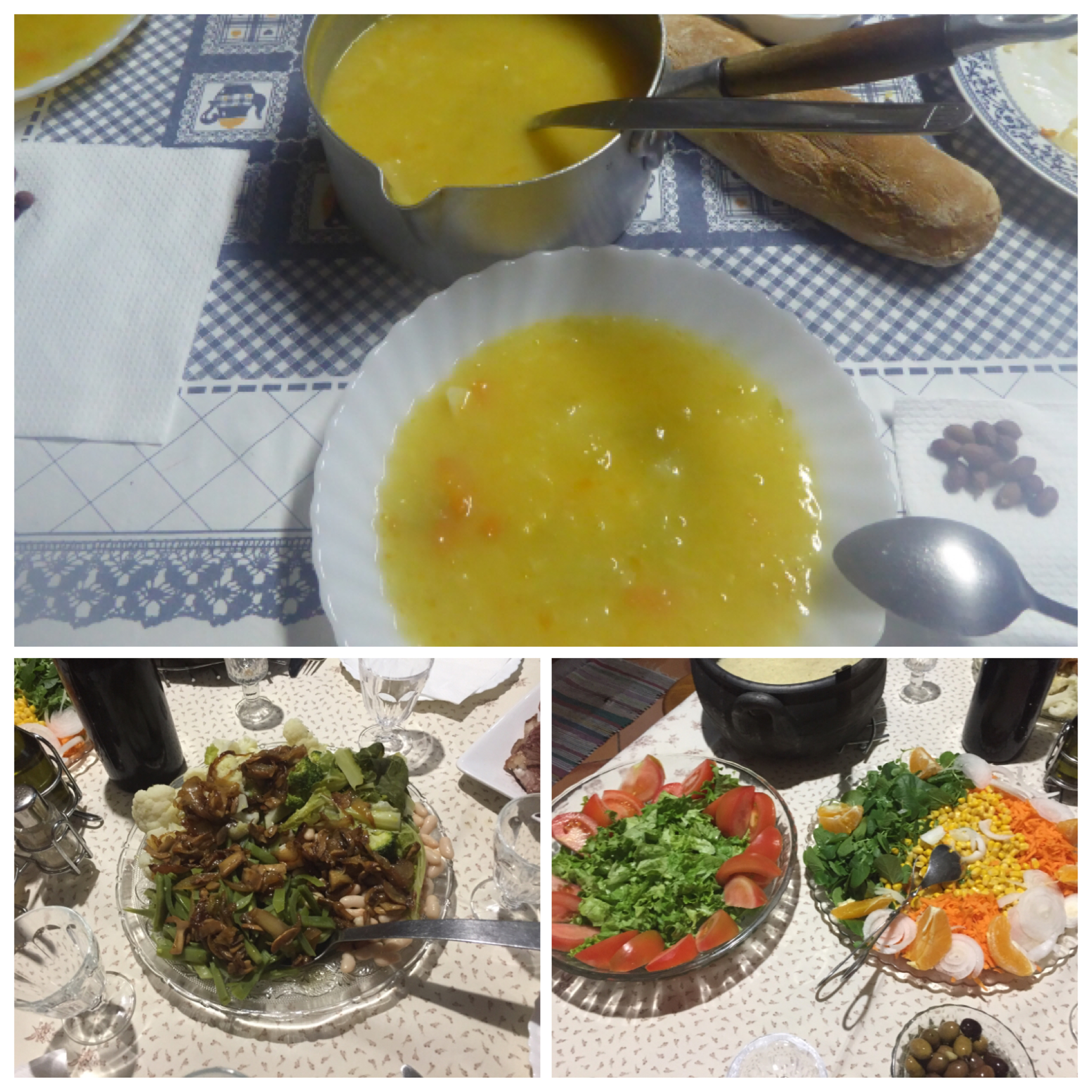
Guess which plate of food was for me!

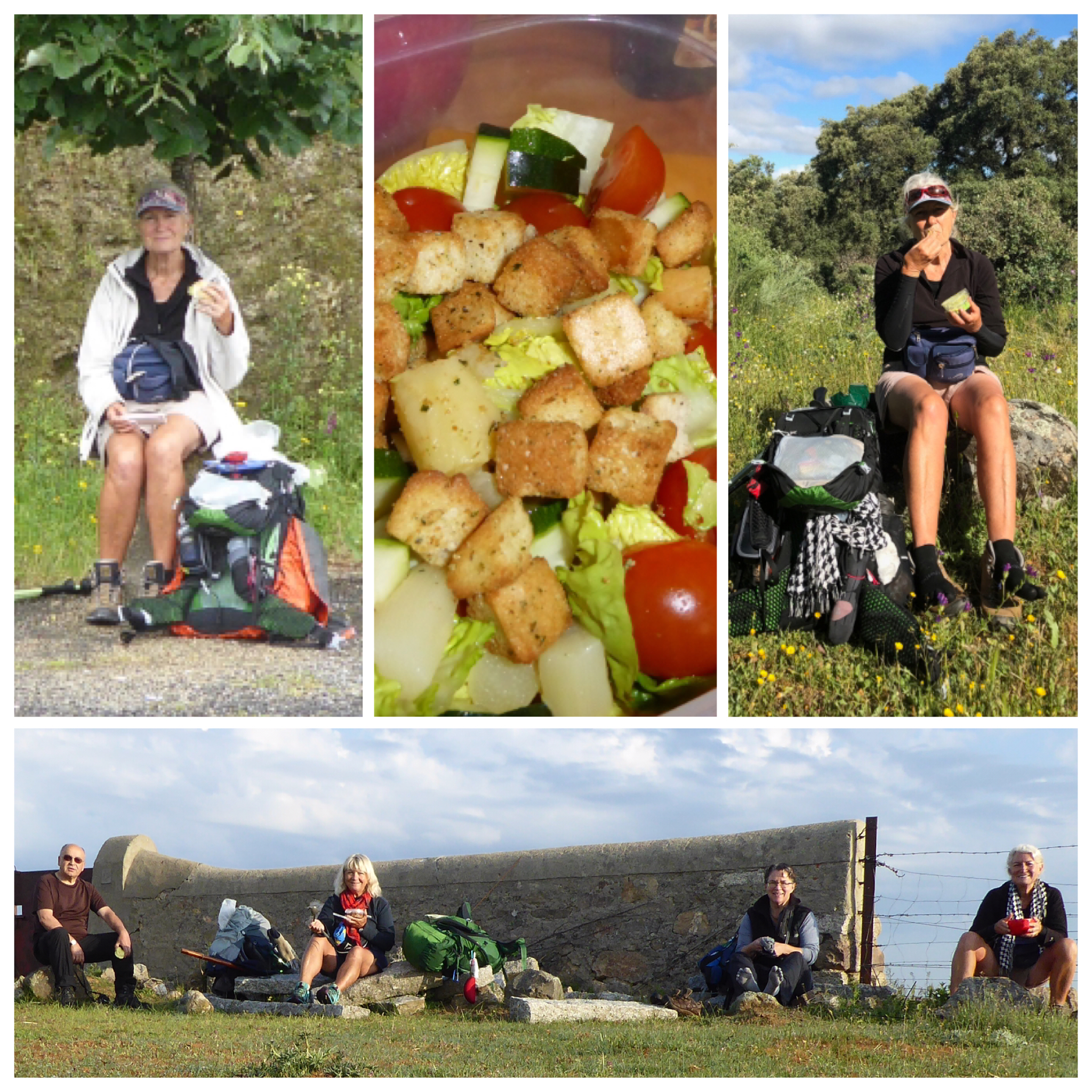
For breakfast tostada con tomate became a firm favourite. Lunch would be whatever was available, often left-overs from a meal I had cooked the previous evening, or a salad I had prepared the night before, or a bocadillo (bread roll) with tomato and avocado. I always bought good fruit when it presented itself and usually had a supply of nuts and sultanas to nibble during the day. And there is a reasonable selection of biscuits that do not contain animal products for the moments when something sweet was required.

Lunch was often taken al fresco – there was usually a tree stump or a rock for a dining chair.

Hot drinks weren’t a problem because I don’t drink tea or coffee, just hot water which was easily available, and for the most part not charged for. A lot of white wine and beer isn’t vegan and nor apparently is some cava – my drink of choice (until a few minutes ago I believed cava was ok, but in checking out for this post I discover I was misinformed. ) See this article if you are interested in the animal products used to clarify wine and beer. I am only slightly ashamed to admit to drawing the line at my dedication to the cause where cava is concerned. I shall just hope that the brands I mostly drink use a non-animal clarifying product.

Although I use the V-word for ease of description – I fall short of being a true vegan. As such I would not wear or sit on leather, wool or silk and not swat really annoying flies. I conform to a whole food plant-based diet, avoiding processed foods. And am working towards eschewing leather products – although I also hate waste, so would not chuck out any items I already own.

There were a couple of negatives though. Often when stopping for a drink with my camigas, we would be presented with a wonderful selection of free tapas, which almost without fail included animal products and so I would just sit back and watch as they were devoured with relish by my friends whilst I starved in the corner. And I could never quite understand why a restaurant could provide a three course menu del dia, with drink and bread for 8 euros, but would charge me perhaps 12 euros for a plate of vegetables and a piece of fruit. I definitely paid a premium in restaurants because I was eating off-menu.

In big cities I was able to use the App ‘Happy Cow’ to source vegan restaurants, or restaurants with vegan options, and had a few exceptional meals. I was glad to have the company of my non-vegan pals on one occasion (in Granada – Wild Food) and they thoroughly enjoyed the food on offer.

I will always remember the wonderful meal I was given by the friends of my Portuguese camino pal – an amazing array of vegetables cooked to perfection. Such a kind gesture to a complete stranger.

Never was food more appreciated than when cooked by friends of my camino pal, with plenty of delicious options for me to enjoy.

And I discovered a new food whilst walking. My eyes must have skimmed over them hundreds of times on the grocery store shelf without noticing them. Altramuces are lupin seeds that are soaked in brine. I was presented with a dish as a tapa in the tiny Spanish village of Alba de Yeltes not far from the Portuguese border. I needed a lesson on how to eat them – it being necessary to nibble a hole in the skin so that the seed can pop directly into your mouth. I soon became an expert and now always have a supply at home. 100g of these little gems contains a reasonable 129 calories and a whopping 11.5g of protein. And in looking on the internet for a photo to include in this post, I came across a recipe for a lupin ‘cheese’ which is definitely going on my list of things to try. Who knew?

No sooner said than done. A bit salty even though I rinsed brine off the seeds, but shows promise.

All in all, walking the camino on a plant only diet was definitely more of a challenge – but then we’re all up for a challenge, or why would we be walking the camino in the first place? Probably the biggest challenge though was carrying some extra weight – around 1.5 kilos, which obviously reduced a little as I progressed.

I did it, I remained nourished and healthy and had sufficient energy to get me through each day with some left over for exploring my destination. If walking one of the more popular routes, with the infrastructure built to service pilgrims, it would be a great deal easier. But hey, who wants an easy life!

Posted in Camino assessments and reflections, Camino de Santiago de Compostela, Camino Mozárabe from Almeria | Tagged , , , , , , , , , , | 13 Comments

Camino Mozárabe from Almería – overview and resources

I decided to walk the Camino Mozárabe from Almería largely in response to a camino forum member requesting company on the route.  I was an early responder and thought for many months that there would just be the two of us. Whereas slowly but surely other forum members showed interest in joining us until we became eleven peregrinos from around the world.  We were assured by the very helpful amigos at Almería (Asociación Jacobea de Almería-Granada Camino Mozárabe, www.almeriajacobea.es) that there would be sufficient beds for us at all stages as far as Granada, but I have to admit to being a little concerned about such a big group setting off at the same time.  

As it happened two people set off a day earlier and the remaining nine of us met with the Almería amigos the evening before the morning after.  And to ease the situation further, four of our number had walked a half stage the day before and were taxiing back to continue from their stopping point.

So that left five of us setting off from Almería on 14 April 2018.  We marked the occasion with the first of many group selfies and strolled out of town.  Included in our initial group were peregrinas from New Zealand, Canada and Denmark, plus my best camino pal Marilyn from South Africa and of course me from the UK.  We were all experienced serial caminoists, with at least five caminos under each of our respective belts. I have to say it was the best camino company, such camaraderie, so much fun and no judgement.
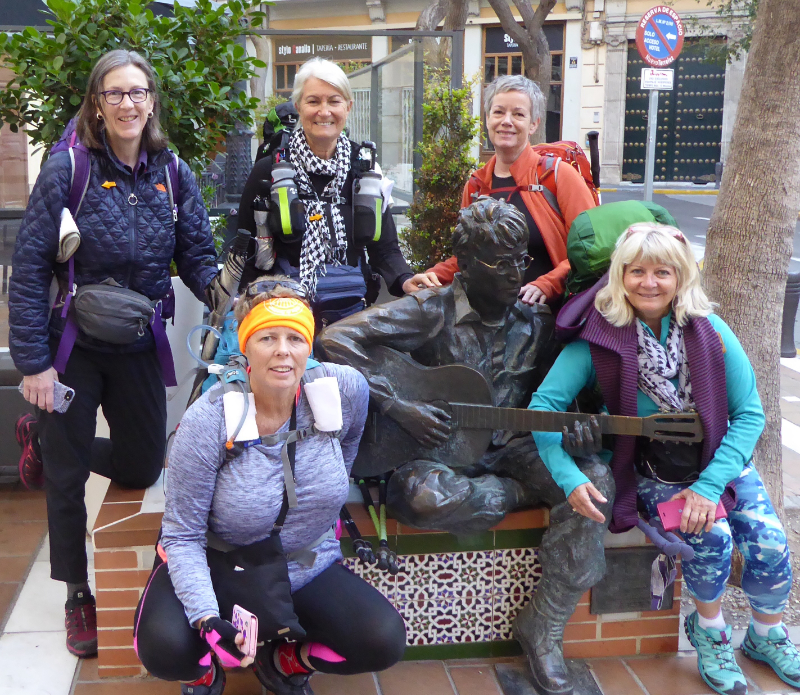
I was expecting not to see other pilgrims along the way.  From what I had read about the route it was still fairly undiscovered and little walked.  So I was very surprised to discover within a few days that we were walking in a ‘bubble’ of thirteen-fifteen pilgrims.  On day two there were an Italian couple, a German couple, an American mother and daughter and a Spanish guy all staying at the albergue, although other than the Americans we didn’t see much of them along the way.  There was often a choice of accommodation at the stage ends and although my group usually opted for the albergue, there wasn’t any problem finding sufficient beds until after Granada.  For the most part the accommodation was good to excellent (although I have to admit that my standards are not too high!).

From Almería to Granada the hospitaleros work with each other and the association to serve the pilgrims.  It is important that you phone a day in advance to let them know of your arrival. The hospitaleros have lives that involve being away from the village and cannot just happen to be there if they do not know anyone will be turning up. And just as important is to inform them if you have reserved and then change your mind and walk on, as much effort is involved in preparing for pilgrims and in winter heating the accommodation.

The scenery was quite barren for the first few days and there was a lot of walking along river beds which was quite tough. By day five/six it began to get greener and more varied.  There were some mighty inclines and descents and some stages without facilities when it was necessary to carry extra food and water. And it is also wise to remember that there probably wont be any shops open, even in big cities, on a Sunday.  I faced an extra challenge this year as I was eating a plant only diet – not a problem when I could shop well and cook for myself, but sometimes a little difficult to eat as healthily as I would have liked.  I shall write another piece about walking the camino on a plant-based diet.

We walked nine days from Almería to Granada, six stages from Granada to Córdoba, and seven stages from Córdoba to Magacela where Marilyn and I took a different route (when I walked previously from Málaga I took nine days from Córdoba to Mérida (which included some very long stages that could have been broken down).

I planned this camino to discover some lesser-walked trails which included the Mozárabe, the variant through Trujillo, the Camino Torres and the Portuguese Coastal/Espiritual.  I shall write separately about each of the four sections.  This is meant as an overview only, giving brief details of each stage.  If you want a more detailed description with lots of fabulous photos, please refer to my blog or click the link for each day.  

From my research I prepared two documents that I referred to constantly.  One with stage distances and accommodation details. The other with distances between towns and villages and the facilities available in each.  I find this is sufficient to guide me through my camino without need to carry a guide book.  It should be noted however that just because the list states there is a bar or a shop, it will not necessarily be open.  Spanish bars normally close one day a week, if there is more than one bar they will alternate days, but if there is only one, then that refreshing drink you have been dreaming about for a number of kilometres may not become a reality.  You are welcome to use these documents as a guide, but please do your own research – much may have changed since I prepared them and I take no responsibility for any misinformation.

2018 camino stages – accommodation Almería – Magacela
stage facilities Almería to Aldeanueva del Camino

You can also find lots of useful information at these links
Stages – Almería Jacobea
Camino Mozárabe guide
Mundicamino
Accommodation & facilities

You can click on the ‘stage’ heading for each day to see a full description and lots of photos on the reports that I posted as I walked. You can also click on the stage names, ie “Almería to Santa Fe de Mondujar” to see the wikiloc tracks for each stage.

Stage 1

Almeria to Santa Fe de Mondujar 24 km Riverbed / road, nice albergue with good kitchen – casa rural (town house) that potentially sleeps 6, 15 euros per person or 40 euros for the house.  Double bed, two singles and double sofa bed. Info for albergue…fabulous cooking facilities, at time of writing everything brand new and shiny. Microwave and ceramic hob, big fridge, washing machine, lovely shower. Ring in advance to reserve 678 288 143, Casa Rural Limon y Naranja
 

Stage 2

Santa Fe de Mondujar to Alboloduy 16 km, first half steep elevation up and down on rough tracks with a couple of villages, then agricultural road.  Good albergue, 20 beds arranged over several apartments, which are also available to tourists. Our apartment which has three bunks and a very decent working kitchen and bathroom costs 50 euros, between the five of us.  +34 633 357 533.  Very important to ring ahead to arrange your stay.  
 

Stage 3

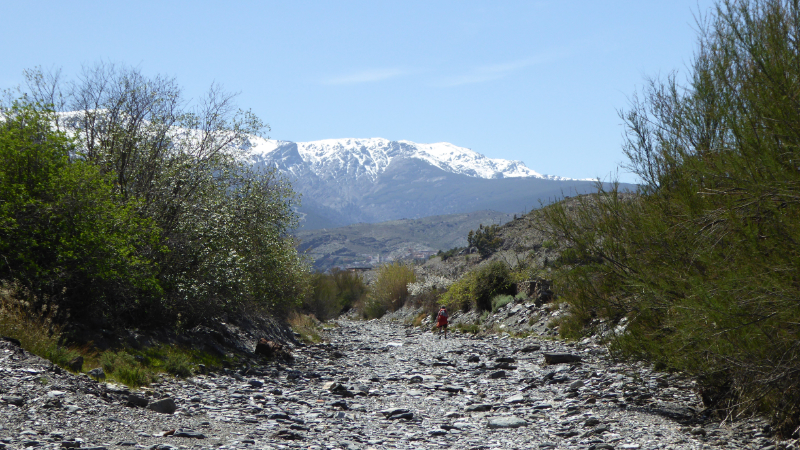
Alboloduy to Abla 30 km.  Start on riverbed – hard underfoot, after 3.5 km on narrow tracks with steep elevation and back down to riverbed.  At least two thirds of the stage is on the riverbed which is hard-going. Town at half-way point and a couple of villages after that. Over 800 metres elevation gain on this stage.  Abergue at very top of town opened three years ago and has two rooms, each with three bunk beds, but only one bathroom for twelve people. There is a good kitchen and washing machine, but no wifi.  Donativo, ring ahead to reserve 660 229 995 / 626 377 113
 

Stage 4

Abla to Hueneja 21.5 km.  First section easy walking with village for refreshment at 8 km.  Should have been a bar at around 15 km but I didn’t find it.  Steady climb throughout the stage and more rough riverbed with no shade.  Albergue in apartment block, 9 places, tiny kitchen and bathroom, donativo.  Collect keys from old people’s home next to church 676 670 052.
 

Stage 5

Heuneja to Alquife 20 km. Fabulous countryside track walking, no riverbed.  Three villages with bars spaced out along the way.  We stayed at private Albergue Lacho.  There are several rooms with beds for 12 in a house with a very large lounge/kitchen and bathroom. Wifi, washing and breakfast are included for 13 euros. Telephone Manuel 603 170 445. There is another private albergue in the town which might be worth a try La Balsa tel  622 798 351 10 euros.
 

Stage 6

Alquife to Guadix 24 km. First day of net elevation loss, a valley with flowing rivers, a pine wood and reservoir (we took a short cut across the top of the reservoir rather than walking all the way around as directed by the arrows).  Mostly agricultural tracks, a bit of road walking and 5 km of not uncomfortable riverbed then back on road into Guadix famous for its cave houses.  We are staying at ‘La Escultora’ an ancient property in the city centre that has been beautifully restored with authentic furnishings, internal patio, beautiful lounging areas and large kitchen, washing machine – 15 euros 604 120 309 / 643 609 800, 13 euros including breakfast.
 

Stage 7

Guadix to La Peza 23 km (or if you get lost as I did 27 km – hence no link to trail – I don’t want others to follow my mistake!). Once out of Guadix the walking is wonderful, soft tracks through pine woods past deserted cave houses until first town at 9.5 km, then on concrete track or asphalt for around 6 km through the next three villages until getting back onto riverbed, first very sandy, turning to extremely rough.  I missed the turn off the riverbed that climbed to the road and wandered in the hills until I found my way back to the route with help from maps.me.  There is a final walk along a switchback asphalt road into La Peza.   We stayed at the municipal albergue, 8 places, donativo, kitchen,  958 674 151 / 608 120 123. There are also casa rurales in the town.  You need to buy supplies for the next day’s 30 km stage as there are no opportunities for refreshment.
 

Stage 8

La Peza to Quentar 28 km. Initial steep climb to ridge with stunning views to each side.  Wide driveable track. After about 8 km the arrows point to a riverbed, deep sand – very hard going for 3 km.  There is a road alongside which would have been much easier to walk.  Then back on wide track winding into the deep folds of the mountains and continuing to rise and fall (mostly rise!). At 22 km we pass through a towering disused quarry and then the track descends steeply all the way to our stage end.  There is an albergue in Quentar 639 479 631 / 958 485 164 12.50 euros, but we book a townhouse (Casa Rio Quentar, booked via booking.com) with charming host who is keen to see all our needs are met. There is an open fire, an excellent kitchen, with washing machine.  For five the cost is 17 euros each. Two rooms with twin beds one double.
 

Stage 9

Quentar to Granada 18.5 km.  Lovely track to start the day, alongside a river, passing allotments and blossoming orchards.  After first village at 3 km there is a steep incline to a ridge running between two valleys. Stunning scenery. At around 4.7 km the descent begins and it is downhill all the way.  Unless you blindly follow the arrows (as we did) at Sacromonte and take an unnecessary loop up to the Abadía – only to descend to the same spot on the road below.  A short walk into Granada gave us the time to relax and soak up the ambience of this amazing city.  We stayed in Hostal Al Andaluz in a six bed dorm (three sturdy bunks) although there are only five of us we paid for the sixth bed so that we didn’t have to share with a stranger. Total cost 66 euros including sheets, but no blankets, and with a very nice modern bathroom. Booked via Hostelworld.
 

Stage 10

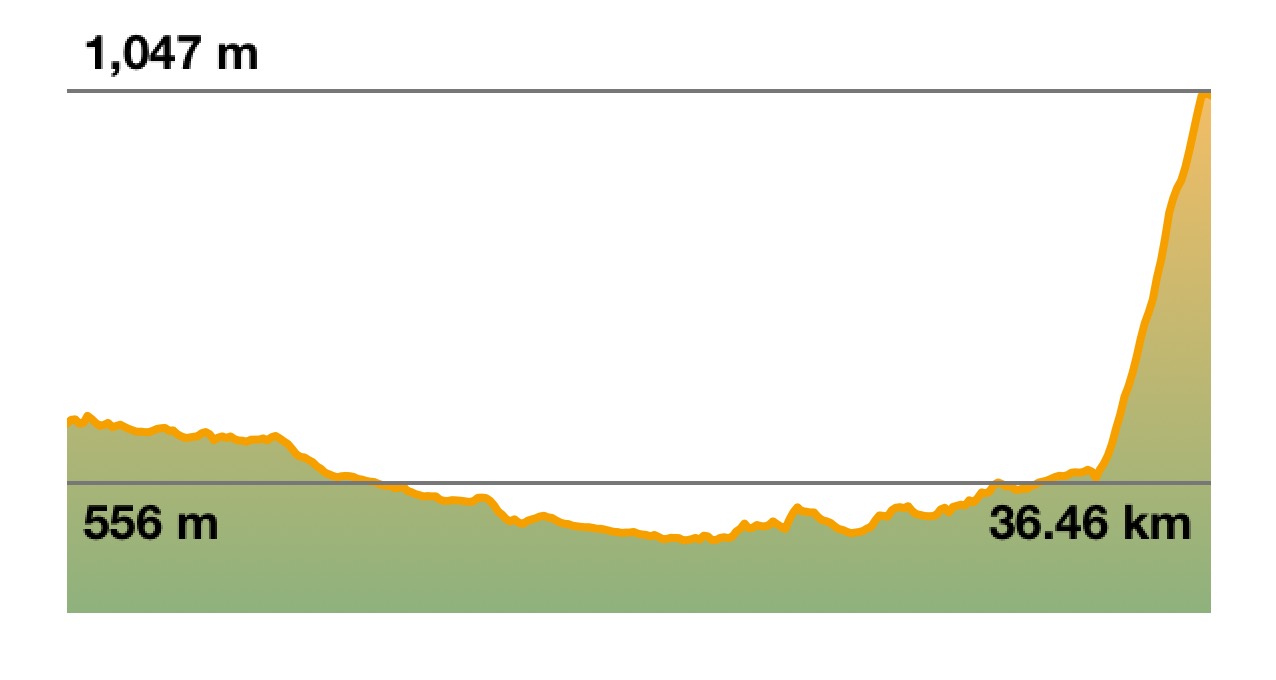
Granada to Moclin 36.5 km.  Difficult to follow signs out of Granada.  Used maps.me route to assist us.  8km to city limits then some track before returning to asphalt alongside agricultural land growing asparagus.  Large town at 12.5 km then a long trek through industrial area, then road between a railway line and some scruffy fields. Easy walking but not enjoyable.  Next town at 22 km after which we enter countryside but still on asphalt.  Finally at 27 km we are walking on track through olive groves.  Last village at 32.5 km then ridiculously steep climb up to the stage end at Moclin.  Various options for accommodation but I booked a magnificent casa rural, a sixteenth century stone property sympathetically renovated with fabulous kitchen and bathroom, could sleep 8 (four singles, two doubles), 70 euros between six of us. What a treat.  Pósito de Moclin, reserved through booking.com, but you could try phoning direct 655 049 013 if you have good enough Spanish
 

Stage 11

Moclin to Alcalá la Real 25 km.  Very steep initial descent, then up and down the rest of the stage.  Tracks through olive groves and past rolling green fields, some road walking, one section fast busy road but only for 1.5 km.  Town at 13.5 km, but bar didn’t open until mid-day, although there is a small well-stocked supermarket for supplies.  The second half of the stage was on tracks through asparagus fields, past various farmland and over a couple of streams.  Alcalá la Real is a sizeable town, no albergue but various options for accommodation.  We stayed at Mirador Tierra de Frontera reserved via booking.com in a triple room for 55 euros, good kitchen, use of washing machine lounge/diner, two bathrooms and lovely terrace directly opposite the castle.  We were the only ones staying.  The owners have a micro brewery and their beers are for sale at the premises.
 

Stage 12

Alcalá la Real to Alcuadete 25 km.  Countryside immediately on leaving town through olive groves and asparagus fields. Town at 12.5 km for refreshments.  Olive groves in every direction on second half of this stage.  There were more pilgrims than accommodation when we arrived in Alcuadete.  Fortunately hospitalero Peter let us stay at his albergue (situated in his home) which was undergoing renovation.  Very kind host, we bought him supper as a thank you.  Donativo, four beds, but possibly more in the future, situated directly on the camino towards the exit from town.  Contact via whatsapp only on 644 842 540.  No faciliies on next stage so buy supplies.
 

Stage 13

Alcuadete to Baena 26 km.   First 3.5 km on very quiet road through olive groves, then track for 3 km, very busy road for a short while, then various tracks again. We stopped for lunch  at 12.5 km overlooking large reservoir.  The approach into Baena isn’t very nice, very dusty track with lots of vehicles throwing up clouds of dust.  Baena is a big town with many restaurants and facilities.  Stayed in ‘Ruta del Califato Baena’ tel 957 670 075, 10 euros. There is a large room with five bunks sleeping ten, one bathroom and no other facilities whatsoever. Only two chairs from which to climb to the five top bunks that have no ladders, no kitchen, no lounging area, no outside space, and no love for what they are doing (obviously my personal opinion, others might have liked this place more). I took a top bunk and put the mattress on the floor.
 

Stage 14

Baena to Castro del Rio 21 km.  First 1.5 km on busy road with no shoulder, then track through olive groves.  Back on quiet country road at 7km all the way to stage end.  Castro del Rio has an albergue and a choice of private accommodation.  I stayed in the albergue, which is rather basic, two rooms with twelve places over six bunks, no kitchen facilities whatsoever although there is a nice room where you can eat any food that you have found elsewhere. The bathroom leaves much to be desired! It is necessary to register with the Policia local situated in the Ayuntamiento. I have a note that the cost is 5 euros, but wasn’t asked for any money and there is no donation box at the albergue.
 

Stage 15

Castro del Rio to Santa Cruz 25 km.  We were informed that there was no accommodation available in Santa Cruz in either of the two hostals (Casa José 957 378 072 – 20 euros/ La Bartola 958 450 136 – 25 euros) Surprisingly there are more pilgrims than beds.  Added to this two of my camigas were suffering badly with a virus and needed to take a couple of days off. I had already walked this stage on the Mozarabe route from Málaga a few years earlier so wasn’t too bothered about missing it and took a day off with my pals.  Next day I took the bus to Santa Cruz and jumped off and walked from there into Cordoba, whilst the others stayed on the bus.  There are no facilities on tomorrow’s stage so shop for supplies.

Stage 16

Santa Cruz to Córdoba 26.5 km.  Quiet road out of village, still walking through olive groves.  First track at 5.75 km.  Hard gravel track winds through undulating crop fields. At 23 km asphalt road into Cordoba. The city is full due to public holiday and patio festival and there is almost no accommodation available.  I find bed at Hostal ‘Backpacker Al-Katre’ reserved via booking.com 20.50 euros for a bunk.  Again, no facilities on tomorrow’s stage
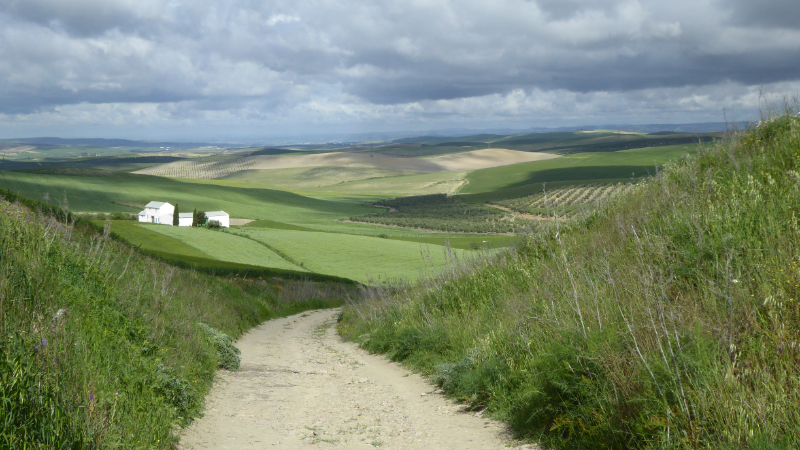
 

Stage 17

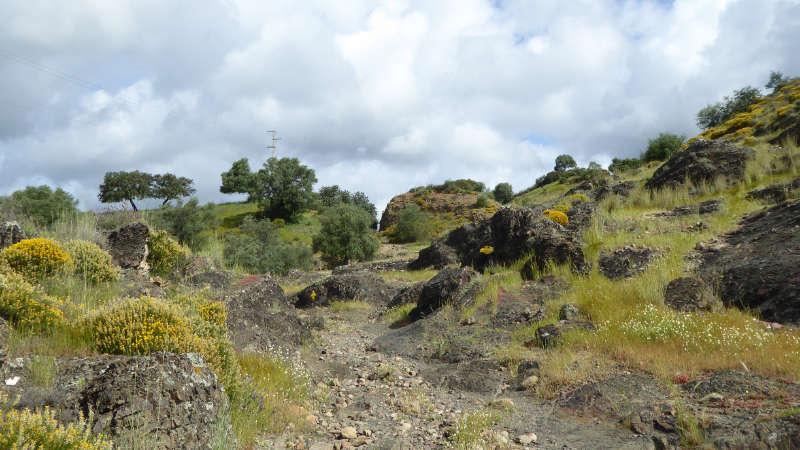
Córdoba to Cerro Muriano 19 km. A pleasant walk out of the city following discrete ceramic wall plaques.  Countryside starts at 4 km, a beautiful walk with much elevation.  We reach the oddly deserted suburb of Torreblanca at 7.5 km, but we don’t pass any shops or bars.  Then we are in stunning woodland with a riot of wild flowers. There seem to be two options for accommodation in Cerro Muriano – Bar X 957 350 188 / 656 836 262 – 15 euros, which was full, and Santa Maria del Trabajo where we stayed for 22.75 euros which seemed very expensive for a room shared by 4 with two singles and one bunk.  There is a variety of accommodation but I think we had the only available room.  It is run by a charitable organisation that raises money for the people down on their luck, rather an odd place.  There are interesting ruins of a copper mine just outside the town if you have the energy for more walking.
 

Stage 18

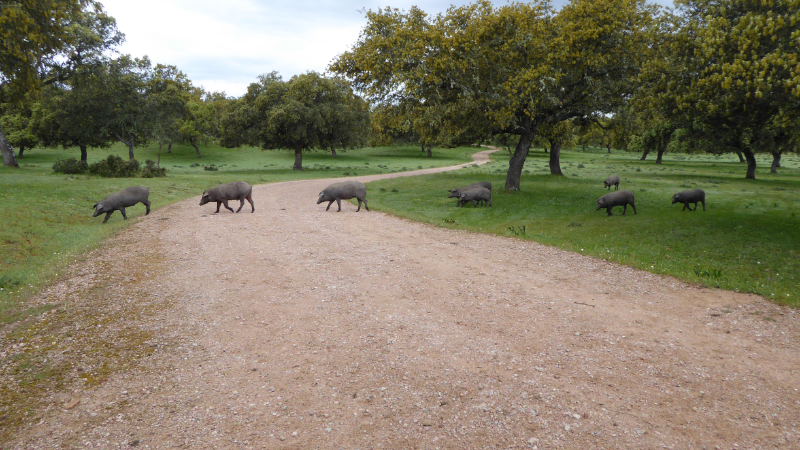
Cerro Muriano to Villaharta 21.5 km. 4 km on road past huge army base, then woodland tracks often within hearing of the busy road, but very pleasant with lots of wild flowers. Village of El Vacar at 12 km with several bars.  At stage end we stay in Hostal Mirasierra which has several rooms with twin beds, a kitchen with only a microwave and one shared bathroom, large terrace, 15 euros.  Bar/restaurant downstairs.  Tomorrows stage is 38 km with no facilities so take supplies.  The bar owner will drive pilgrims to the half way point if 38 km is a problem.
 

Stage 19

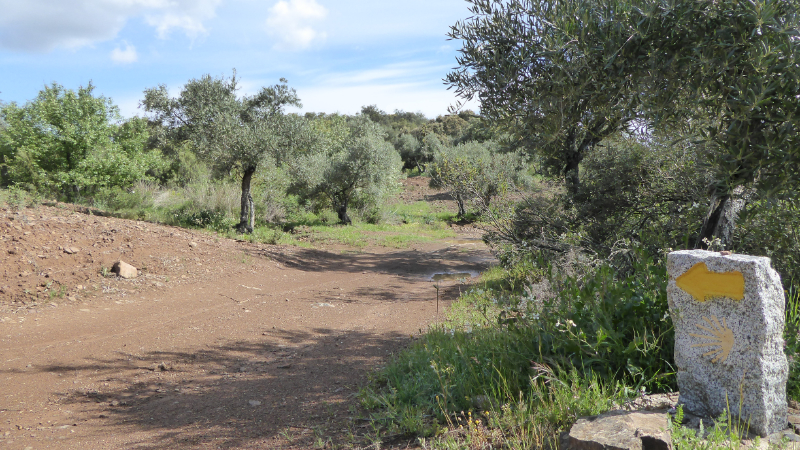
Villaharta to Alcaracejos 38 km. 2.5 km uphill on quiet road then tracks through beautiful countryside with views to hillsides covered in holm oaks.  River crossing at 8.7 km, upper calf depth, maybe 20 metres wide.  Lovely walking on tracks until 32 km then 5 km on gravel and asphalt.  There are various options for accommodation in Alcaracejos including an albergue 678 917 040 / 671 542 430, 9 euros.  I can’t remember why we didn’t stay in the albergue, opting instead for Hostal Las Tres Jotas, huge room with six single beds, wonderful hot shower, but no cooking facilities 15 euros.
 

Stage 20

Alcaracejos to Hinojosa del Duque 23 km.  Leave town on a compacted dirt track through agricultural land with herds of cows, sheep and goats, huge crop fields dotted with holm oaks. There are two villages at  2 km and 10 km. The approach to Hinojosa del Duque is not very pleasant through an industrial wasteland but the town is pleasant.  Call in at Policia Local, next to Ayuntamiento to register and for key to the albergue just around the corner, four bunks, sleeping eight, a decent bathroom, no kitchen but a room with a microwave and a large table, wifi, no charge!  Once again, no facilities on next stage – buy supplies!
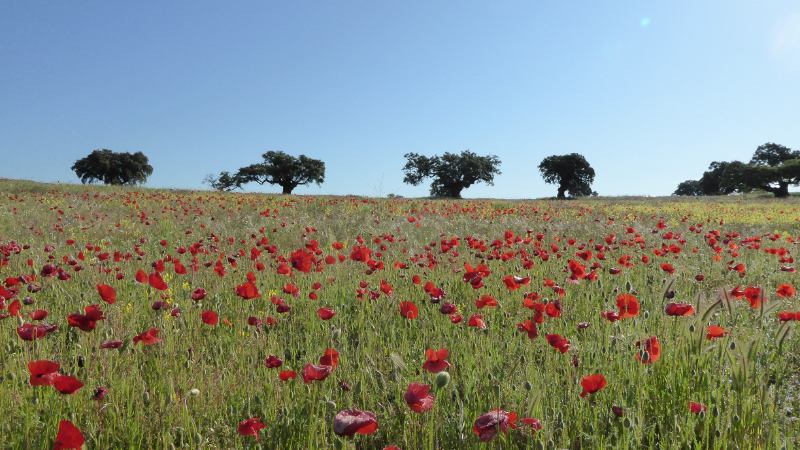
 

Stage 21

Hinojosa del Duque to Monterrubio de la Serena 32 km. Directly onto comfortable track through pastureland.  At 19 km we came to asphalt road.  Last time I walked this stage I crossed the road and continued on track and had to wade a river, again only calf depth.  But last night we had been warned that the river was swollen and not possible to wade, and so turned left onto the road and trudged the asphalt for the following 13+ km – no shoulder but fairly quiet.  Absolutely no shade.  We met other pilgrims who had not heard the warning (from an association volunteer) and had crossed the river without any problem.   New albergue in Monterrubio de la Serena 684 457 681. Sleeps 14, sheets, duvets & towels provided, excellent kitchen and bathroom, washing machine. Calle Nueva 34, 8 euros.  No facilities on tomorrow’s stage.
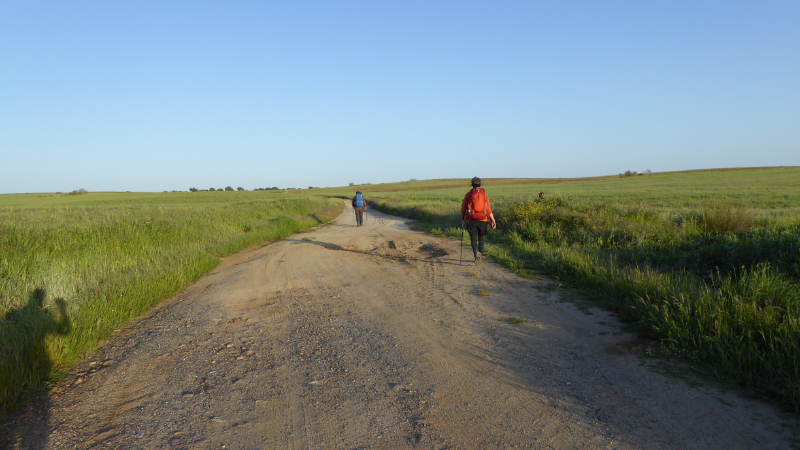
 

Stage 22

Monterrubio de la Serena to Castuera. Not much elevation. 14 km on quiet country asphalt road – pleasant walking, 3.5 km on track and final stretch back on the road into Castuera.  Call into policia local 924 772 350, around the corner behind the ayuntamiento to register and collect key for the excellent albergue.  Two large rooms each with two sets of bunks, a substantial kitchen and dining area, and two state of the art bathrooms, terrace areas – pilgrim heaven, 8 euros including sheets and quilt. Thank you Castuera. 
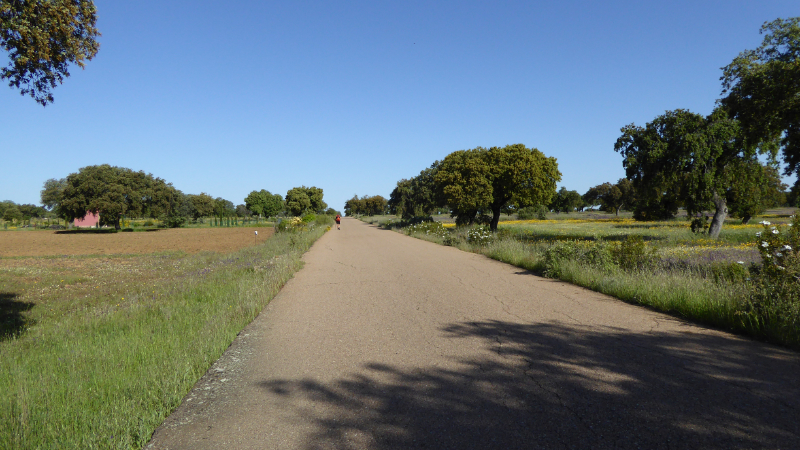
 

Stage 23

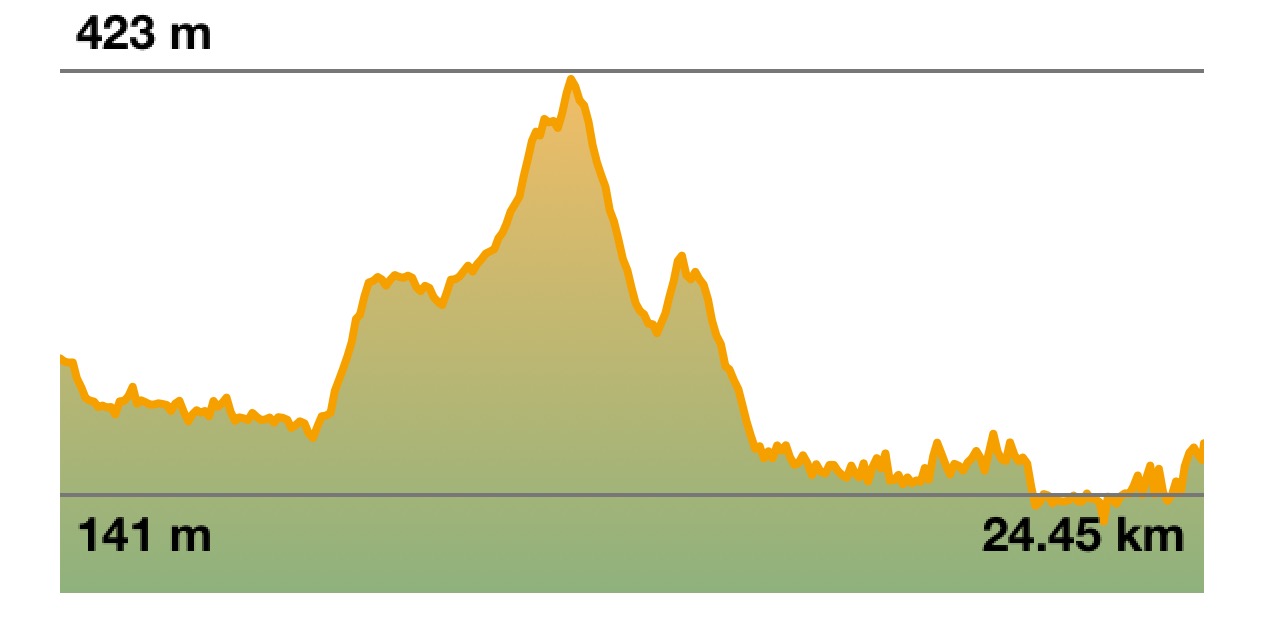
Castuera to Magacela 35 km (there are a couple of albergues between these towns at 8 km and 20 km). Comfortable track all the way, wide open pastureland, no shade. Archaeological site at 27 km that can be visited on weekdays.  Magacela sits atop a hill and can been seen from a great distance.  We stayed at Casa Rural el Cercón de Candelo, telephone Isabel 651 670 413 situated before reaching the hill, well signed from the camino.  Highly recommended, beautiful peaceful courtyard, two bedrooms with twin beds, and bathroom. Cost 15 euros including breakfast. Dinner can be provided for 10 euros.  The spike at the end of the elevation profile above shows where we unnecessarily climbed the hill and back down again to find the albergue.
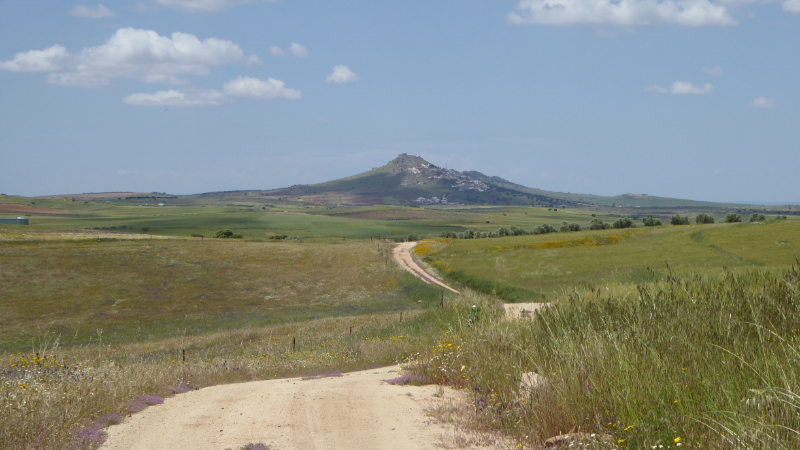
 

This is where the Camino Mozárabe as it is normally walked finished for Marilyn and me.  The next stage was on the variant via Trujillo.  I will write separate posts about this stage, the Torres and the Portuguese Coastal/Espiritual.

Posted in Camino de Santiago de Compostela, Camino Mozárabe from Almeria | Tagged , , , , , , , , | 4 Comments

Camino Portuguese Variante Espiritual, Vilanova da Arousa to Santiago de Compostela 27 km by boat + 28 km walking

Today’s distance 28km (the extra 4 km involved walking around Santiago before I remembered to turn off the GPS)
Elevation gain 488 m
Elevation loss 235 m
Total distance from Almería 1,496 km

So, today we have a boat trip up the Rios Arousa and Ulla and then a walk into Santiago.

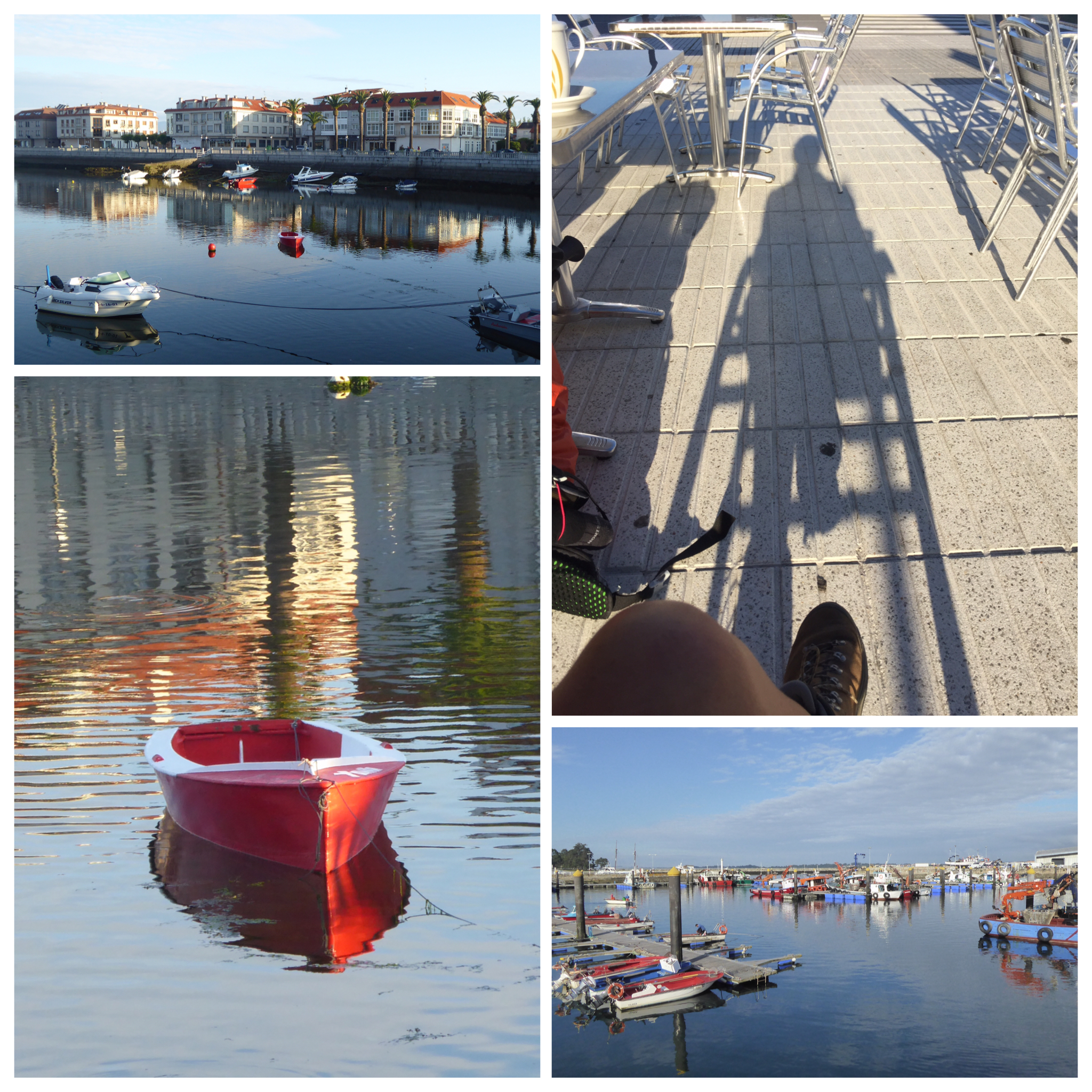
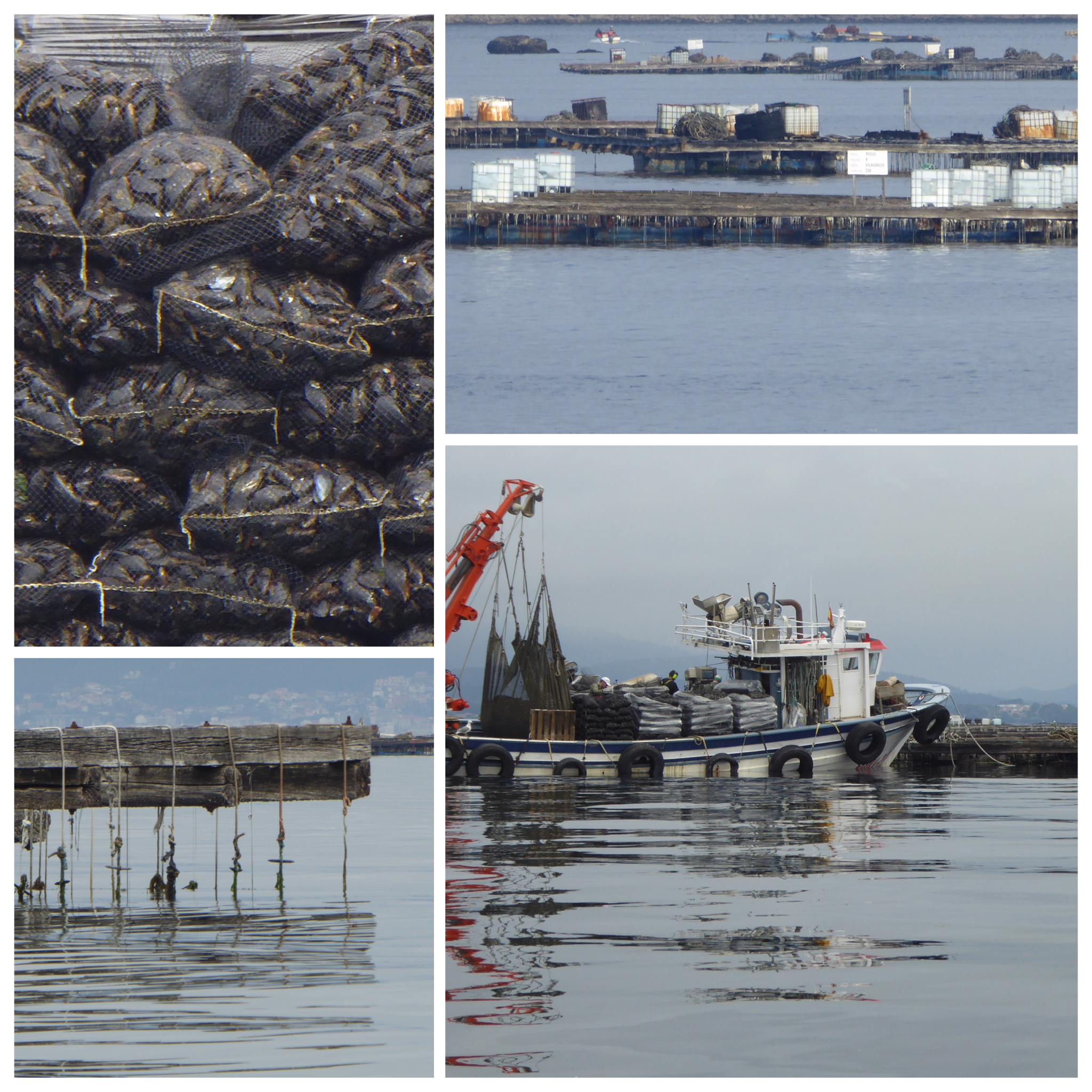
We wake early even though we can’t leave town until the boat arrives at 10:00. The day starts bright and sunny but storms are forecast for later. We make the most of the sun on our backs whilst it lasts. Nina and I take a stroll around the fishing port and the marina and look out over the mussel farms to the bay beyond.

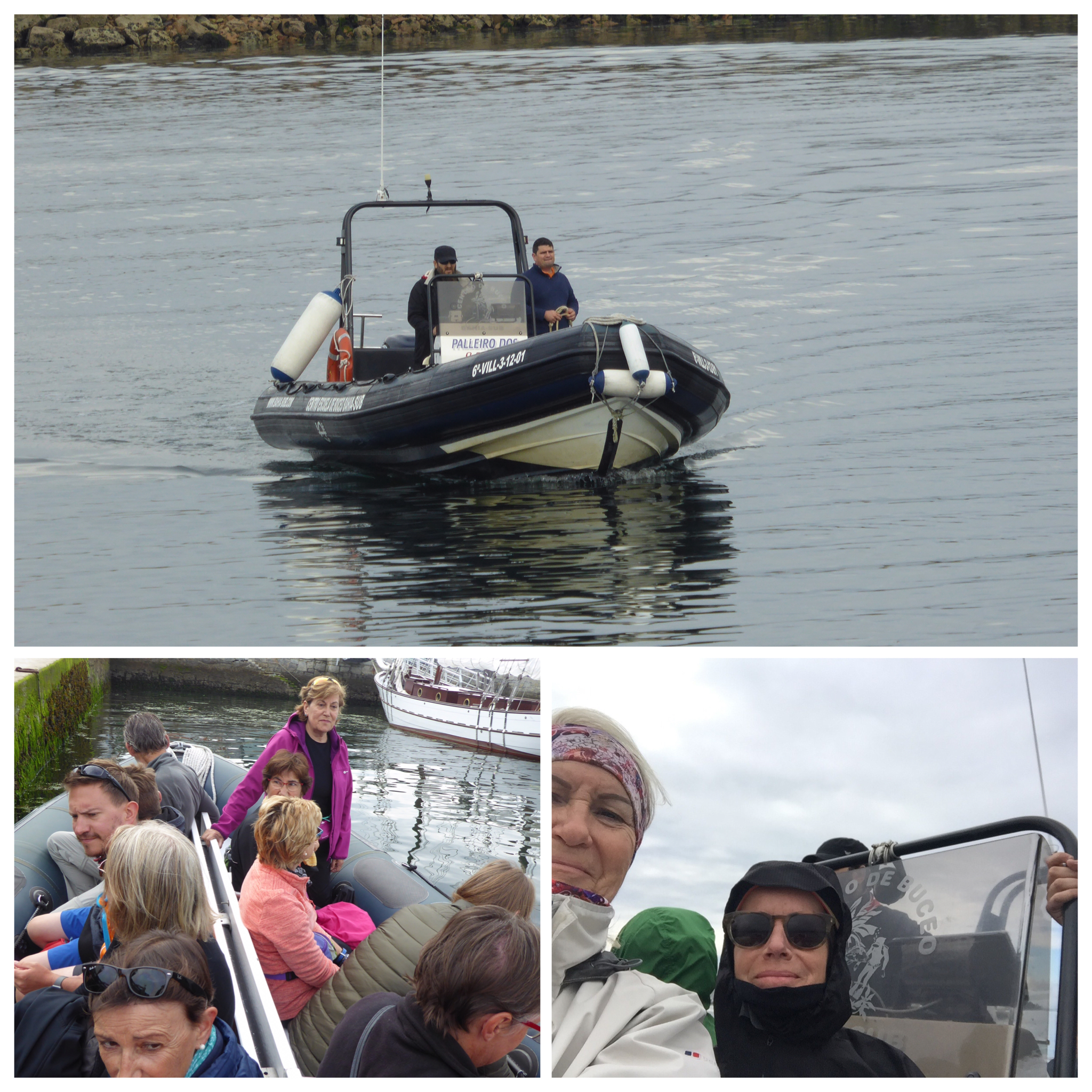
When it arrives I am a little taken aback by the small size of the boat compared to the large number of pilgrims waiting to embark. 19 of us plus two crew squeeze onto what I would call a rubber dingy, but am reliably informed is called a rib (rigid inflatable boat), completely open, no safety drill or information about where to find life jackets. By the time we set off, the sun has disappeared behind the clouds and travelling at 15 knots in the open estuary is rather chilly. So in addition to my fleece and rain jacket I fish in my pack for buff for head and neck, scarf over my knees and gloves. El Capitan stops the boat to give us some information about the mussel beds, apparantly this is the largest production site in Spain, smaller mussels are sent to France and Italy whilst the spanish prefer more muscular molluscs.

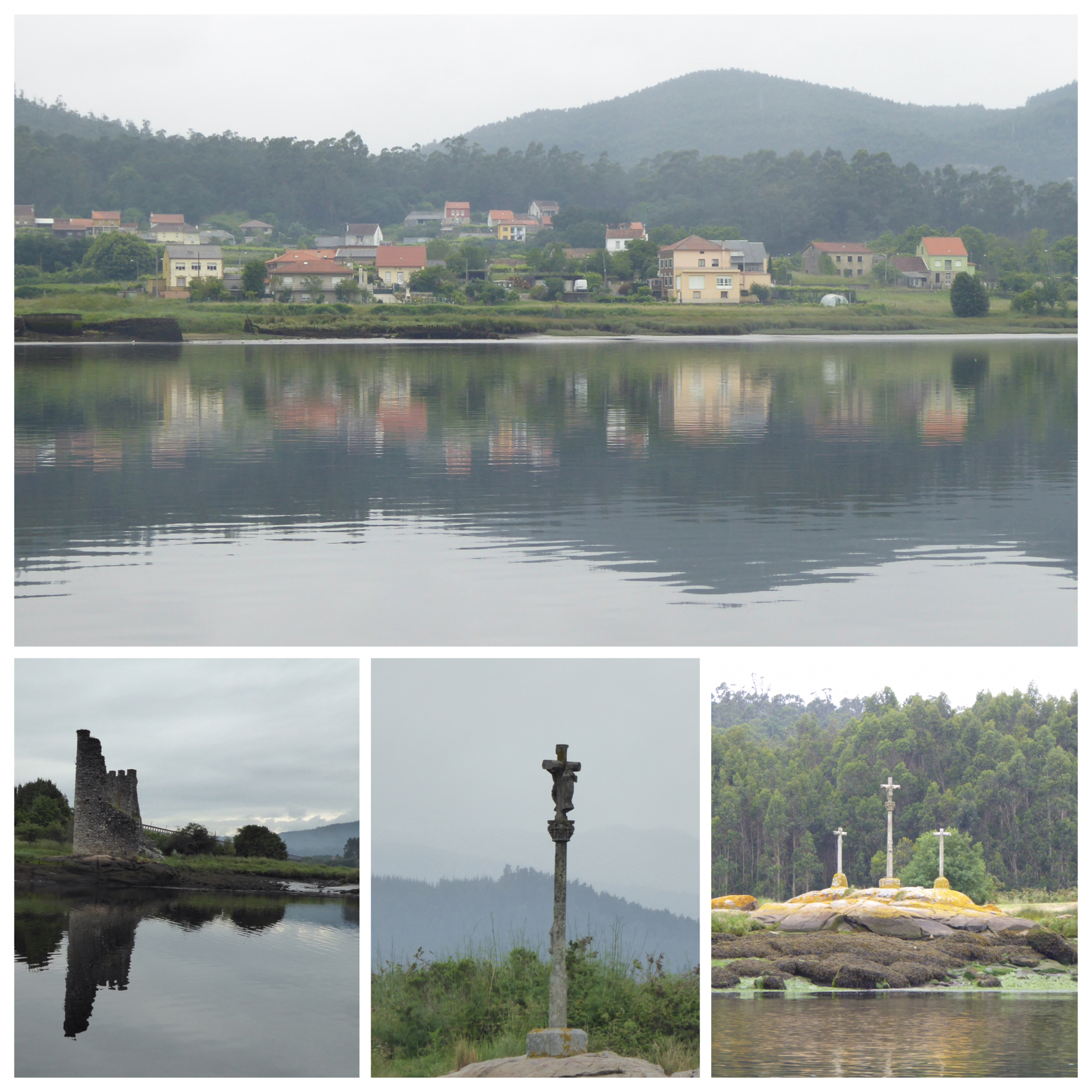
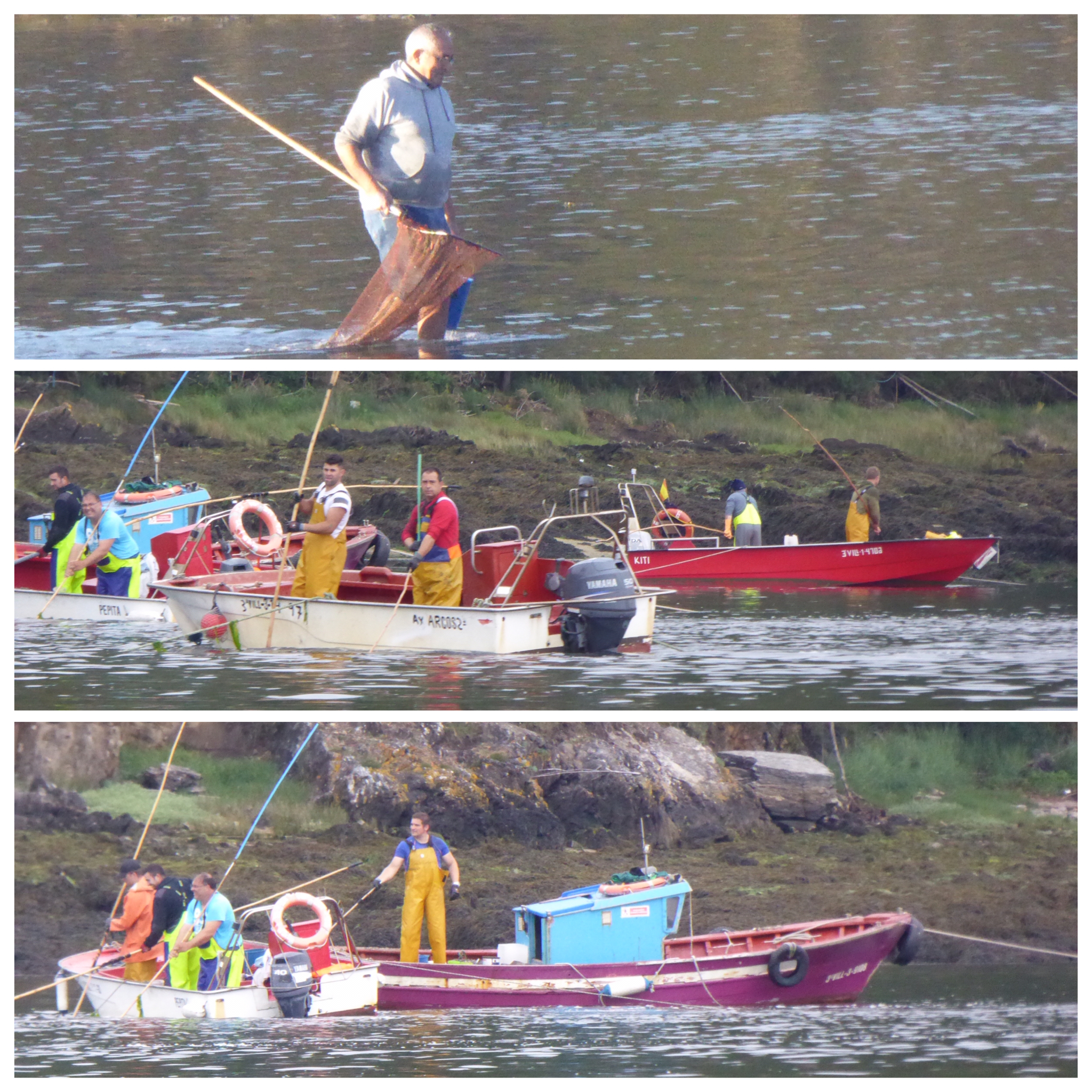
We have another pit stop where the Rio Arousa becomes the Rio Ulla at a small island where three crosses mark the spot. And yet another when we cross the border from somewhere to somewhere else (sorry I wasn’t listening properly) at which point tea and cake was served. Despite the lack of sun and the chill of the speed, it was a very enjoyable journey for 27 km to the landing point at Puentecesures, through a wide and still waterway passing beautiful scenery with lovely reflections in the water. We also passed small fishing boats where several men on each were standing, vigorously and precariously levering long poles with large nets on the end into the water. I didn’t get to see what was their intended catch, but it was all very colourful and they all waved happily to us as we passed.

The boat ride couldn’t start until 10:00 because of the tide, I think at different times there may also be an afternoon sailing and there is also a much bigger ferry for when the numbers are greater. The rain desisted during our journey and when we alighted after an hour and ten minutes, we walked the 2 km into Padrón, stopped at the market for some fruit and bread, and visited the church of Santiago where legend has it St James’ body was delivered in a stone boat.

I had walked this last stage between Padrón and Santiago back in 2014 when I had some excellent company. The rain started soon after leaving Padrón so I didn’t take many photos, but if you are interested to read more about this stage you can see my previous post here (some of the route has changed in the meantime).

As we walk through villages I can smell the delicious aromas of lunches being cooked, and although I am certain I wouldn’t be able to eat any of what is being cooked, it doesn’t stop my nose from twitching in appreciation.

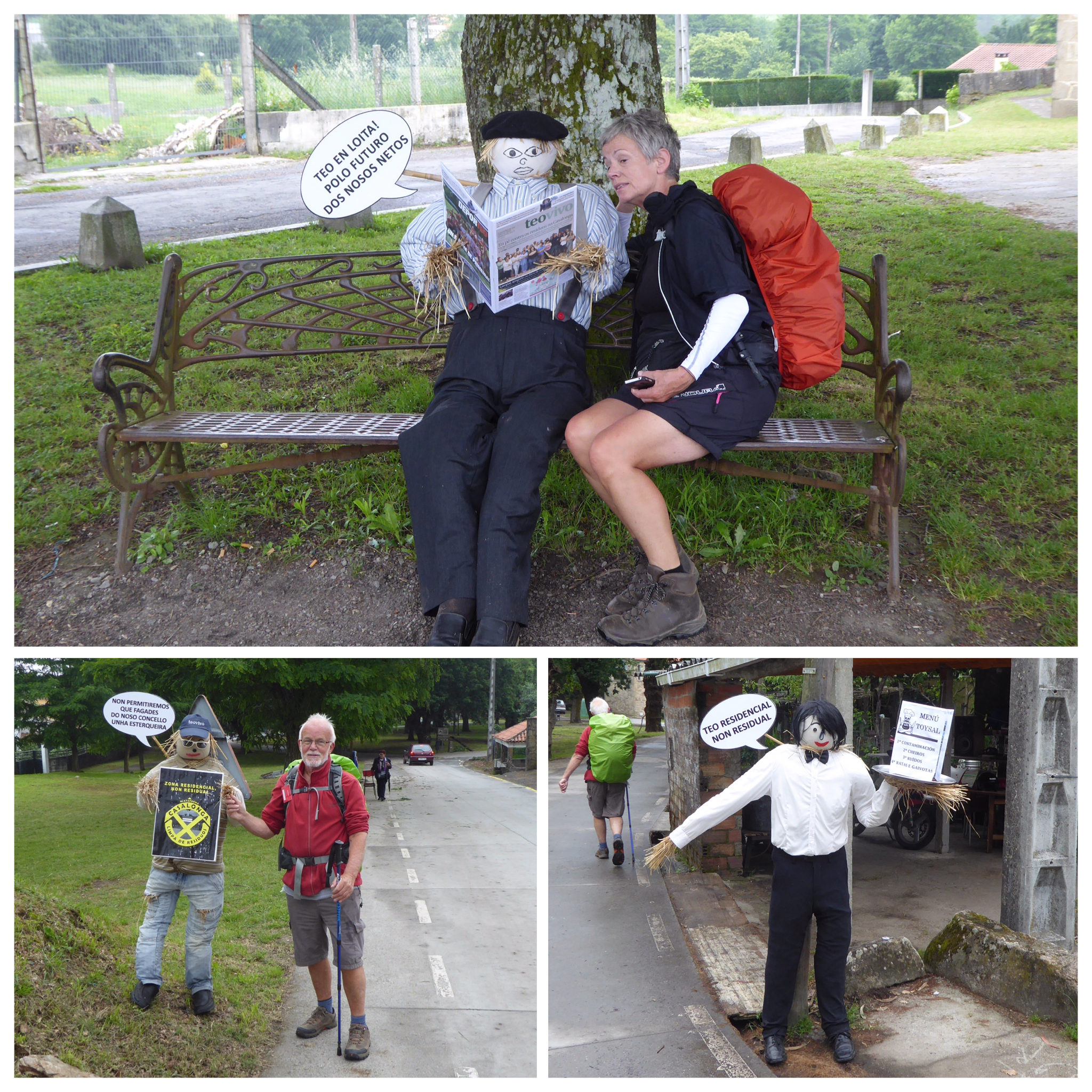
In the municipality of Teo a protest was taking place, very restrained and difficult to miss. Rather than ugly banners strung from fences, there were many attention grabbing full sized straw dolls holding signs and messages. We must have seen at least twenty. Very clever.

This stage was mostly on hard surface, but passing through many pretty little villages, as well as a couple of shortish stretches on the horribly busy N-550. Towards the end of the stage there are two options to walk, one taking around 4 km to reach the city and the other taking 7 km. Unsurprisingly we opted for the shorter route, taking the left fork towards and past the hospital

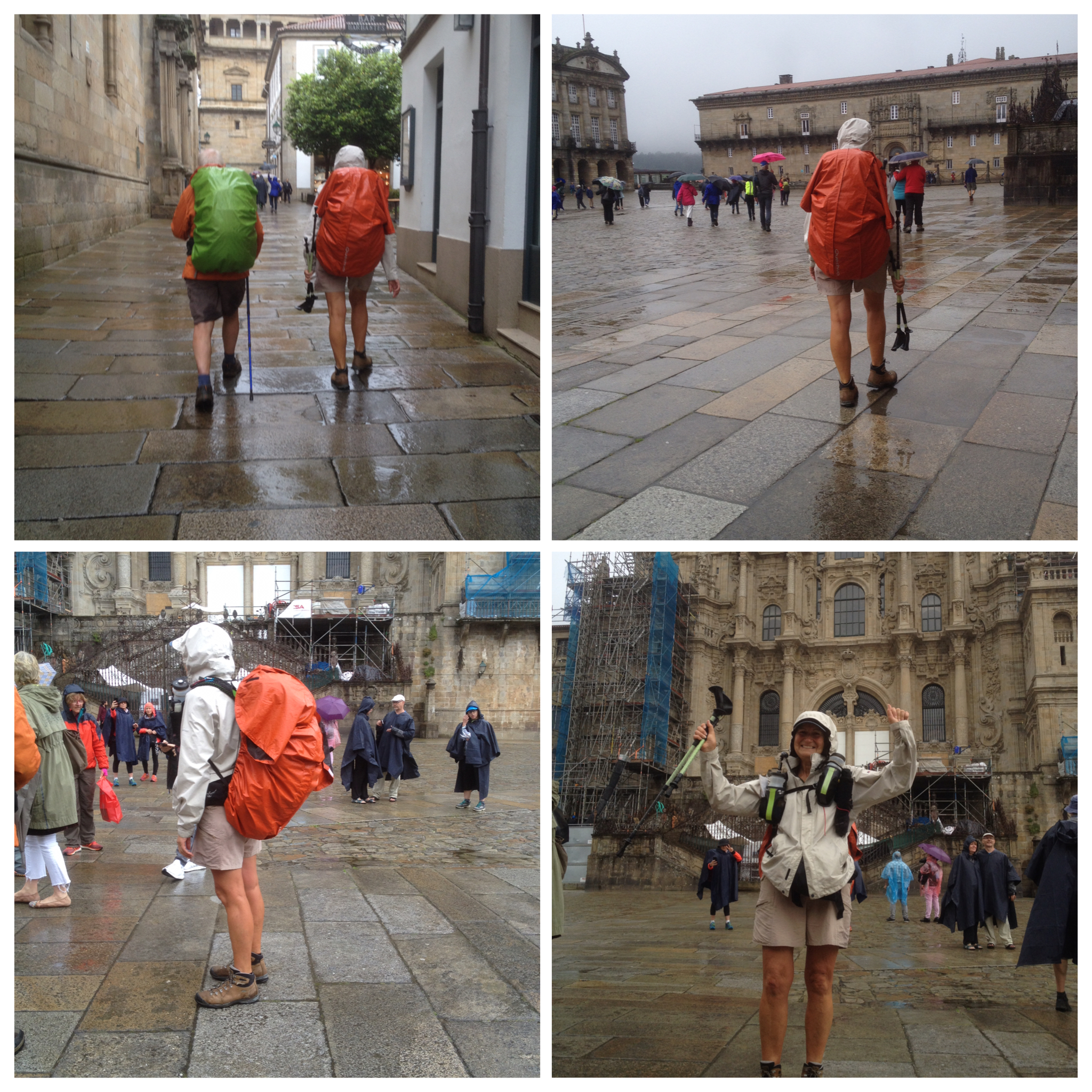
It was still raining as we neared our destination. I had almost reached my goal and walked over 1,400 km from Almería without mishap of any kind when I tripped over something and fell flat on my face (well, not actually on my face thankfully, but I went down completely – sprawled on the wet ground). Luckily Nina was at my side and helped me up (it is no easy feat to get up from the ground with 8 kilos strapped to your back). No harm done, just a grazed knee and a bit of a shock, and on we went, the final few hundred metres to the Cathedral.
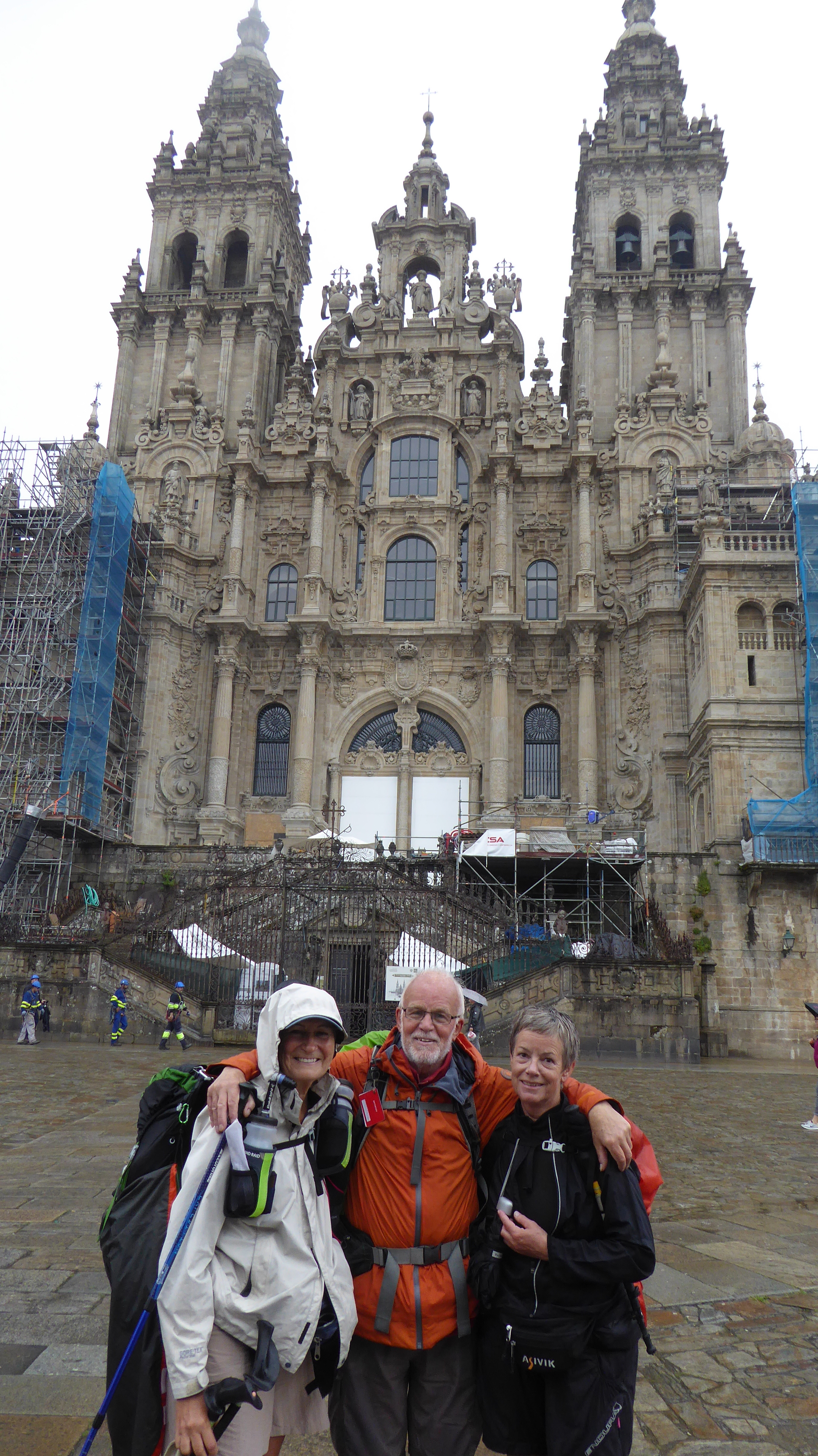
We took a few selfies and had a couple of group hugs. Such a shame Marilyn wasn’t there at the finale – we missed her sunny presence.

Our late start and boat ride meant that we didn’t arrive until 18:00, but there were plenty of other pilgrims arriving from different directions, from different caminos, all with the same looks of wonder and achievement on their faces – no matter what distance they had walked, the feeling of reaching Praza Obradoiro at the end of your camino cannot be beaten.

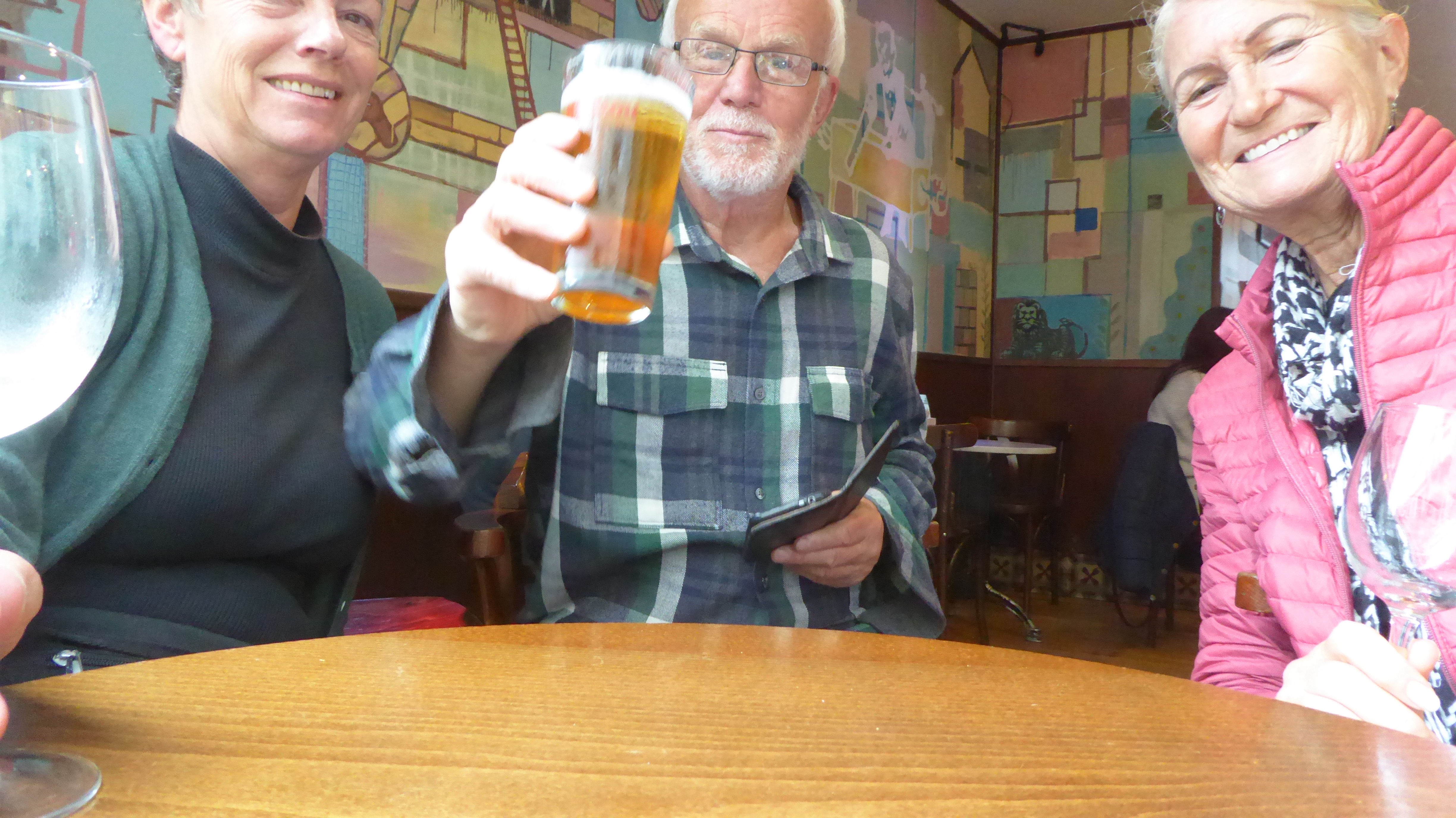
Nina and I stayed at the Last Stamp Albergue – central, comfortable, all facilities, including bed linen and duvet, 18€. We met with Paul later for a bar crawl and a bite to eat.

And there it was, done! Another camino completed.

Of those 1,496 km stated at the top of the page, I didn’t walk 75 of them due to illness (not mine) and accommodation difficulties. But I am sure I walked at least another 150 km in addition to the stage lengths, sight-seeing, shopping, just wandering the streets. I shall write another post or two to round off this adventure, so expect a few more mails to arrive in your inbox.

I would like to thank everyone who has commented on and contributed to this camino blog. I appreciate your support so very much and read and relish every word. Over time I will answer any specific questions and if relevant maybe write a post with responses to items of general interest.

A huge THANK YOU to all those who have travelled with me, in person and in spirit.

Posted in Camino de Santiago de Compostela, Camino Mozarabe, Camino Mozárabe from Almeria, Camino Mozárabe variante Trujillo, Camino Portuguese Coastal Route, Camino Portuguese Variante Espiritual | Tagged , , , , , , , , , , , , , | 39 Comments

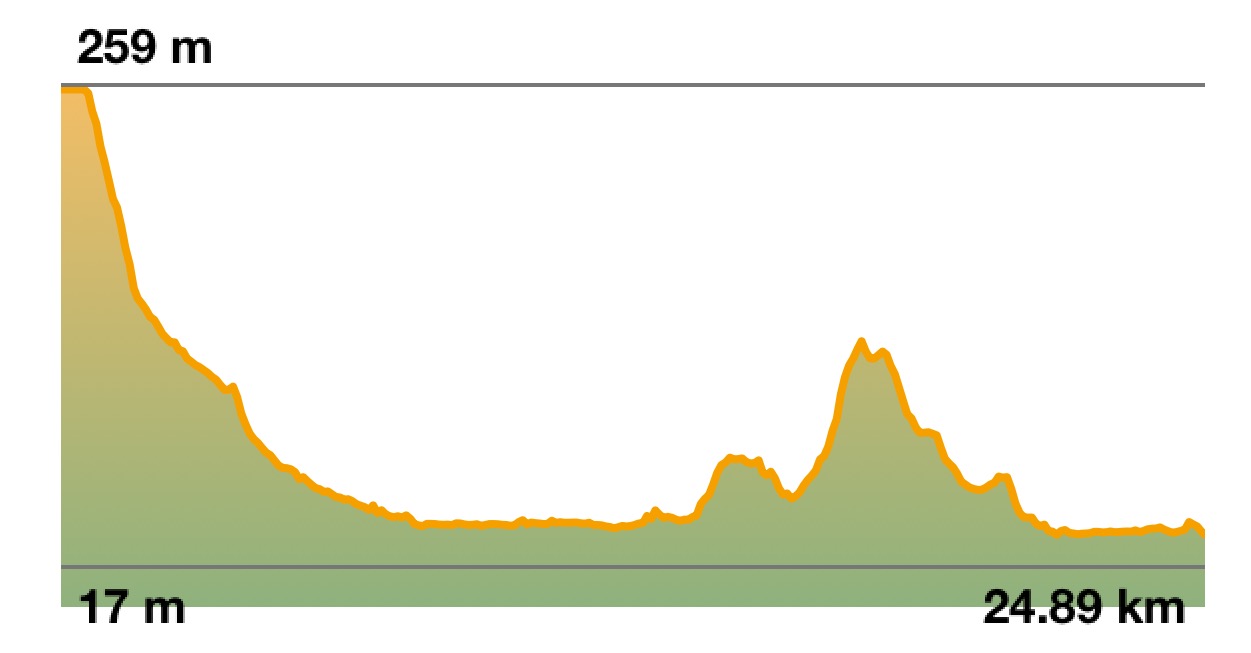
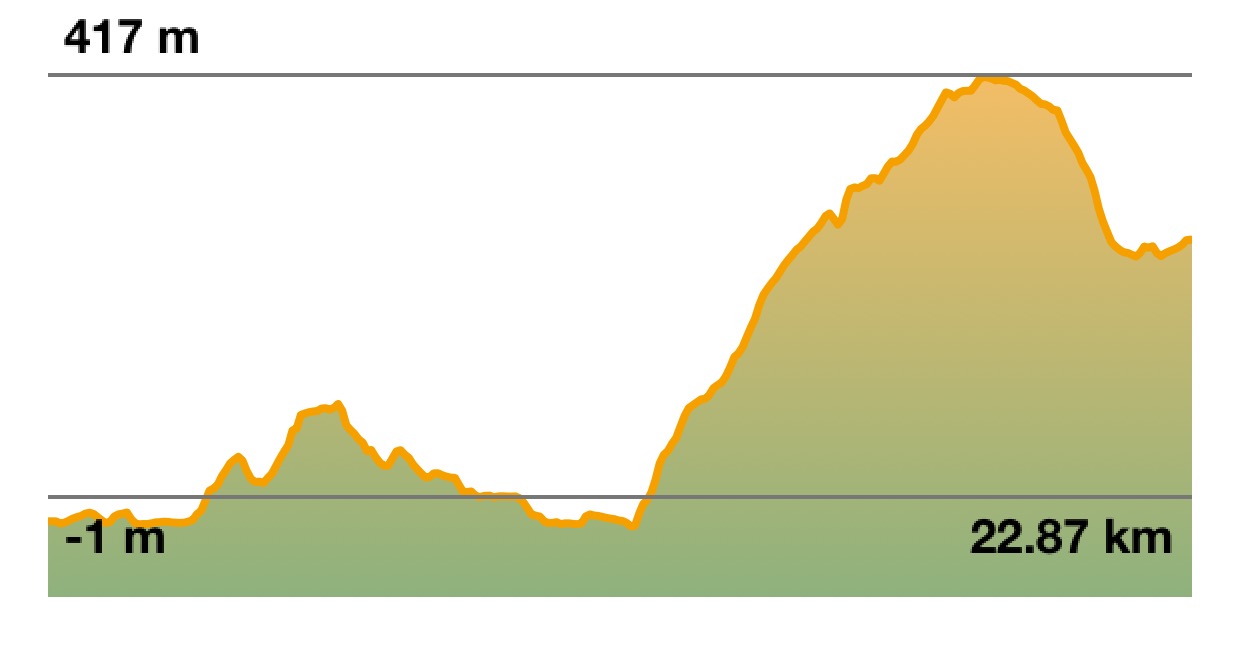
Camino Espiritual, Armenteira to Vilanova da Arousa 25 km

Today’s distance 25 km
Elevation gain 144 m
Elevation loss 385 m
Total distance from Almería 1,468 km

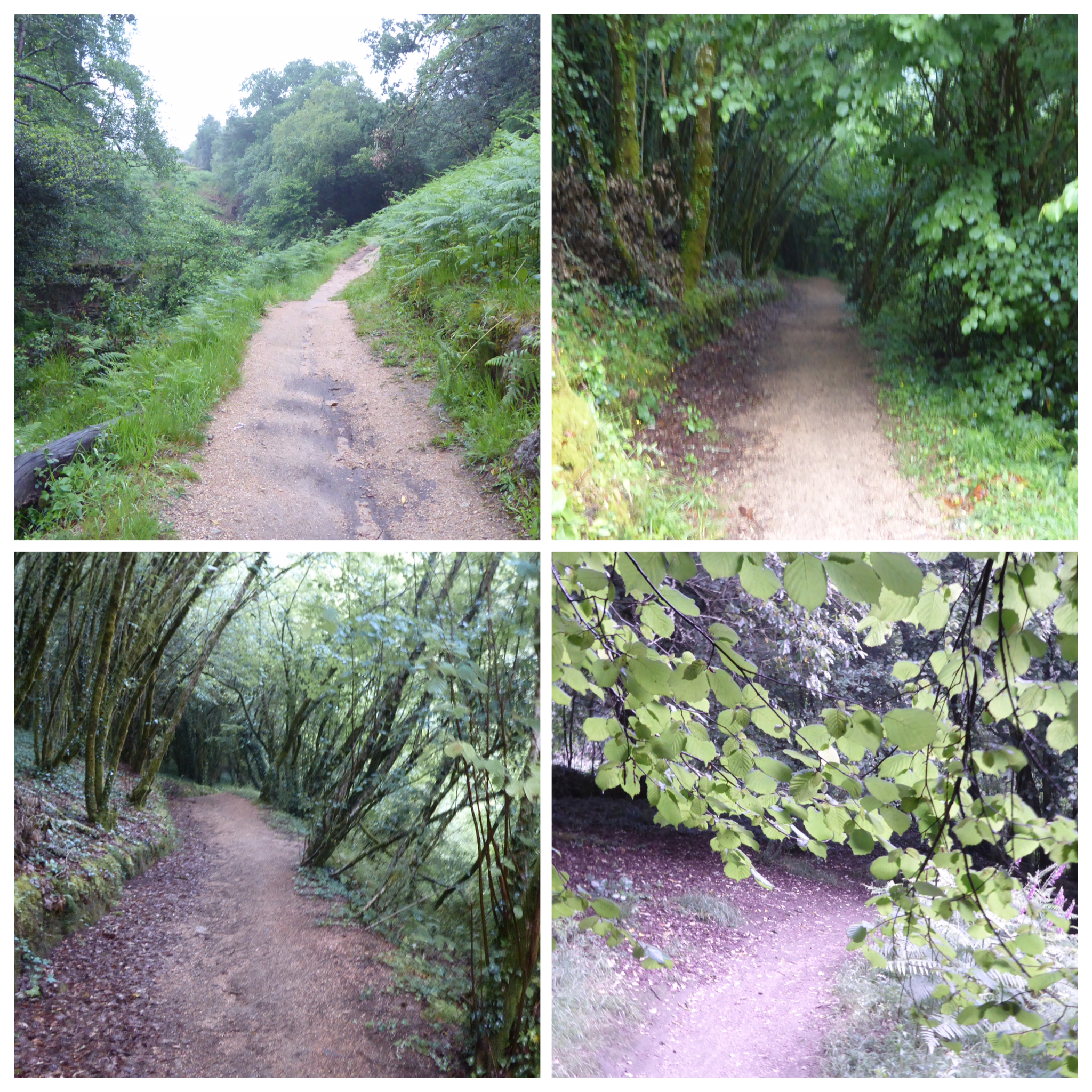
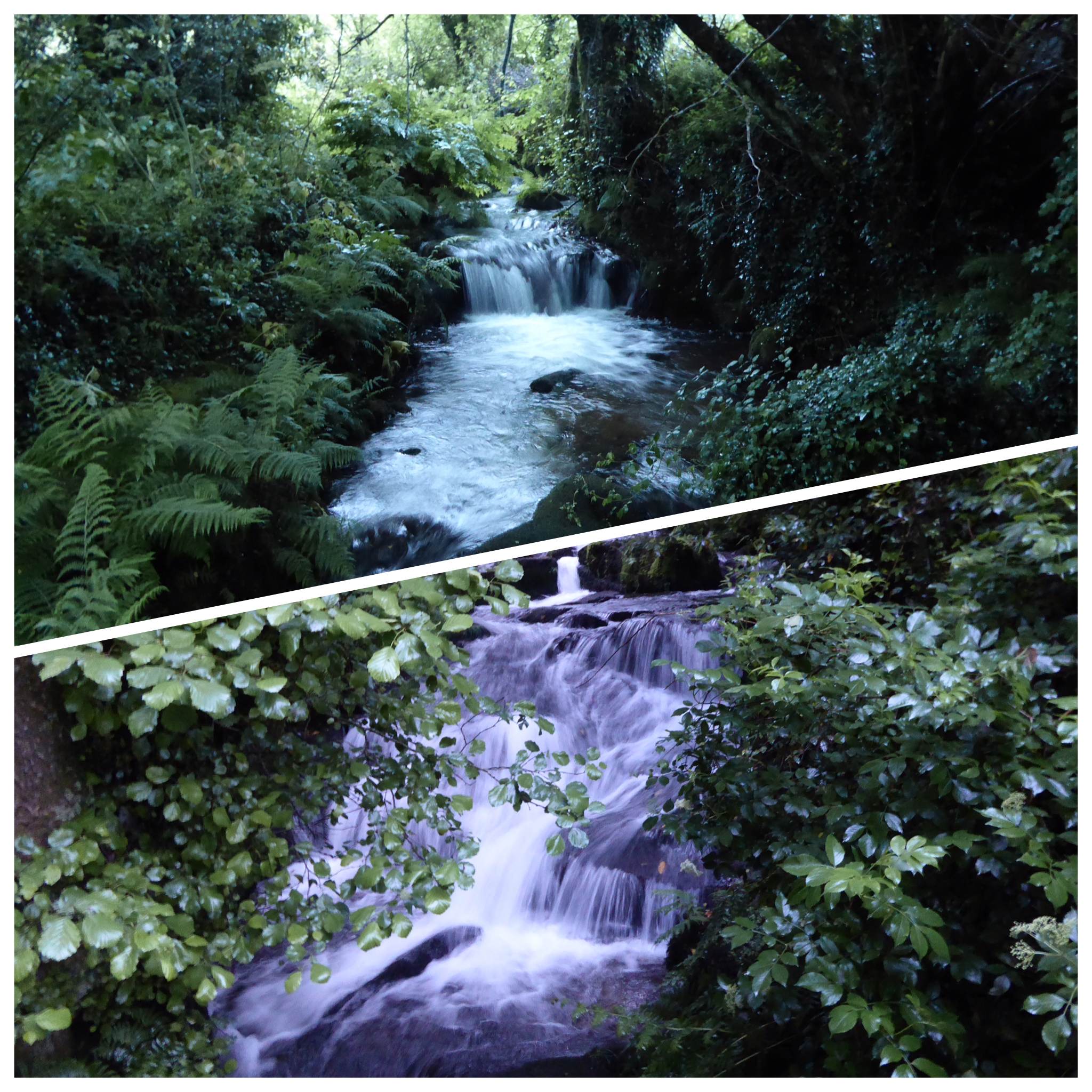
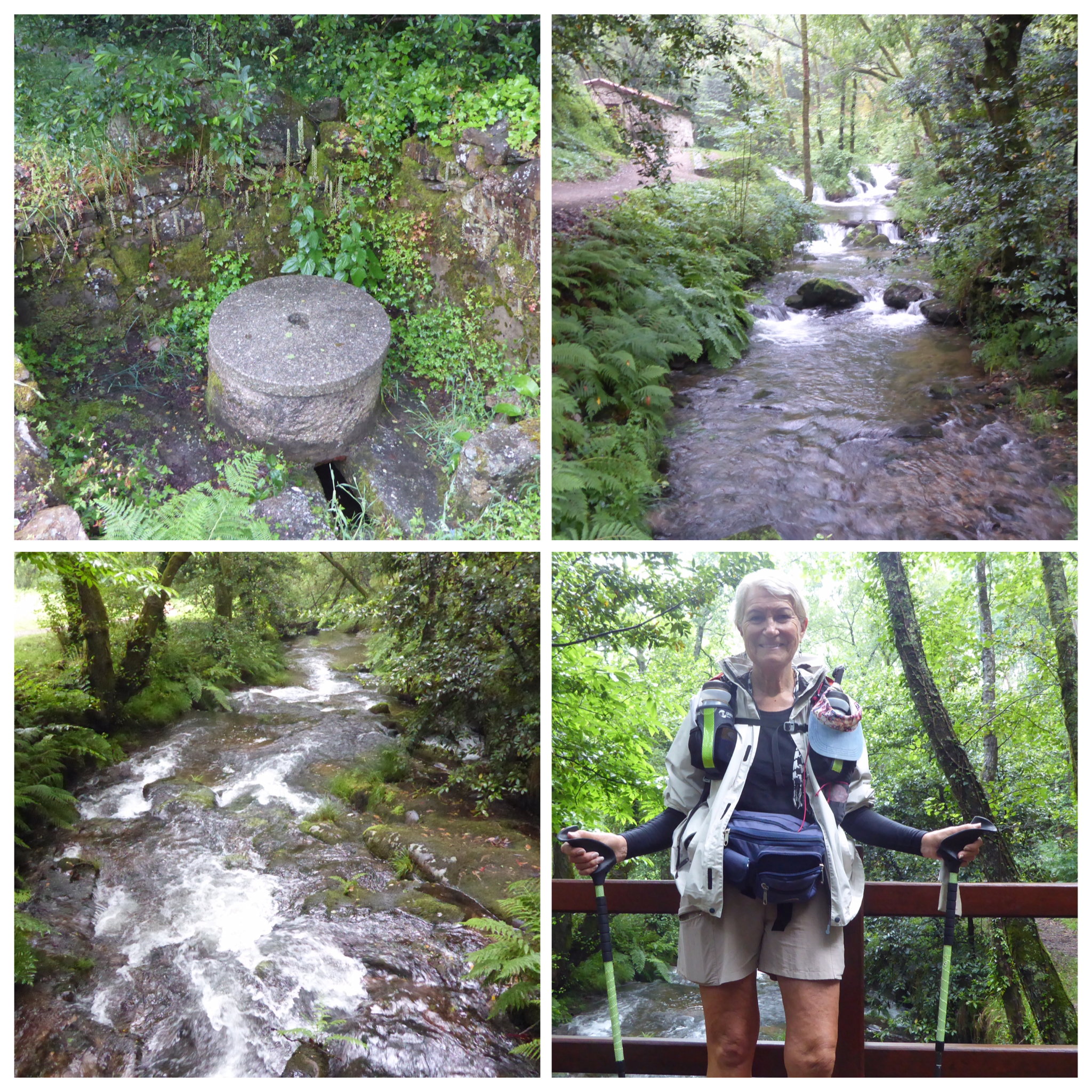
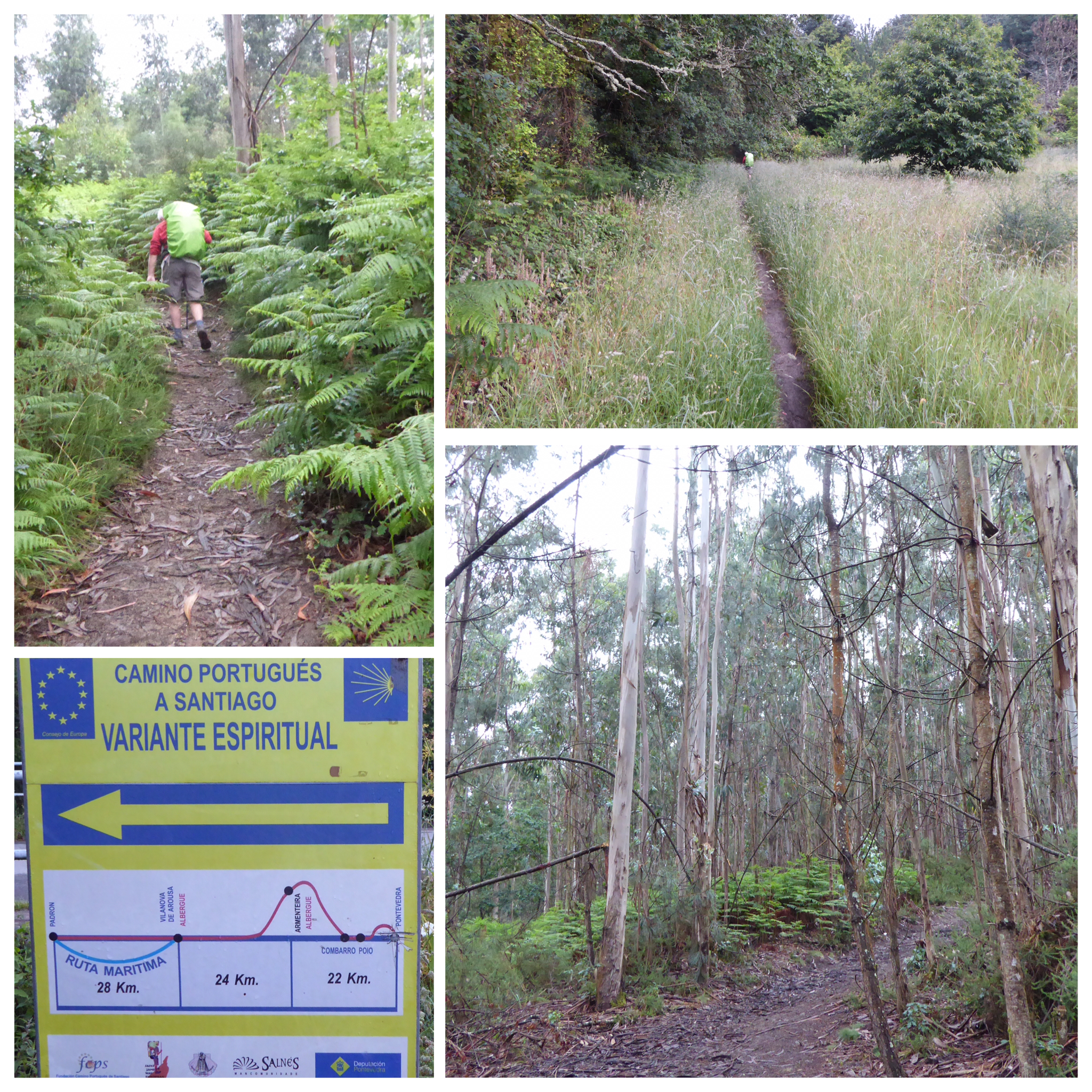
What a fabulous start to the day! The weather doesn’t look too promising but at least it is dry when we leave and almost immediately we are walking on a natural woodland track alongside a fast flowing river with lots of waterfalls, and a symphony of birdsong. It is totally enchanting

The birds sound as happy as I am to be awake this morning.

The walk is very much downhill and mostly on soft track with lots of puddles but no great amount of mud. Nina and Paul are up ahead and I am loitering, making the most of this delightful section in dry weather. I even see a few patches of blue sky amongst the grey.

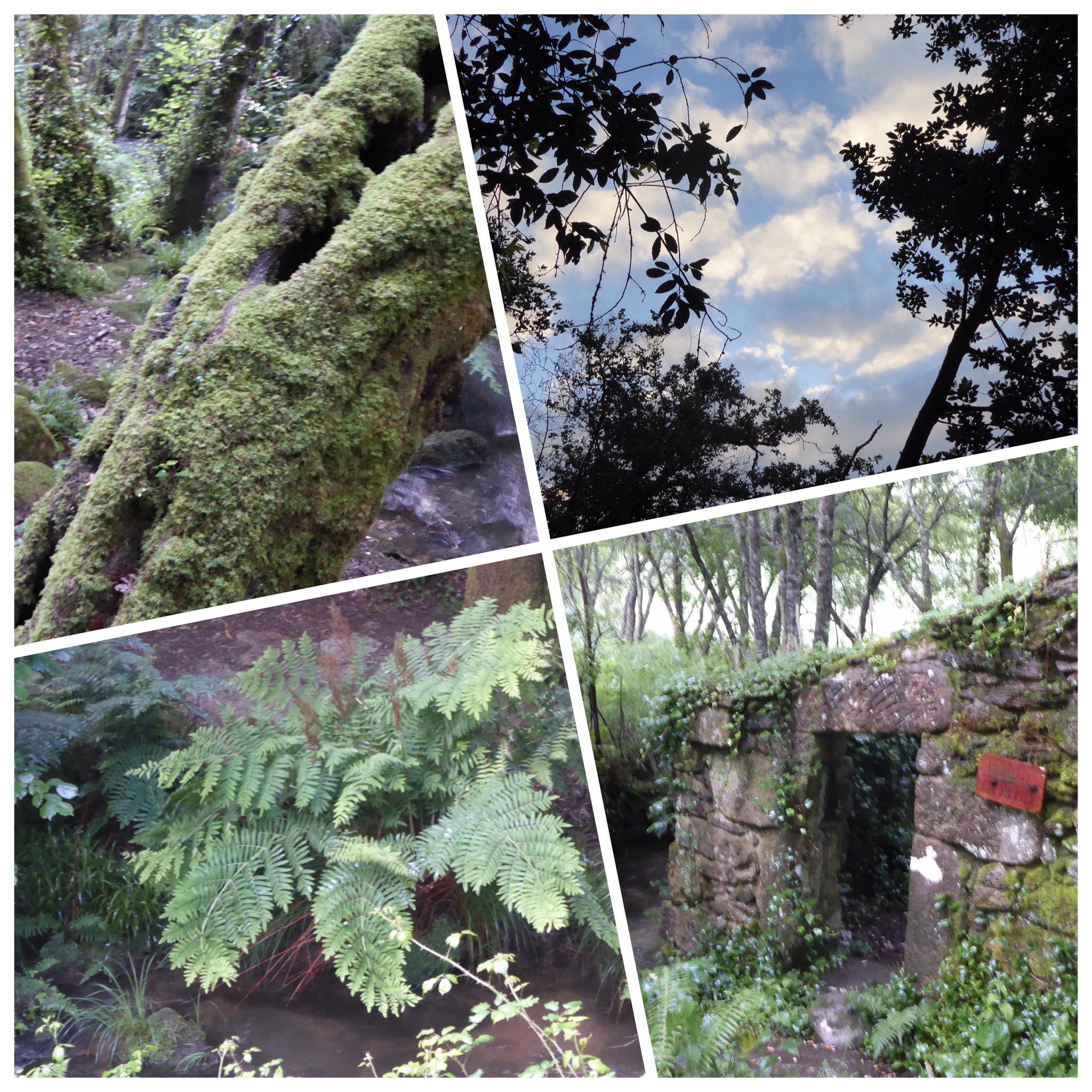
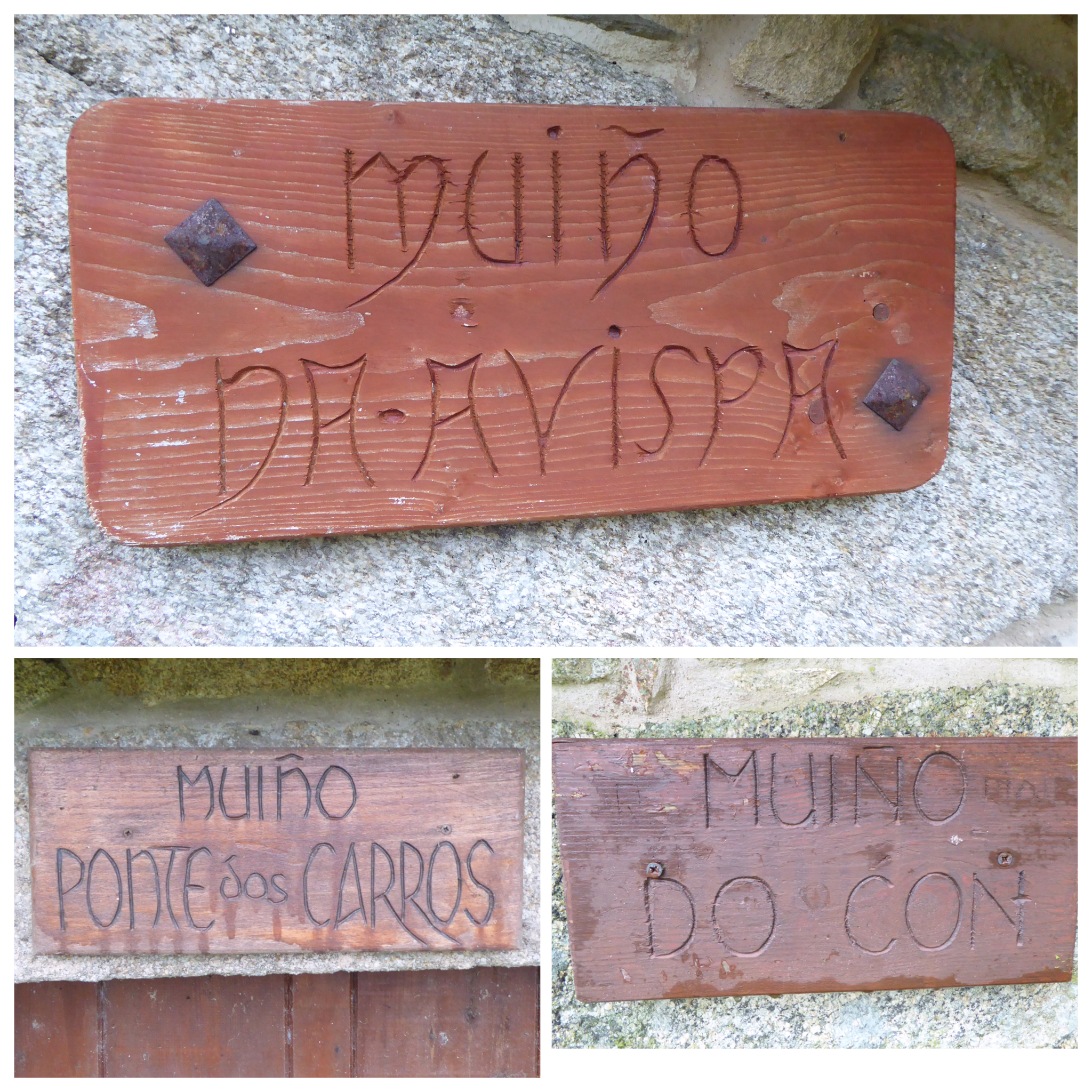
We pass countless mills – some in ruins, some restored, and all with name plates. Everything is covered in a thick coat of moss.

At 5K we cross onto a road for a short while, pass under a motorway bridge and are almost immediately back onto the track alongside the river.

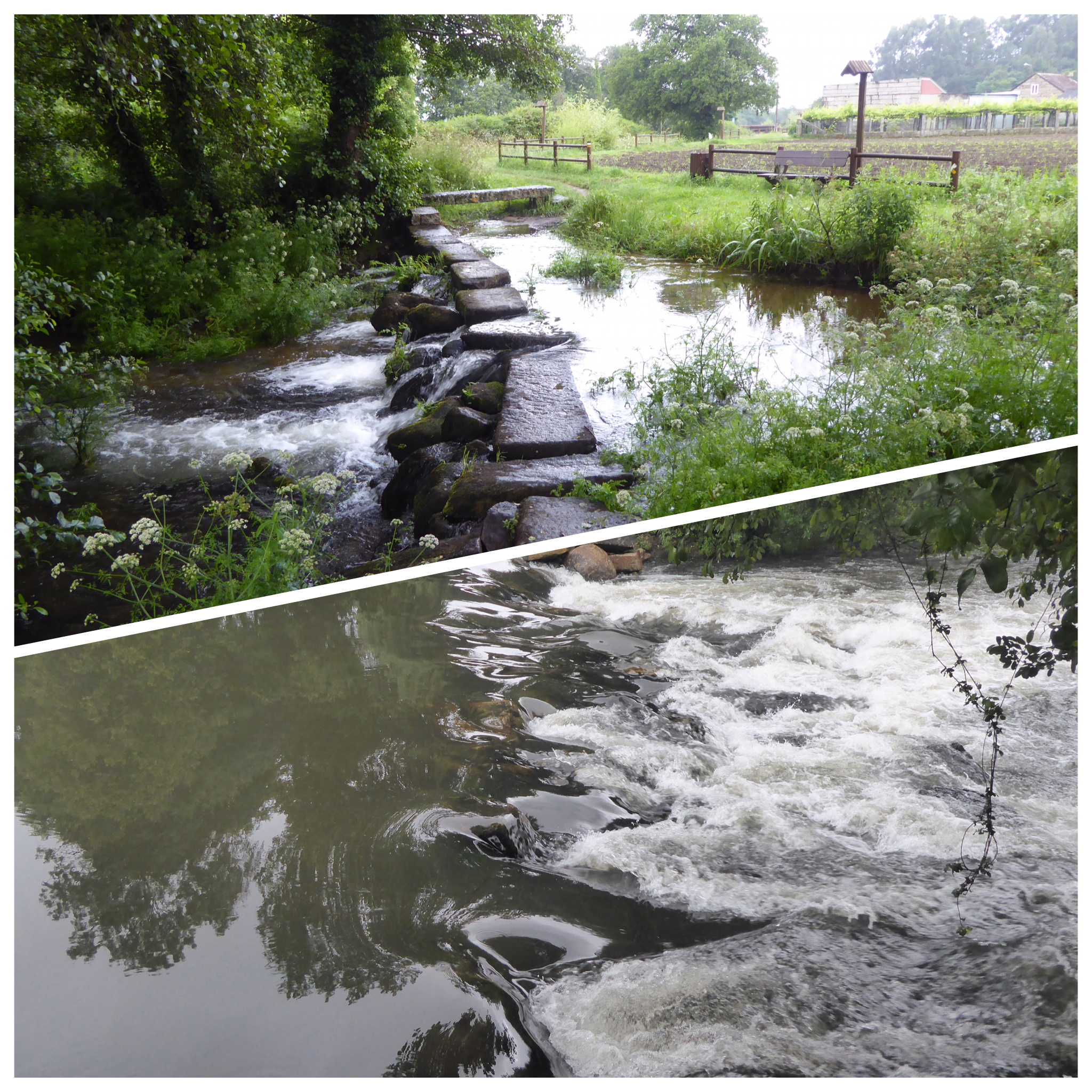
We cross wooden bridges, stone bridges, and stepping stones and switch from one side of the river to another

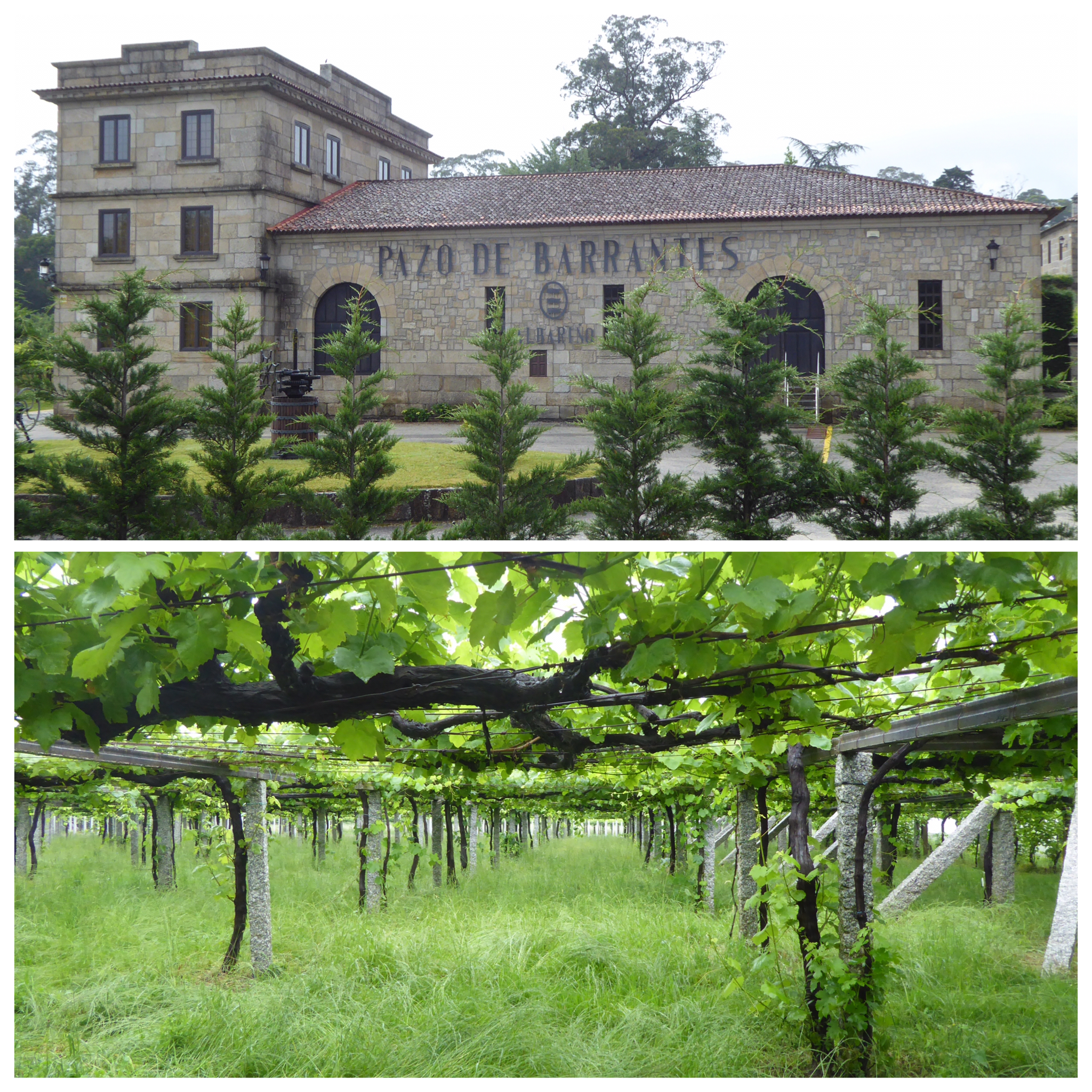
We met up at 6.5 km when we stop at Ribadumia for a drink. We were previously walking along the Rio Armenteira, but have now upgraded to the wide and fast flowing Rio Umia, strolling between the river and vineyards. At some points along the river frogs compete with the birds to see who can sing loudest.

At around 13 km there is a stretch on the road And at 16.5 km we are back on track through a eucalyptus plantation – our first climb of the day.

There are several more kilometres on the road before we reach the banks of the estuary at 21.5 km, and we take a short break sitting on the rocks, breathing in the fresh sea air. We are rewarded by a show of the sun – and it has never felt so good.

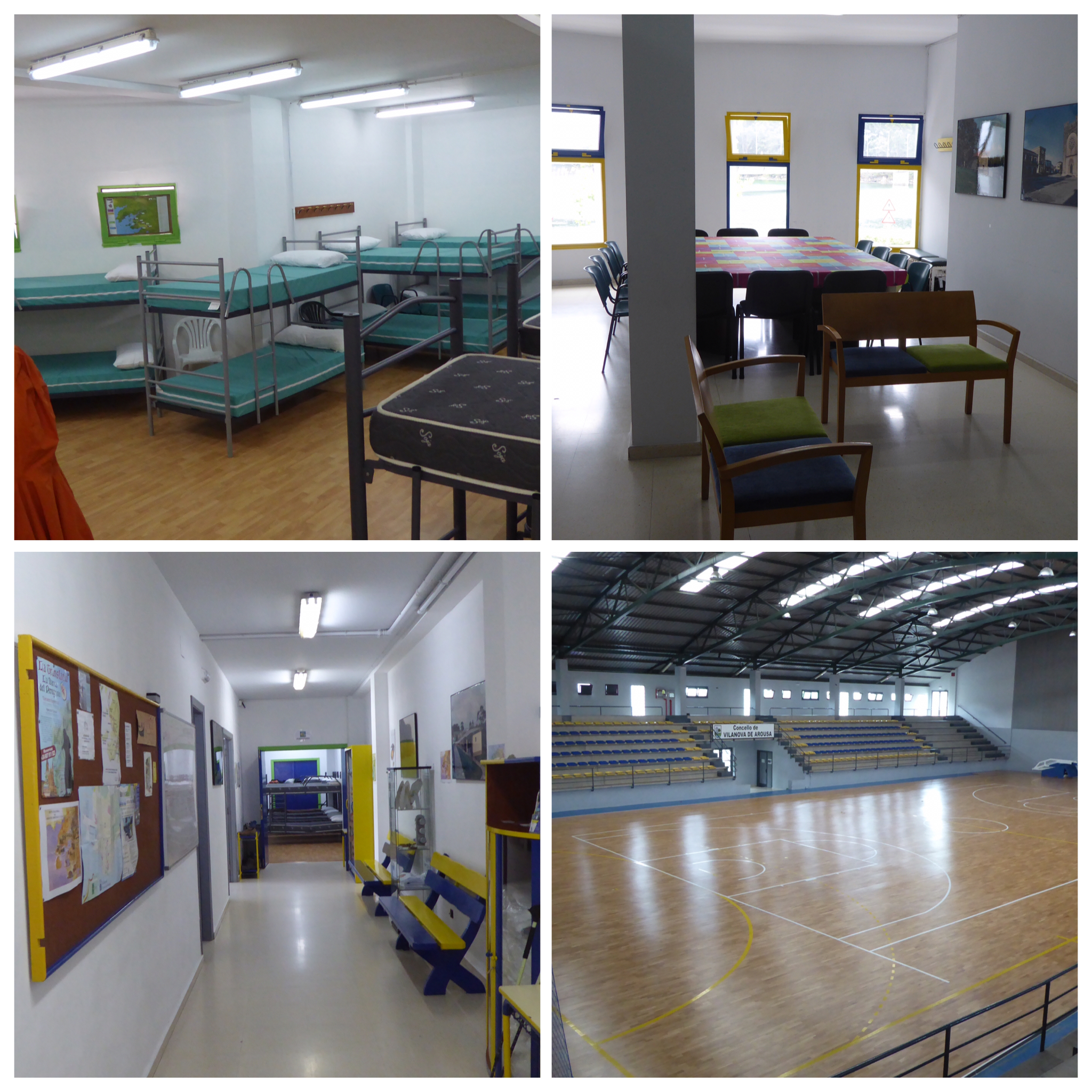
The rest of the walk is on a sand track alongside the estuary and finally across a bridge that takes us almost to the door of the albergue. Once again it doesn’t open until 14:00 and whilst we wait we find a bar around the corner. The albergue is situated in the town sports centre, a 28 bed dormitory, working kitchen, and large dining area. 6€ including disposable sheet and pillow case and blankets. There are separate bathroom facilities, each with one shower and two loos and the wash basins are communal. There is a washer/dryer for a fee if required.

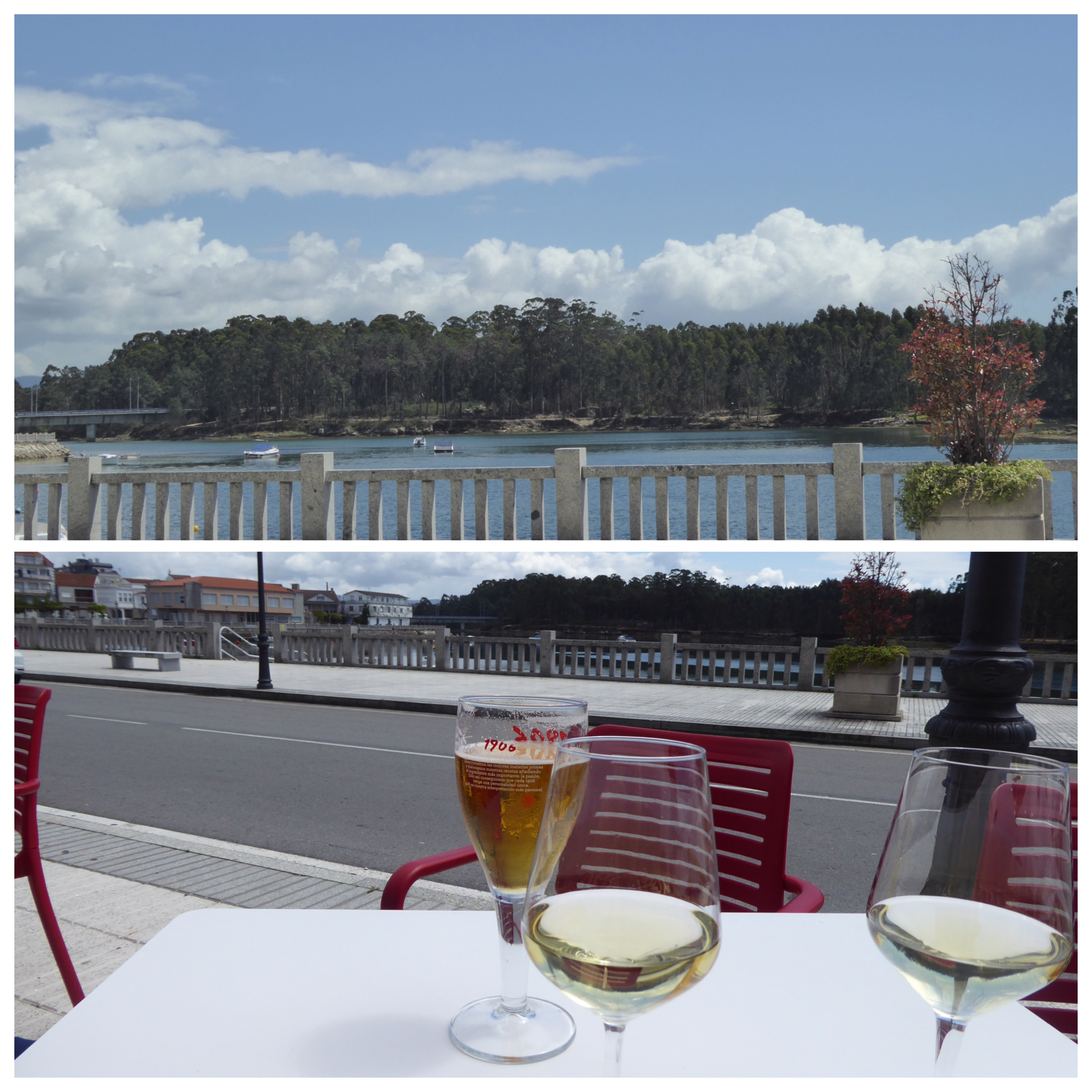
We three shower and change, I do my last hand-wash for many months and we set out to wander the town and languish in the sunshine.

Tomorrow we take a boat up the Rio Ulla for 27 km, but due the limitation of the tides it will not be leaving until 10:00 so there will be no rush to get up and go in the morning. It is advised to reserve a place on the boat at a cost of 19€, which seems a bit expensive. And then I will be walking my last stage of this elongated and convoluted camino. Fingers crossed for another dry day.

Posted in Camino de Santiago de Compostela, Camino Mozarabe, Camino Mozárabe from Almeria, Camino Mozárabe variante Trujillo, Camino Portuguese Coastal Route, Camino Portuguese Variante Espiritual | Tagged , , , , , , , , , , , , , | 11 Comments

Camino Espiritual, Pontevedra to Armenteira 23 km

Today’s distance 23 km
Elevation gain 589 m
Elevation loss 331 m
Total distance from Almería 1,443 km

Although the rain held off for all of our walk yesterday it started in earnest as soon as we arrived and didn’t stop before we retired for the night. So unfortunately we didn’t take a good walk around the beautiful old town of Pontevedra.

The weather forecast tells us that it should be fine in the morning until 11:00 so we rendezvous at the Puente del Burgo at 06:30 in order to get s good start before the rain sets in.

We reach the parting of the ways at 2.7 km, Variante Espiritual to the left, CP Central Route to the right. Our first track was just after 4 km. Some tracks are very narrow, through fern and tall grass and I am happy to be bringing up the rear as the other two have been dispersing the dew and raindrops. Nothing gets you wetter quicker than walking through wet foliage!

Then we are walking through a eucalyptus forest and the aroma is delicious, but the amount of waste these trees make is incredible They shed strips of bark and their leathery leaves and small branches litter the track, waiting to trip you up. Apparently they suck all the goodness out of the soil and give nothing back.

The route is very well marked with a very pretty sign, plus the usual yellow arrows.

We pass through several villages between sections of track and at 8 km we reach the monastery and town of Poio where we stop for a drink. Whilst we are in the cafe it starts to rain – it was forecast to start at 11:00 but turned up at 08:30 – so much for our plan to miss most of it.

It came down in some style, and although I stopped to put on my gaiters they had no effect on the rainfall. Consequently there were almost no photos or notes of the walk for the rest of the stage.
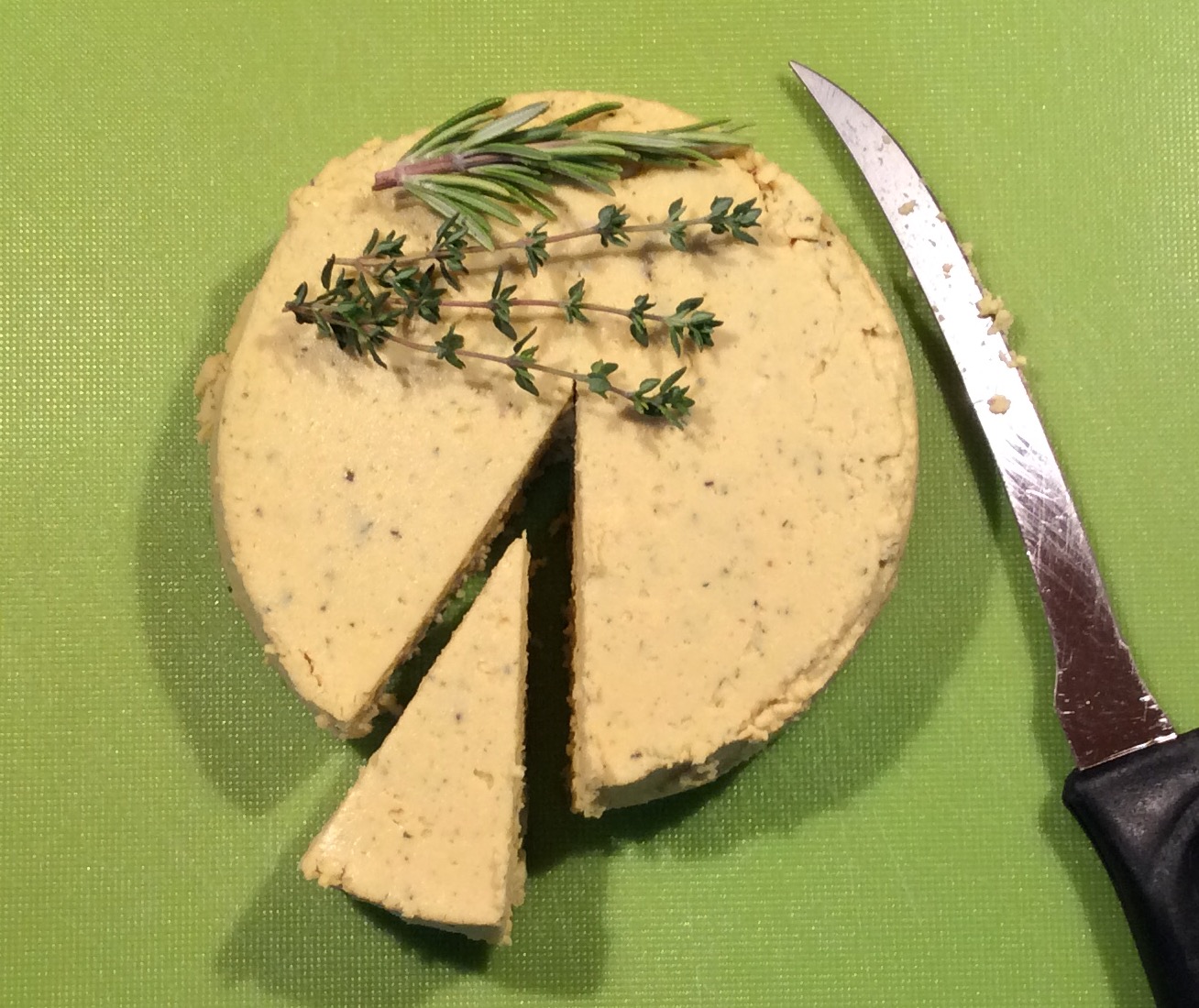
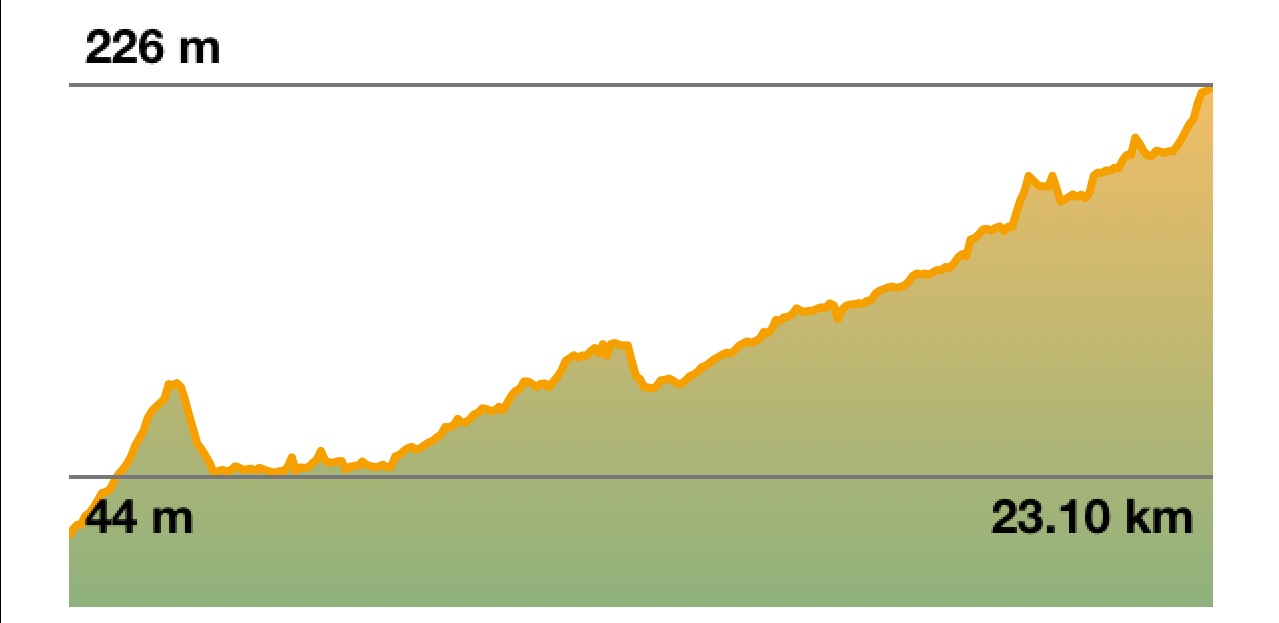
We were on the road most of the time from Poio until we reached track at 15.5 km. The road between Poio and Combarro was busy and fast and quite unpleasant trudging along with my head down against the slanting rain, but after passing through the town we were back on country roads, constantly climbing, walking between eucalyptus plantations and pine forests. After a brief stop to take in the view over the estuary from on high we started to walk on soft tracks through the woods, still climbing until we peaked at around 19 km and thereafter dropped steadily on narrow muddy tracks with tree roots protruding to try and trip us up.

And suddenly we emerged from the undergrowth to find ourselves at our stage end in Armenteira. It had continued all this time to rain hard and my only thought was to reach the albergue and dry off and warm up. The albergue is situated about 1 km from the bars and monastery in the town and we were now also contending with a strengthening wind. I arrived at the albergue to be confronted by a notice announcing that it opened at 14:00, but it was only 11:45. Bugger! So back we traipsed to the bar to sit it out. There are two bars and we tried them both before the allotted opening time.

But the albergue was worth the wait. Situated in a modern building with 32 beds, excellent separate bathroom facilities, kitchen with only a microwave and fridge, but plenty cups and utensils. Lovely dining area and plenty of outdoor space which would be appreciated in warmer weather. We are about 12-14 pilgrims here for 6€, and more are staying in the monastery (around 25€ per person).

After settling in and showering, Nina and I decided to go back to visit the monastery – and received another soaking in the process. There is a lovely cloister where we watched a monk walk round and round the perimeter – maybe his daily exercise, or maybe some penance? There is a shop that sells soap, presumably made by the nuns. A charming nun tried to tell us the legend of the monastery but I didn’t entirely understand. I googled it later – you can read it here if you are interested. We also obtained a lovely sello for our credenciales. Later, back at the albergue, we joined forces and supplies to hash together a rather tasty supper.

Only two days to go, and I fear they will both we very wet. I have never been so unlucky with the weather on any of my caminos. I am extremely glad of the company of Nina and Paul. Being soggy in good company is bearable.

Posted in Camino de Santiago de Compostela, Camino Mozarabe, Camino Mozárabe from Almeria, Camino Mozárabe variante Trujillo, Camino Portuguese Coastal Route, Camino Portuguese Variante Espiritual | Tagged , , , , , , , , , , , , , , | 9 Comments